

These day trips explore Rochester’s geological history with drumlins, eskers, kames, kettles, fossils, house-sized boulders, and mesmerizing meromictic lakes, showcasing the amazing features of our corner of the Earth.
City of Rochester

Lower Falls Gorge
City of Rochester
In the Lower Falls section of the Genesee River gorge, the material at the bottom was deposited 430 million years ago and at the top 410 million years ago. Thus, you are looking at 20 million years of geological deposition in a gorge carved in the last 10,000 years.

You can begin your exploration of the Genesee River from either Maplewood Park on the west side or from the east side, starting at the Seth Green Genesee Riverway Trail parking lot. From there, you can walk down towards the fishing access.
Learn more: lowerfalls.org, Thomas X. Grasso’s Geology and Industrial History of the Rochester Gorge Part One, Lower Falls Foundation
Explore More
Rochester, delivered
A weekly Substack newsletter, with periodic essays exploring behind-the-scenes work and reflections on traveling close to home. While the content is free, paid subscriptions support my ongoing research and writing.

Mount Hope Cemetery
City of Rochester
Mount Hope is part of the Pinnacle Range, but it has unique characteristics. Join a Geology Tour to explore the fascinating history of Ice Age landforms such as kames, moraines, and kettles. You’ll also learn about the rocks used to create gravestones, mausoleums, and the ground beneath you. Additionally, you’ll discover the influential residents who have contributed to the sciences during their time above ground.
Explore More


Pinnacle Range
City of Rochester
The five highest hills in the area are Cobb’s Hill, Pinnacle Hill, Highland Park, Mount Hope Cemetery, and Oak Hill, which is currently the University of Rochester campus. The Oak Hill Country Club was situated next to the river from 1901 to 1921 before moving to Pittsford.
Thanks to the early advocates for its preservation, the Pinnacle Range remains untouched by development. All major infrastructure, such as the Erie Canal, subway, and expressway, were routed around the area.
Explore More
Monroe County

Mendon Ponds
Mendon
Mendon Ponds Park covers 2,500 acres and features 21 miles of marked trails that take you through woodlands, wetlands, and glacially-created landforms. The park is named after its four main ponds—Hundred Acre, Round, Quaker, and Deep Ponds. One of the park’s unique features is Devil’s Bathtub, a rare meromictic lake that is approximately 47 feet deep at its lowest point. In 1969, Mendon Ponds Park was designated as a National Natural Landmark due to its geological history and the presence of significant kettles, kames, eskers, and bogs.
Learn more: Glacial Geology of Mendon Ponds Park, Glacial Geology
Explore More
Greater Rochester

Bergen Swamp
Bergen
The Bergen Swamp is a 10,000-year-old natural ecological succession after the glaciers’ retreat. The lichens were the first organisms to grow on the barren rock left by the retreating glaciers. It is the first private environmental land trust in the United States to be chartered as a New York State living museum and the first site of its kind to be designated a National Natural Landmark.
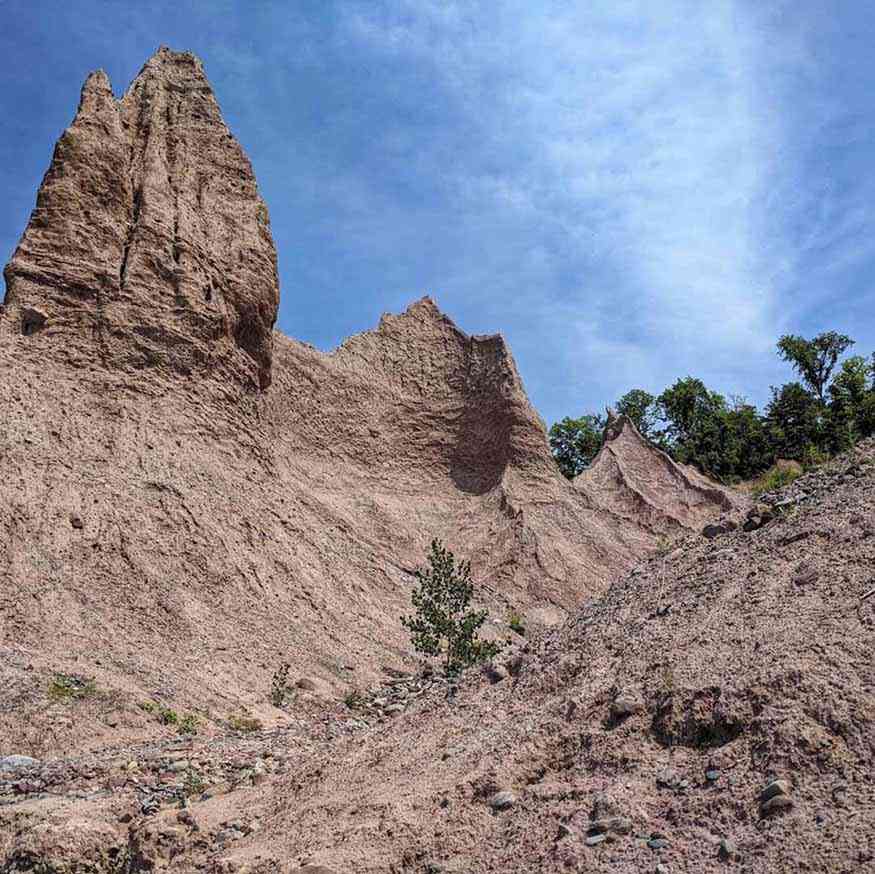
Chimney Bluffs
Huron
The bluffs overlooking Lake Ontario provide a fascinating glimpse into our geological history. These delicate drumlins rise 175 feet above the lake and are part of a large group of drumlins in New York State. There are approximately 10,000 drumlins located between Lake Ontario and the Finger Lakes.

Driving through Wayne County’s landscapes, you may encounter the drumlins, which, while not as otherworldly as Chimney Bluffs, are still fascinating.
Learn more: Drumlins in Wayne County, New York State Geological Association 2000 Guidebook page 116
Explore More
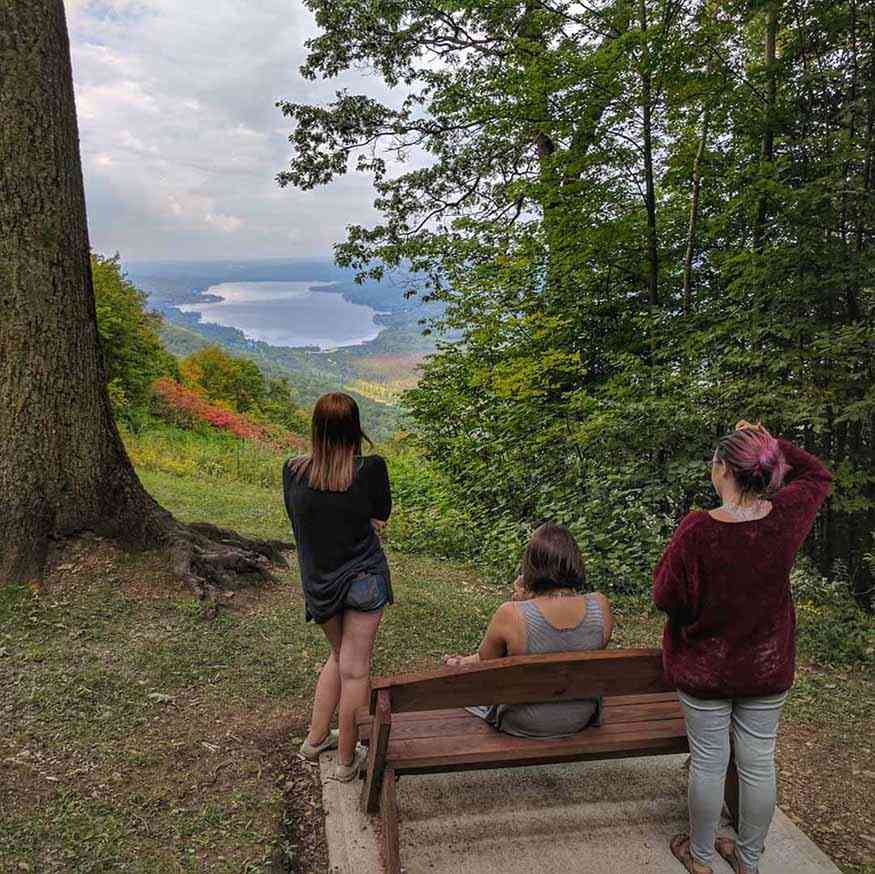
Finger Lakes Region
The Finger Lakes consist of 11 long, narrow, roughly parallel lakes that are oriented north-south, resembling the fingers of outstretched hands. The southern ends have high walls cut by steep gorges. Seneca and Cayuga Lakes are two of the deepest in North America, with bottoms below sea level.
The lakes were formed over the last two million years by glaciers carving old stream valleys. The actual depth of the carved rock is well over twice as deep, but it has been filled with sediments. There may be as much as 1000 feet of glacial sediment in the deep rock trough below the lake bed.
Learn more: Paleontological Research Institute
Explore More
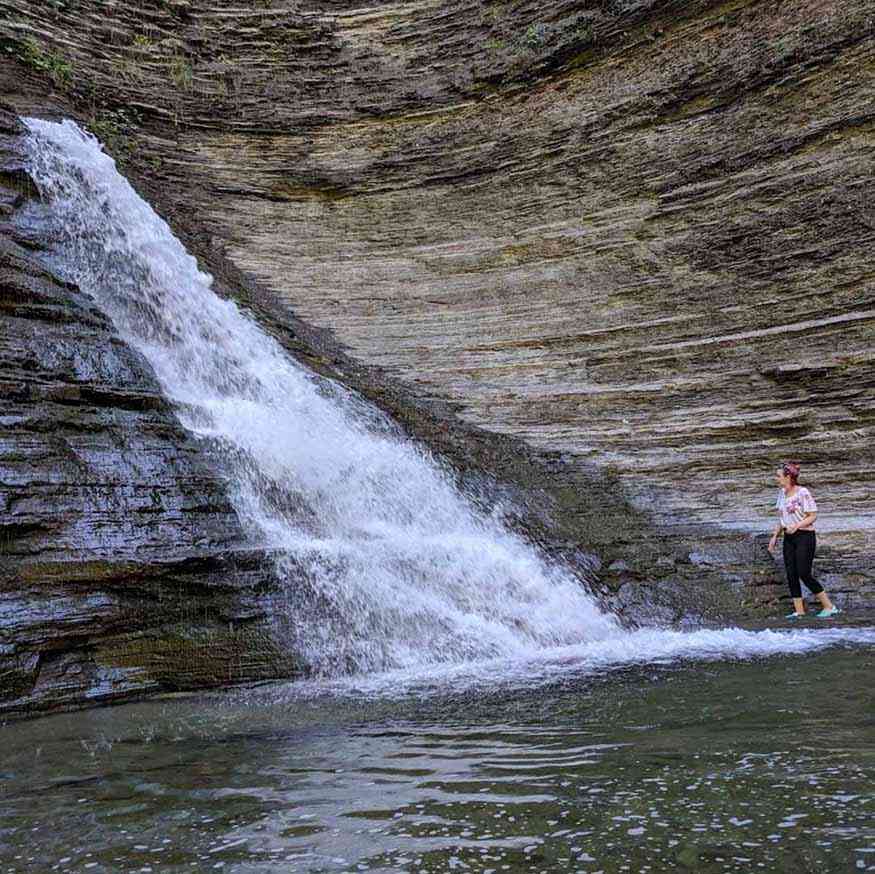
Grimes Glen
Naples
After taking a short walk along the creekside trail through Grimes Glen, you will need to wade through the water for half a mile to reach the first 60-foot waterfall. Continuing along the creek for another half mile will lead you to the second waterfall, a picturesque cascade of the same height. To return to the parking lot, simply retrace your steps.
Learn more: Ontario County
Explore More

Letchworth
Castile
The walls of Letchworth State Park’s Genesee River gorge provide a glimpse into four hundred million years of geologic history. Sedimentary rocks are formed from sand, shells, pebbles, and other material fragments that accumulate and harden over time. These rocks are generally soft and prone to crumbling. The gorge primarily contains shale, with some limestone and sandstone. The red layers appear due to iron oxide deposited during high oxidation.
Learn more: Geocaching Letchworth
Explore More
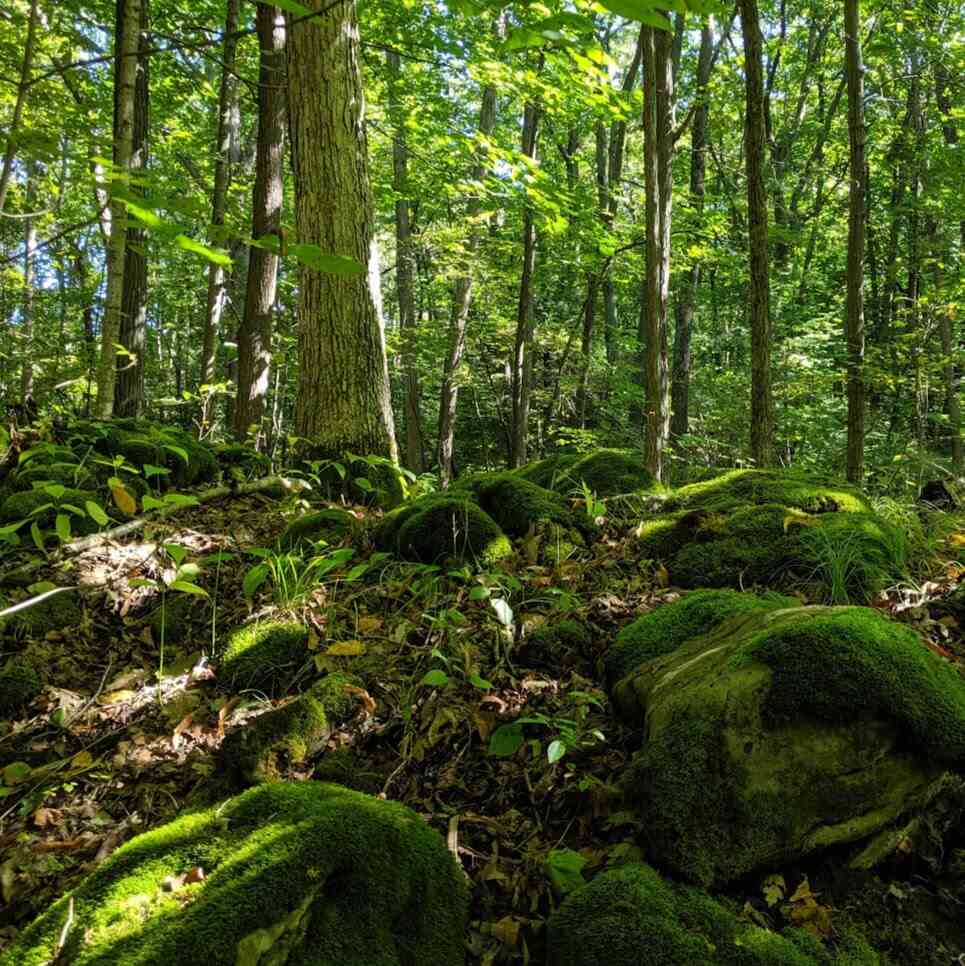
MacKay Wildlife Preserve
Caledonia
Geologists have studied the amazing rocks found within the preserve’s 26 acres; some were determined to be 380 million years old. These rocks contain fossils from the time when the area was covered by a tropical sea. Toward the field wall, there is a sea of moss-covered boulders. Science teachers from Cal-Mum bring their classes here to explore the geology and biodiversity.
Walking along the trails of the nature center at Genesee Country Village and Museum, you’ll notice similar rock formations. This is because they share the same backyard, which spans the land between Flint Hill Road and NY-5.
Learn more: History of MacKay Wildlife Preserve
Explore More
Surrounding Counties

Eternal Flame
Orchard Park
The Eternal Flame, where natural gas escapes through the shale into a sheltered grotto beneath Shale Creek’s 35-foot waterfall, is not actually eternal, despite its name. If the flame goes out, it’s a good idea to bring a lighter to reignite it. To find the Eternal Flame Trail in Erie County’s Chestnut Ridge Park, start from the large parking lot on New York State Route 277/Chestnut Ridge Road and follow the trail markers to a staircase with approximately 135 steps. Then, proceed to follow the creek upstream.
Learn more: EPOD USRA Eternal Flame
Explore More

Green Lakes
Fayetteville
Green Lakes State Park, situated in Fayetteville just 15 minutes east of Syracuse, is renowned for its turquoise-colored glacial lakes and the old-growth forest known as the Tuliptree Cathedral. Private boats are not permitted on the lakes due to their sensitivity, but rentals are available, including clear-bottom tandem kayaks. Additionally, Round Lake has been designated as a National Natural Landmark by the U.S. Department of the Interior.
Explore More

Howe Caverns
Howe Caves
If you’re starting from Rochester, it’s important to note that Howe Caverns is a bit of a drive—about three and a half hours away. Despite the distance, it’s definitely a must-see if you’re looking to take a day trip from Rochester. I made the trip there and back in one day, but only because the tour was relatively short and we didn’t stop to explore other areas along the way.
Howe Caverns were formed over six million years ago by natural processes predating the woolly mammoth’s appearance. They are among the few limestone caves worldwide that are still inhabited.
The limestone beds formed by ancient sea creatures were relatively soft compared to other rock formations, such as marble and granite. As a result, rainwater trickling down from the ground quickly eroded the top layers of the limestone. This process created small cracks that opened to the layers below, allowing rainwater to dissolve the limestone.
Over time, small cracks expanded into extensive openings, allowing underground streams to flow through. These streams gradually carved out the incredible cave formations and winding passageways of Howe Caverns. Millions of years ago, sea creatures left behind solid limestone deposits, which were later shaped by the gentle yet persistent flow of underground brooks and streams.
Learn more: Science & Geology of Howe Caverns

Little Rock City
Little Valley
Little Rock City was not formed by glaciers but through mountain-building events known as orogenies. The base for Little Rock City was formed as sediment from surrounding areas was deposited over the Rock City State Forest. Over hundreds of years, gravity erosion of the landscape began to separate non-resistant rock layers from highly resistant ones, leaving us with the large boulders present today.
Learn more: 4 Rock Cities Near Rochester, Cattaraugus County Geology Trail
Explore More

Museum of the Earth
Ithaca
The Museum of the Earth focuses on life beginning in the Cambrian Period and explores the Earth’s 4.5 billion-year history. Visitors will learn about the Phanerozoic Eon, which includes the Paleozoic era (the era of plants), the Mesozoic era (the era of dinosaurs, birds, and the breakup of Pangaea), the Cenozoic era (the era of mammals), and our current Quaternary period (the Ice Age and the arrival of humans).
Explore More

Niagara Falls
Niagara Falls
Niagara Falls has changed significantly over time due to geological shifts. Around 16,000 years ago, a glacier covered the area, and when it receded, water from the Great Lakes eroded the hard rock, forming the Niagara Gorge. Currently, the falls are moving upstream at about one foot per year. It is projected that in approximately 50,000 years, the river could erode back to Lake Erie. The region’s geological layers, formed around 440 to 425 million years ago, consist of limestone, shale, sandstone, and dolostone, with visible marine fossils.
Learn More: New York State Museum – Niagara Gorge Geology
Explore More
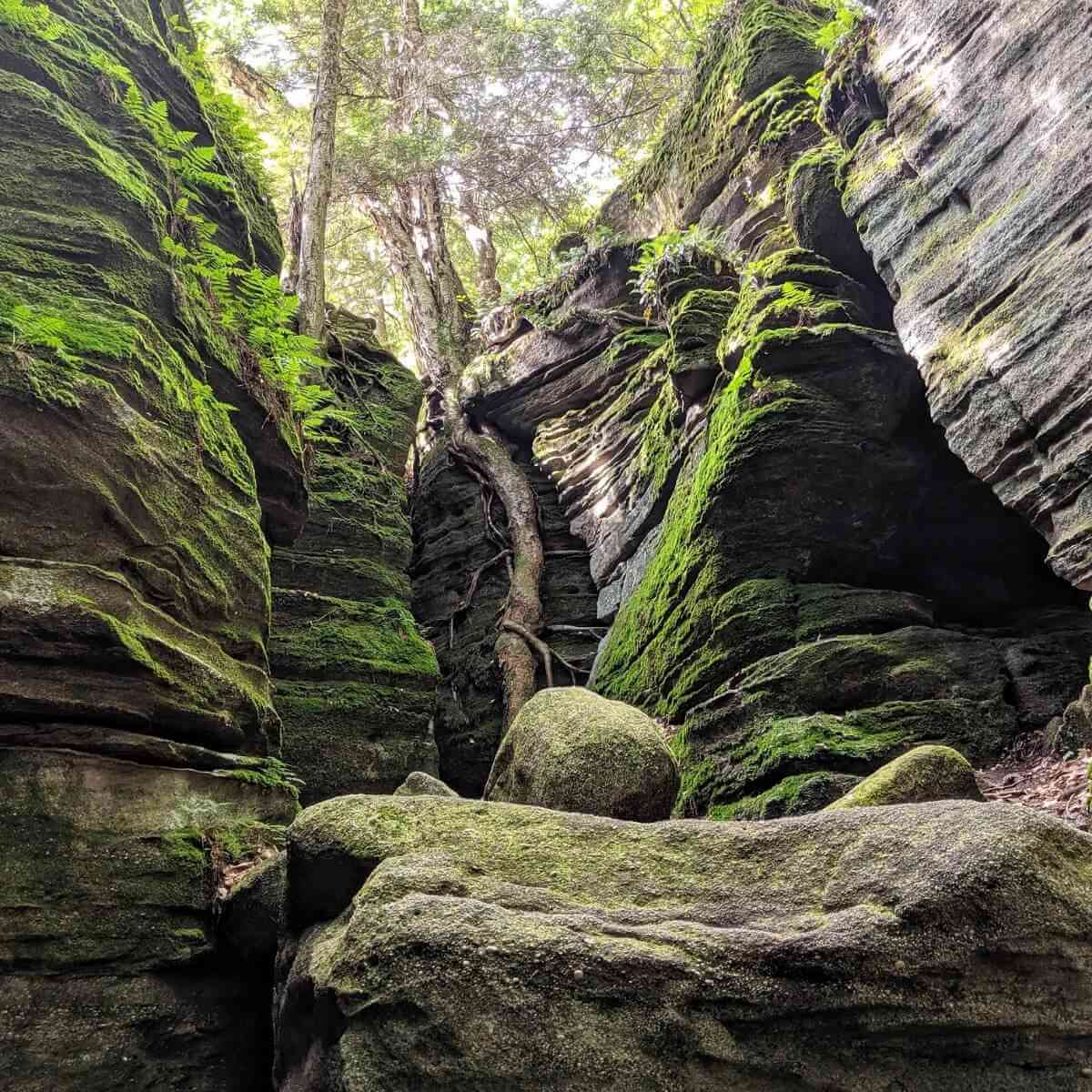
Panama Rocks Scenic Park
Panama
Panama Rocks Scenic Park contains the world’s most extensive formations of glacier-cut, ocean-quartz conglomerates, which form a half-mile-long ridge. The rock formations date back about 400 to 350 million years (Ma) to the Devonian period.
To provide perspective on the age of these formations, it is believed that the first animals classified in the genus Homo appeared only 2 million years ago. Modern humans (Homo sapiens) are believed to have originated about 200,000 years ago.
Learn more: Panama Rocks Scenic Park, 4 Rock Cities Near Rochester, Tour Chautauqua
Explore More

Penn Dixie Fossil Park and Nature Reserve
Blasdell
Find and collect 380-million-year-old animal and plant fossils that once flourished in an ancient tropical sea that covered Western New York at Penn Dixie Fossil Park & Nature Reserve. Managed by the Hamburg Natural History Society, take a guided tour to learn about the 54-acre quarry before searching for fossils to take home.
Learn more: Penn Dixie Field Guide; They’ll never run out of fossils at Penn Dixie
Explore More
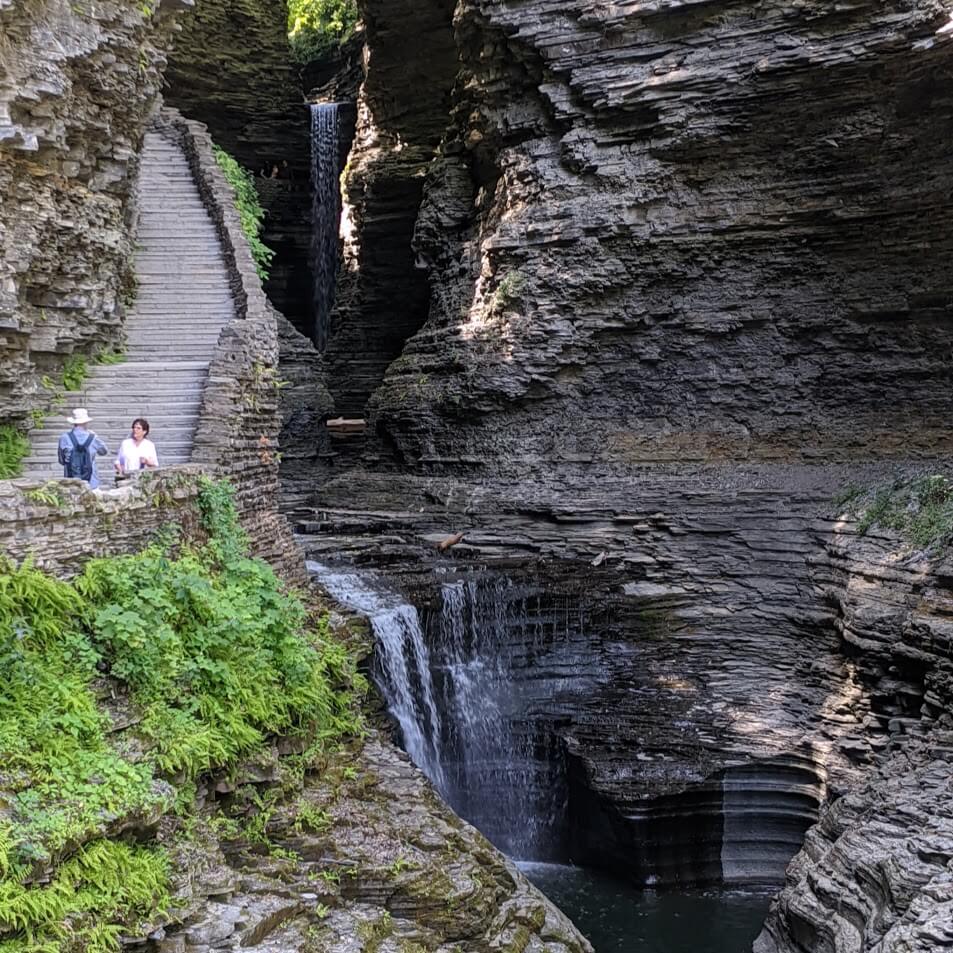
Watkins Glen
Watkins Glen
Watkins Glen State Park is situated in the heart of the small town of Watkins Glen, at the southern tip of Seneca Lake. The glen stretches two miles, making it perfect for a day trip. While the park offers a well-maintained walking path, it’s not an easy stroll and is not accessible. The gorge trail can be wet from spray (so wear good walking shoes/boots and bring a spare pair to change into), and the majority of the walk consists of climbing 800 rock stairs if you go the entire length. The elevation rises 520 feet from the Main Entrance to the Upper Entrance.
That said, it’s also one of the most transcending, awe-inspiring, and wondrous displays of nature’s beauty on Earth!
Explore More

Learn more about our geologic history and geoscience
- Library Book: Roadside Geology of Western New York
- Library Books: Various publications by Herman Fairchild
- Rochester Museum & Science Center
- Buffalo Museum of Science
- Rochester Academy of Science
- Buffalo Geological Society
- New York State Geological Association + Field Trip Guidebooks
- The Geological Society of America
- American Geosciences Institute
- Glacial Geology of Western New York
- Geology of New York State
- Geologic units in Monroe County, New York
- Geological History and Glacial Formations of the Finger Lakes
- Paleontology and Stratigraphy of the Rochester, New York, Area
- Genesee Valley Glacial and Postglacial Geology from 50,000 Years Ago to the Present: A Selective Annotated Review
- Western NY Geology: The Land Before Time
- 1902 Bulletin of the United States Geological Survey
- Geology of the Erie Canal, Rochester Gorge, and Eastern Monroe County, New York State – In the Footsteps of Amos Eaton and James Hall
Explore More

Where are your favorite spots to explore Rochester’s geologic history?
I’d love to hear from you—please share your thoughts and experiences in the comments below.


Help Support My Work
People often ask if I get free access to the places I visit. The answer is no—unless I’m invited to a special preview or offered behind-the-scenes access through my media role. Most of the time, I don’t even mention Day Trips Around Rochester, New York when I visit a place. I want to have the same experience you would.
I create and share this content because it brings me joy—and I hope it adds value to your adventures, too.
If my work has helped you explore and appreciate the Rochester area, please consider becoming a paid subscriber on Substack. You’ll receive an email whenever I publish new content and have the chance to connect with a growing community of local explorers.
Thank you for supporting my efforts to keep producing meaningful and helpful content.
Thank you!
Debi
Enjoy the Journey Together!


Seneca park! Trees, nuts, red
sand stone, birds, ponds, walking bridge, amazing fall foliage…
This website was well worth my time exploring and reading. I shall save it for future reference and will send its link to my children and grandchildren. Thank you.