
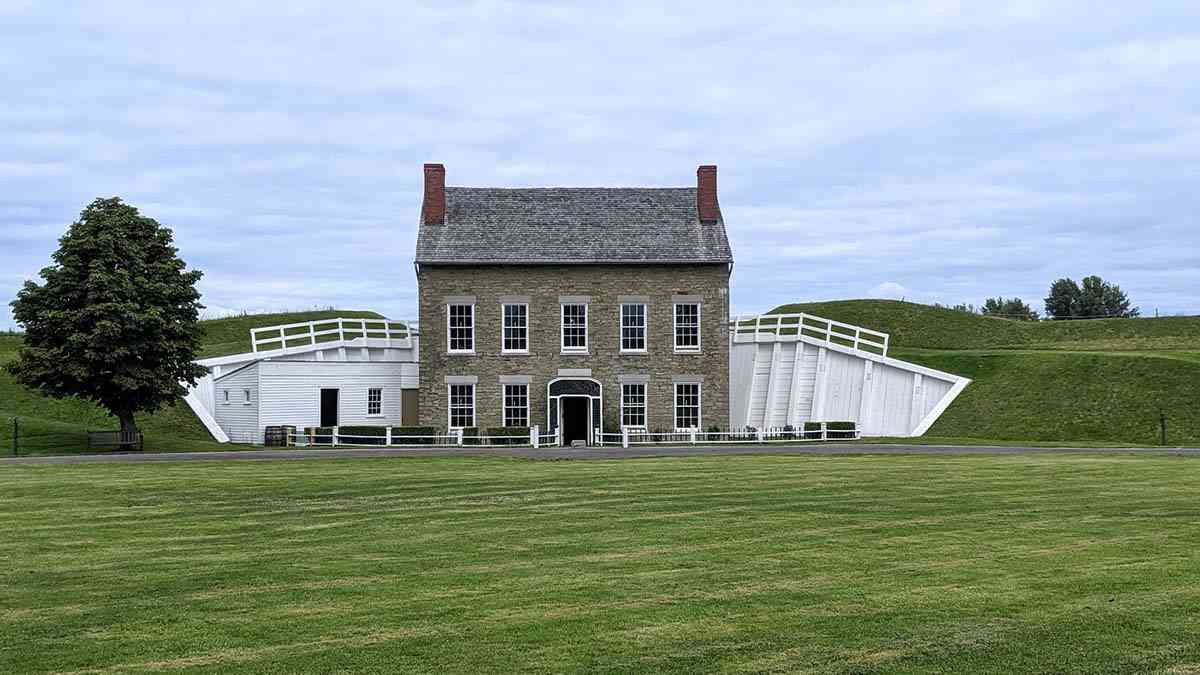
Fort Ontario rises above the mouth of the Oswego River, where the waterway meets Lake Ontario. From the ramparts, you can look across the harbor toward the West Pierhead Lighthouse and see why this location mattered: the river provided a route between the Great Lakes and New York’s interior.
The present star-shaped fort dates mainly to the 1840s, but the site’s history begins nearly a century earlier. Its buildings and earthworks interpret military life and conflict from the French and Indian War through World War II. Just outside the fort, the Safe Haven Holocaust Refugee Shelter Museum tells another part of the property’s history—the story of 982 European refugees brought to Oswego in 1944.
Exploring Fort Ontario

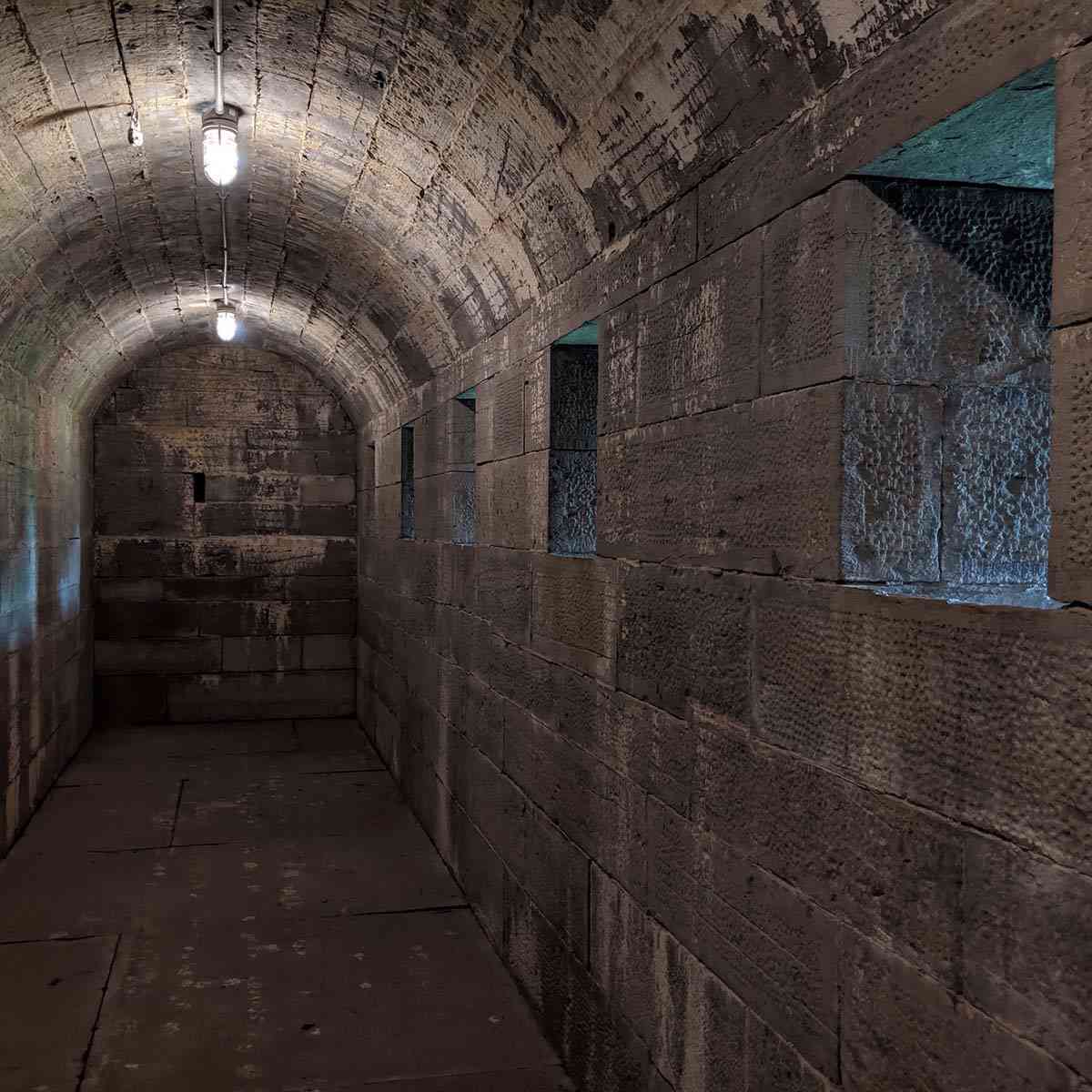
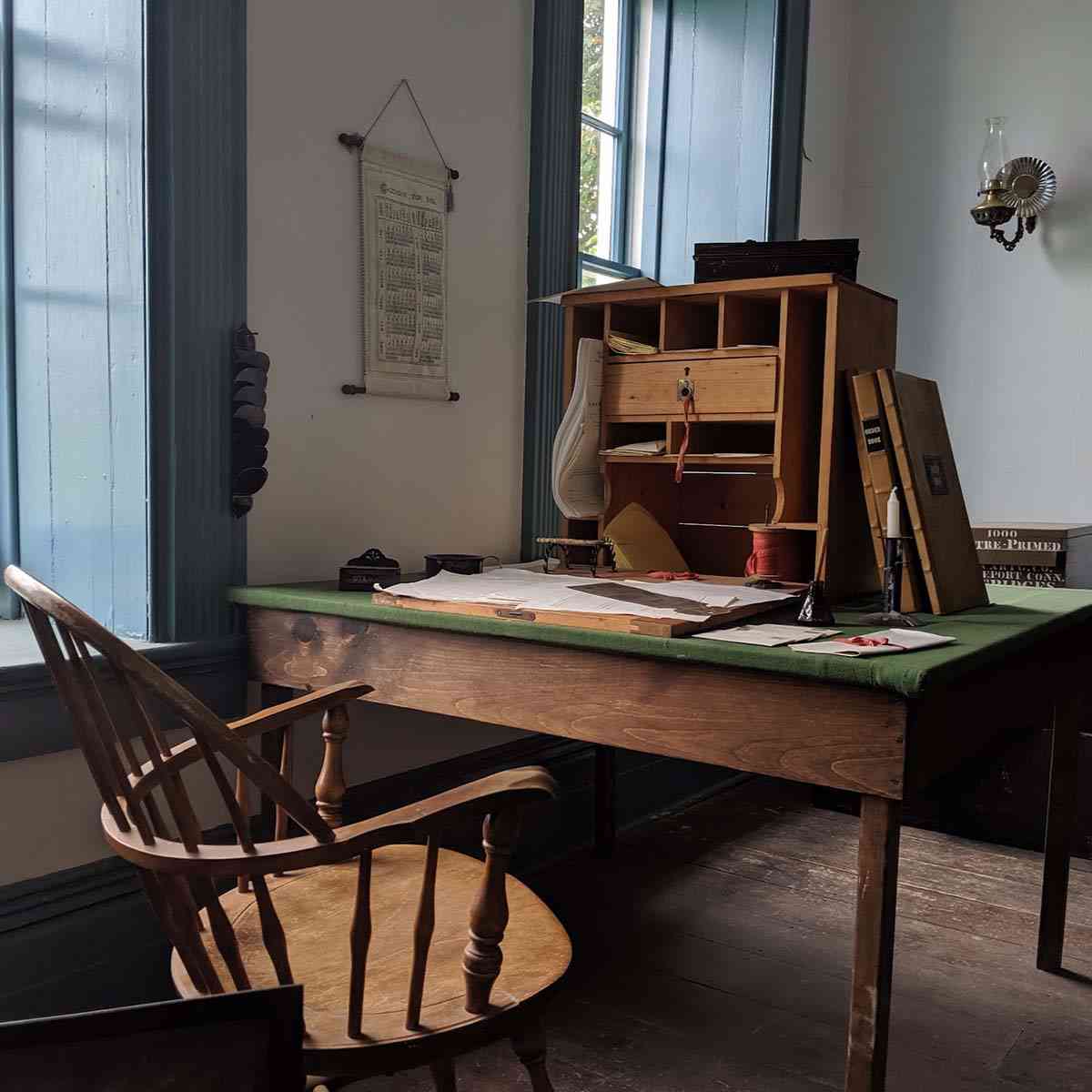
Enter through the fort’s narrow passageway to reach the parade ground, where historic buildings stand within the earthworks. Exhibits, period rooms, and videos introduce the people who lived and worked here. Depending on what is open during your visit, you may explore guardhouses, enlisted men’s barracks, a powder magazine, a storehouse, an Army office building, underground stone casemates, and galleries built into the walls.
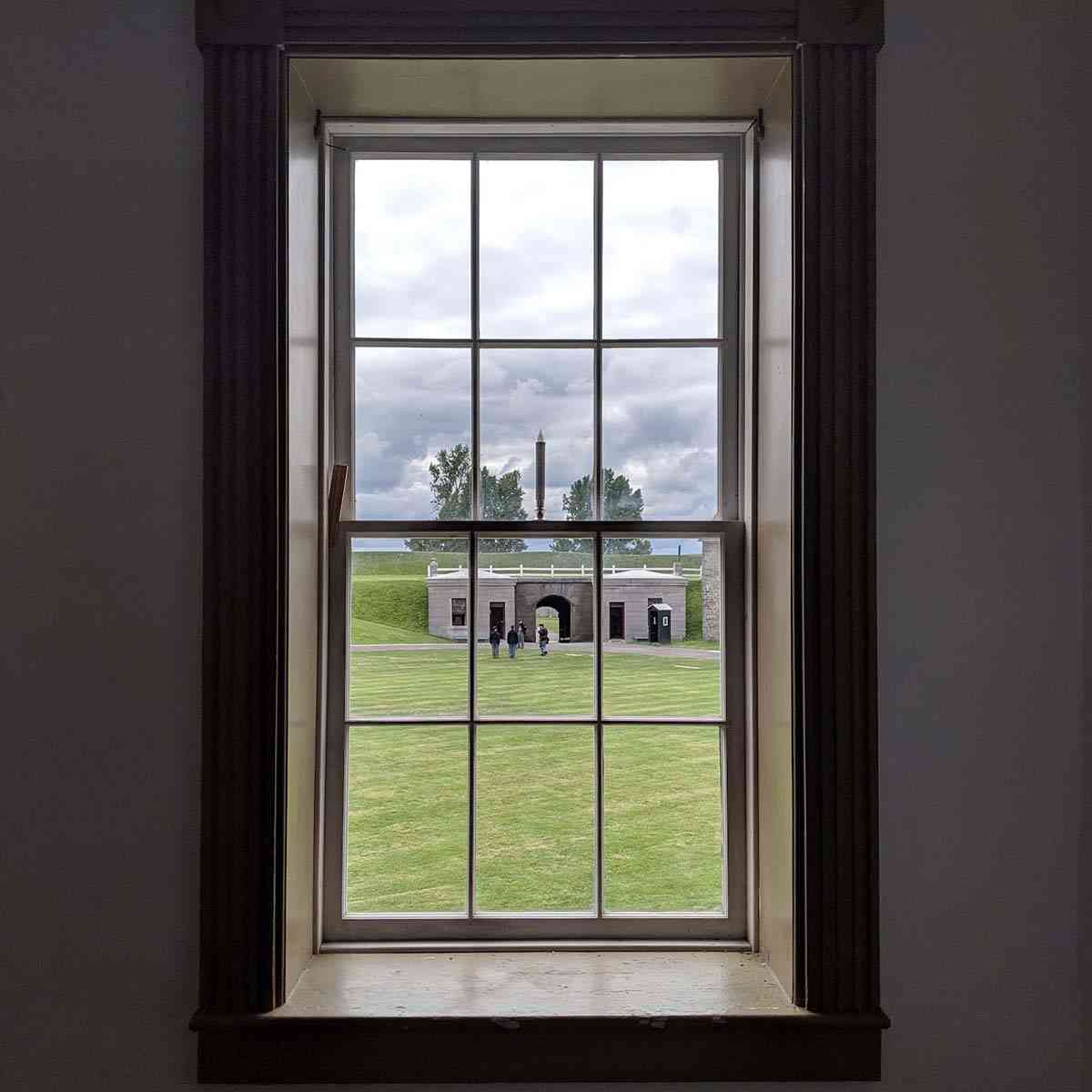
Walking the ramparts adds an important layer to the experience. Views of Lake Ontario, the Oswego River, and the harbor make the fort’s strategic position easier to understand. The exposed location can also be windy and noticeably cooler than inland areas, even on a pleasant day.
The grounds also include picnic areas and the Fort Ontario Post Cemetery, where 77 officers, soldiers, women, and children are buried.

A Strategic Place on Lake Ontario
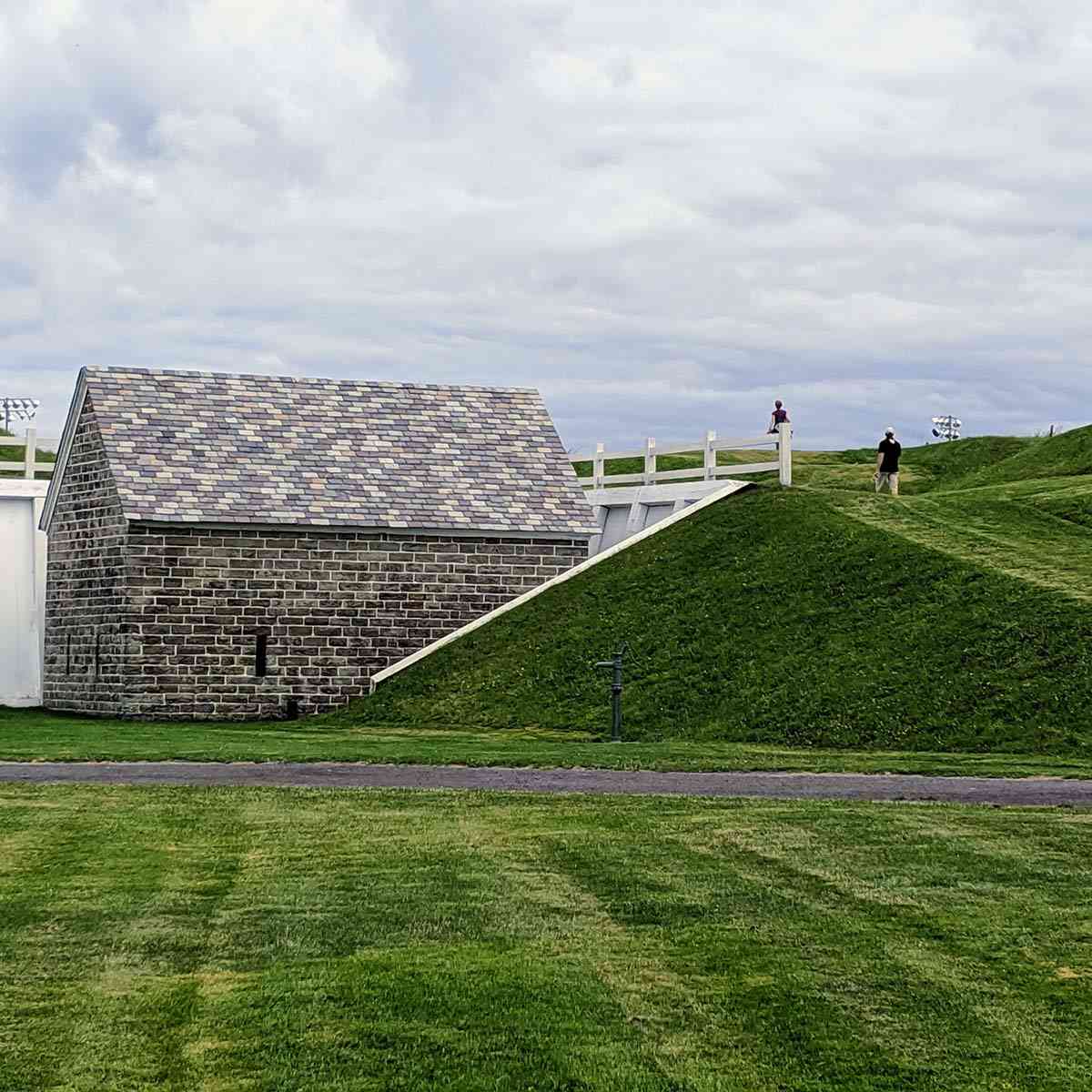
British forces built the first Fort Ontario here in 1755 during the French and Indian War. French troops captured and destroyed it the following year. A succession of fortifications occupied the high ground above the river during the American Revolution and the War of 1812.
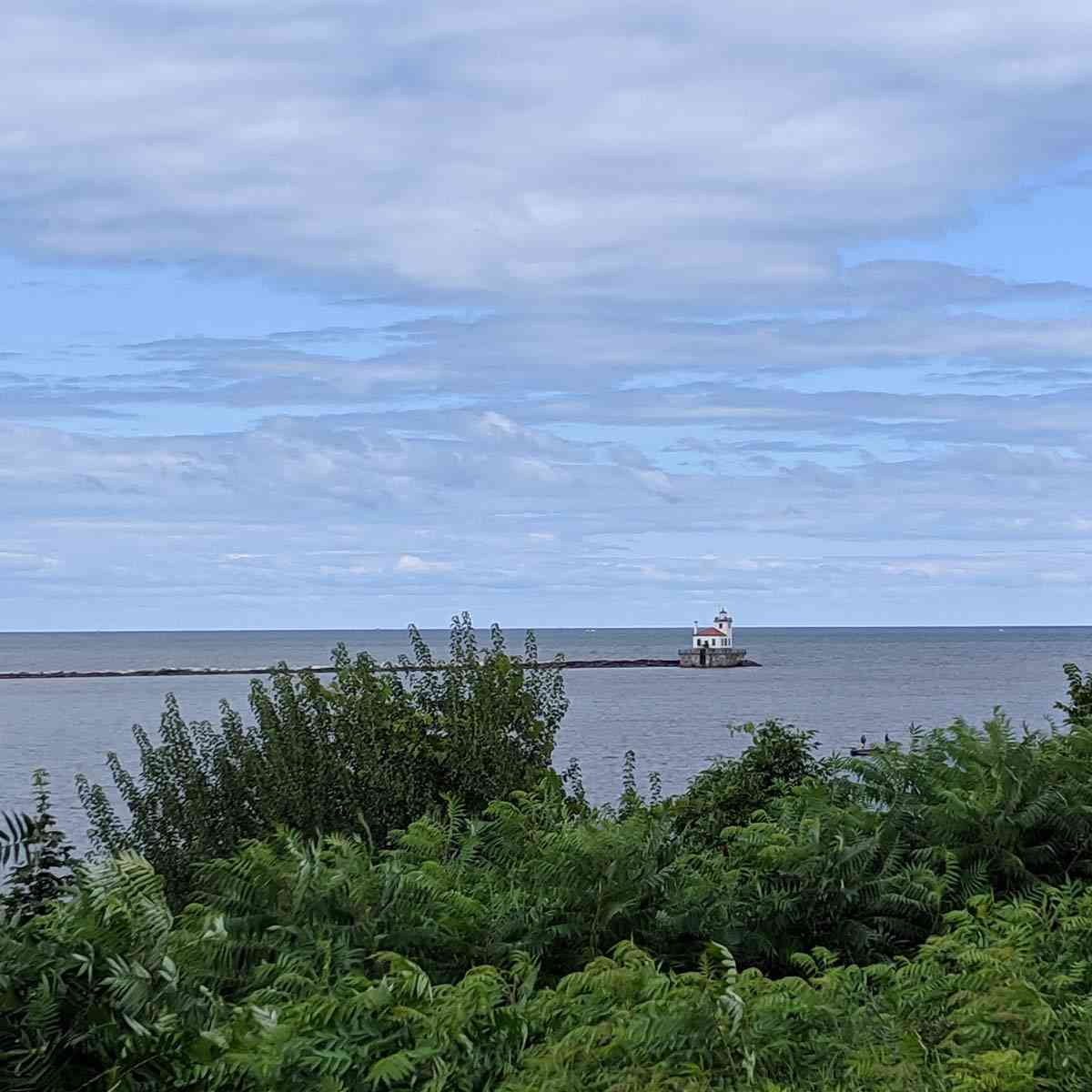
Control of this location meant control of a route connecting Lake Ontario with the Oswego River and inland waterways. The fort served at different times as a defensive position, supply post, staging ground, military hospital, training site, and Army installation. The present fort was constructed in the early 1840s and improved between the Civil War era and the 1870s.
Fort Ontario remained in military use through World War II. After the property transferred to New York State in 1946, some buildings housed World War II veterans and their families until 1953. Fort Ontario opened as a state historic site in 1949.
Safe Haven Holocaust Refugee Shelter Museum
From August 1944 through February 1946, Fort Ontario served as the only emergency shelter established in the United States for refugees from the Holocaust. The 982 refugees who arrived in Oswego came from 18 countries; most were Jewish.
Although they had escaped war-torn Europe, the refugees arrived to find the shelter enclosed by a fence topped with barbed wire. They had entered the country as guests of President Franklin D. Roosevelt and had signed an agreement to return to Europe after the war. Their future in the United States remained uncertain for much of their time in Oswego.
Relationships formed across the fence as local residents met the newcomers and learned their stories. Oswegonians joined religious organizations, elected officials, and other advocates in pressing the federal government to allow the refugees to remain. In December 1945, President Harry S. Truman issued a directive that allowed them to apply for admission under existing immigration quotas.
The Safe Haven Holocaust Refugee Shelter Museum occupies a surviving building from the shelter complex, a short walk or drive from the fort entrance. Its photographs, documents, artifacts, and personal accounts place the refugees’ experiences at the center of the story.
Fort Ontario and Safe Haven are separate museums that operate independently. Visit each museum’s official website for current hours, admission, and visitor information.
Plan Your Visit
Official website: New York State Parks
Visit the New York State Parks website for current hours, admission, programs, accessibility information, and other planning details.
Rochester, delivered
A weekly Substack newsletter, with periodic essays exploring behind-the-scenes work and reflections on traveling close to home. While the content is free, paid subscriptions support my ongoing research and writing.
Make a Day of It in Oswego
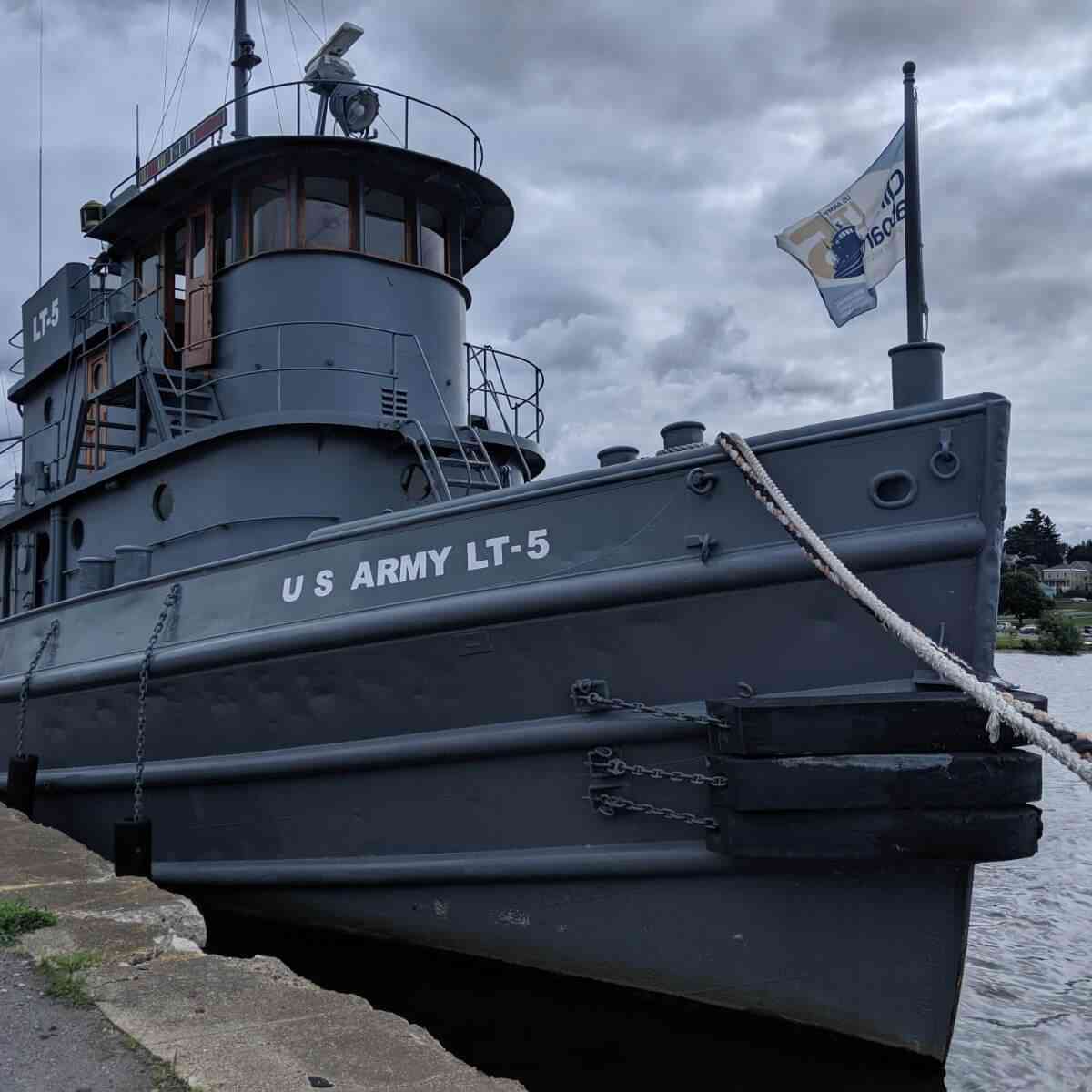

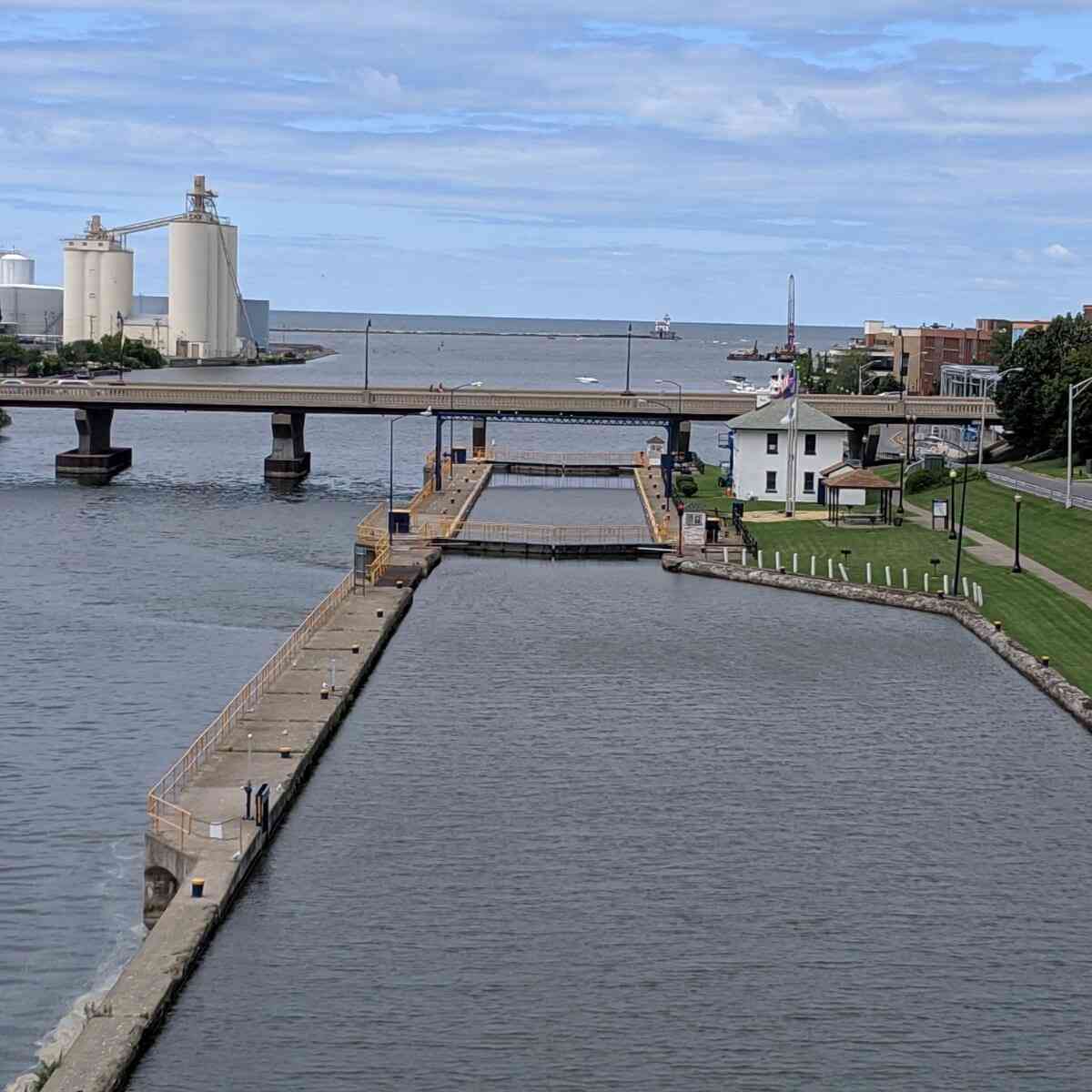
Fort Ontario overlooks Oswego Harbor, making it easy to connect the site’s military history with the city’s maritime setting. Consider pairing Fort Ontario with a visit to the Safe Haven museum, a walk along the river, or a shoreline view of the Oswego West Pierhead Lighthouse. The H. Lee White Maritime Museum, located across the river in the Historic Maritime District, offers another perspective on the port, shipwrecks, and commerce on Lake Ontario.
Explore More

Top 10 Historical Field Trips Around Rochester, New York
Explore 10 historical field trips around Rochester, from Indigenous sites to abolition landmarks and innovation and engineering marvels.
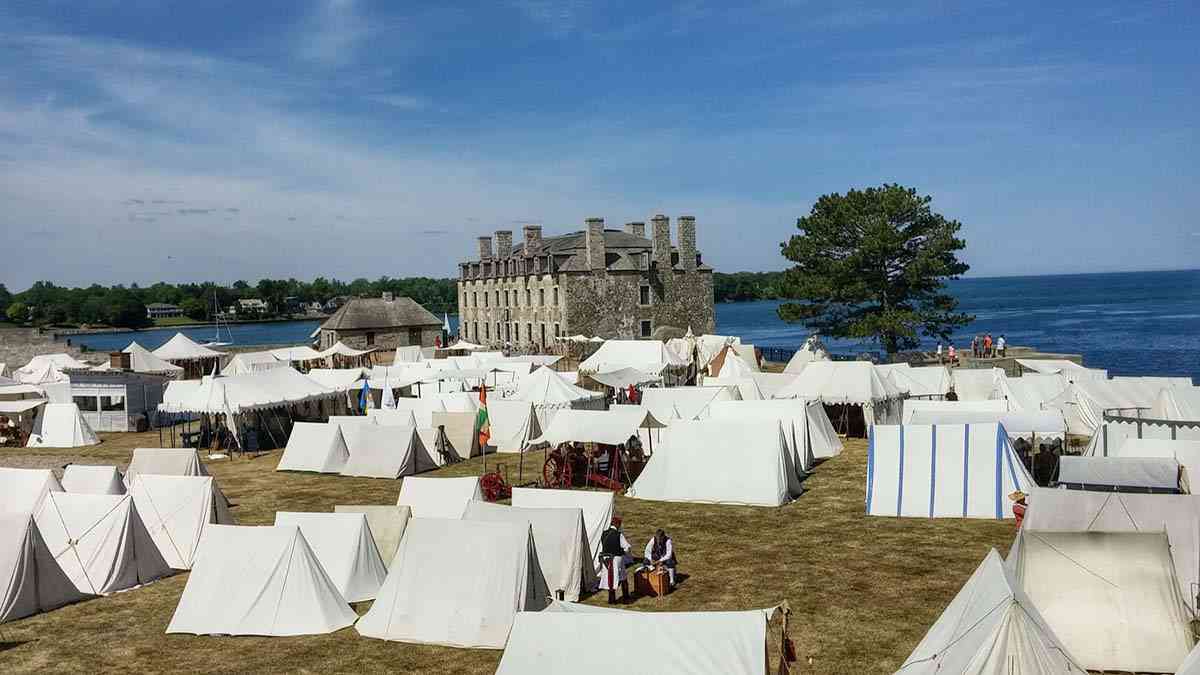
Old Fort Niagara
Old Fort Niagara served as a strategic stronghold for 300 years during the French & Indian Wars, War of 1812, Revolutionary War, and Civil War.

9 Lake Ontario Lighthouses in New York
These lighthouses along Lake Ontario in New York are within a two-hour drive of Rochester. And where there's a light there's a sweeping view!
What is your favorite part of Fort Ontario in Oswego?
I’d love to hear from you—please reach out and share your thoughts and experiences.


Help Support My Work
If my work has helped you explore and appreciate the Rochester area, please consider subscribing to Substack as a paid member. You’ll receive an email whenever I publish new content and can connect with a growing community of local explorers.
See you out there!
Debi
Enjoy the Journey Together!


