
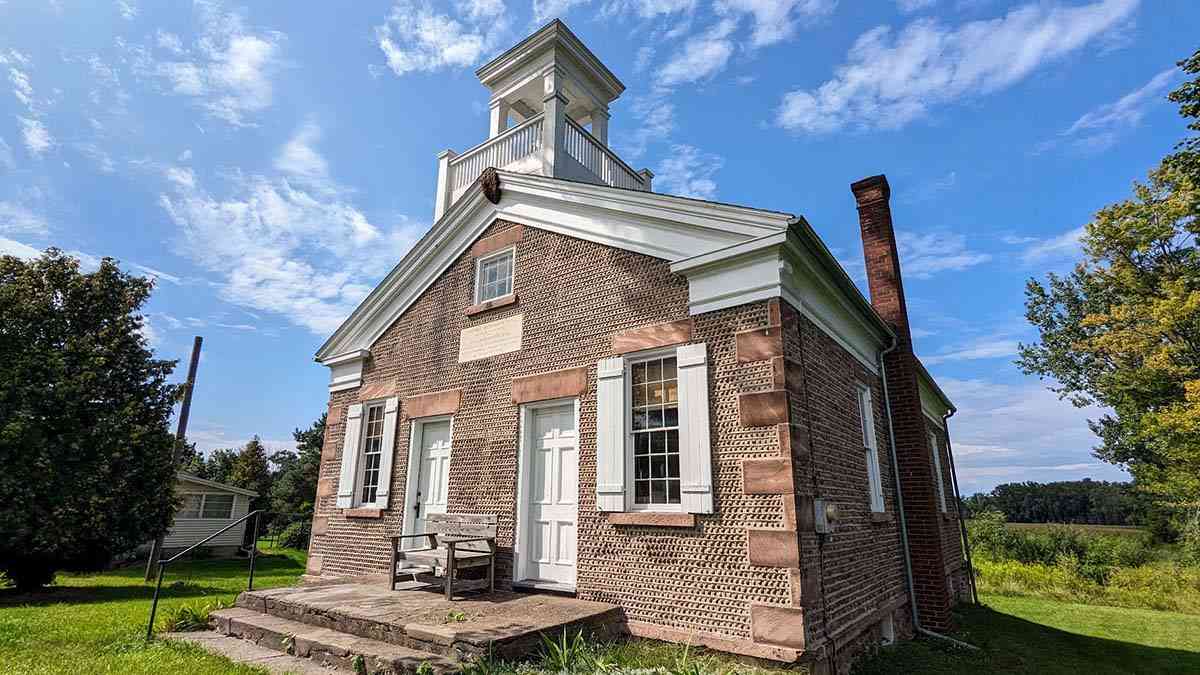
Tucked into the quiet hamlet of Childs in western Orleans County, the Cobblestone Museum preserves one of the largest and most significant collections of cobblestone buildings in the United States. Constructed between the 1830s and 1860s using lake-washed stones gathered from the shores of Lake Ontario, these carefully laid walls reflect a distinctly regional craft perfected by local masons during a brief but remarkable building boom in the mid-19th century.
Many of these buildings stand along historic Ridge Road, which follows the ancient shoreline of glacial Lake Iroquois. The same prehistoric lake that formed this ridge also left behind the rounded stones masons later used to create the region’s distinctive cobblestone walls.
Located at the intersection of Ridge Road (NY-104) and NY-98, the museum functions as an open-air historic village. The cobblestone church—now the visitor center—and the Ward House anchor the northeast corner, while the cobblestone schoolhouse stands a short distance east along Ridge Road. Across the street, several non-cobblestone period buildings—including the Vagg House, a blacksmith shop, harness shop, print shop, and Farmer’s Hall—round out the story of daily life in 19th-century rural New York.

What began as a single historic structure has grown into a complex of more than a dozen 19th-century buildings, including homes, a schoolhouse, and the striking Cobblestone Universalist Church. Together, they tell the story of early settlers, skilled masons, and a rural community shaped by faith, farming, and ingenuity.

Across Ridge Road, additional historic buildings expand the story: Farmer’s Hall, the Vagg House, a harness shop, a blacksmith shop, a print shop, and other period structures that round out daily life in 19th-century rural New York. Together, both sides of the road create a walkable historic village rather than a single preserved building.
What You’ll Experience

Volunteer guides share stories about cobblestone craftsmanship, the rise of canal-era prosperity, and the families who built and sustained this small crossroads community.

Step inside furnished rooms that evoke daily life in the mid-1800s—wood cookstoves, rope beds, handwritten ledgers, and worn classroom desks.
Rochester, delivered
A weekly Substack newsletter, with periodic essays exploring behind-the-scenes work and reflections on traveling close to home. While the content is free, paid subscriptions support my ongoing research and writing.
Good to Know

- Location: Ridge Road in Childs, just west of Albion
- Season: Typically open May through October (check ahead for current hours and special events)
- Time Needed: 1–2 hours to explore several buildings at an unhurried pace
- Best For: History lovers, architecture enthusiasts, photographers, and anyone curious about regional identity
- Official Website: cobblestonemuseum.org
- Driving Tours: The museum maintains maps and resources for exploring cobblestone buildings across the region, including a self-guided driving tour and an Orleans County “Cobblestone Trail” featuring nearly 100 sites visible from public roads.
Why It’s Worth the Trip
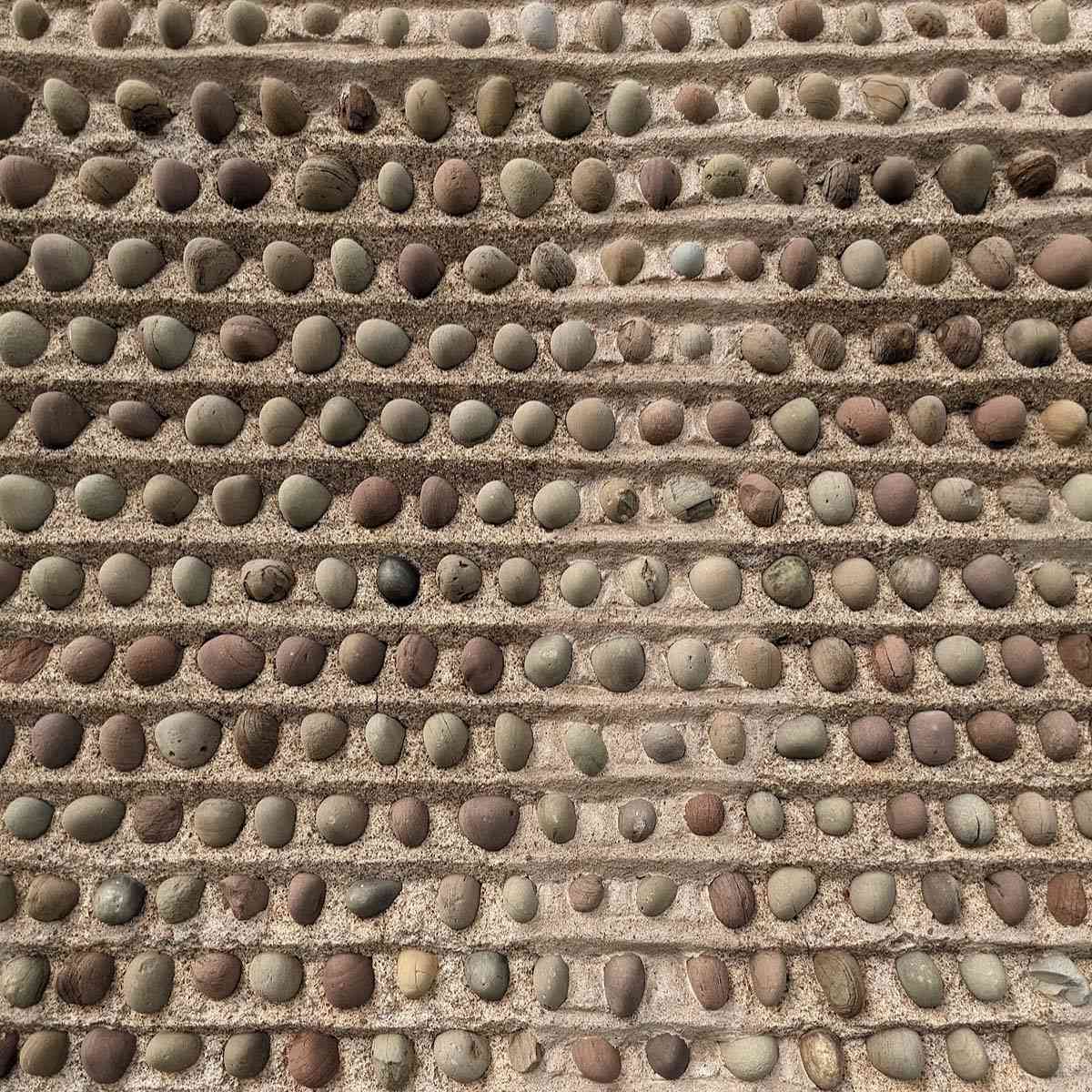
Cobblestone architecture is rare—and almost entirely regional. Roughly 700 cobblestone buildings were constructed in the United States, and an estimated 90% still survive today. The vast majority are found in western and central New York. These distinctive cobblestone buildings in New York State were constructed primarily between 1825 and 1860 using glacial stones gathered from the shores of Lake Ontario. Seeing them gathered in one preserved setting offers context you cannot get from a single roadside farmhouse.
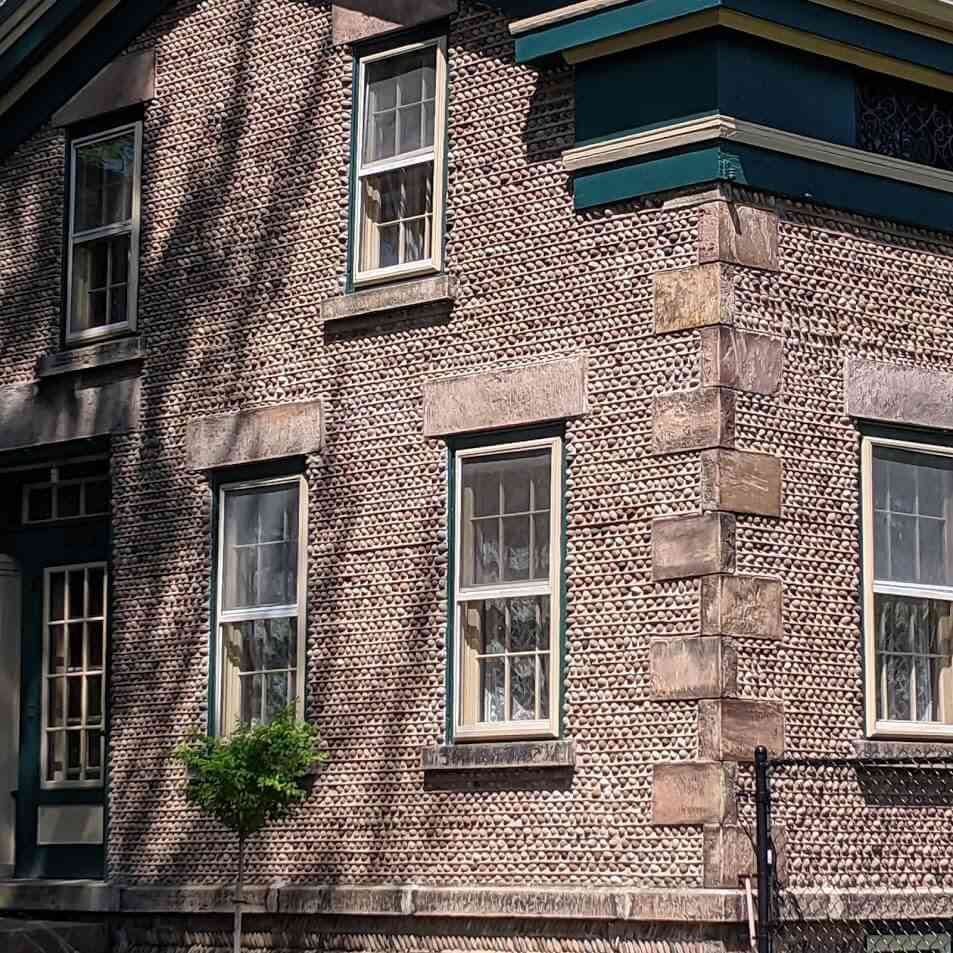
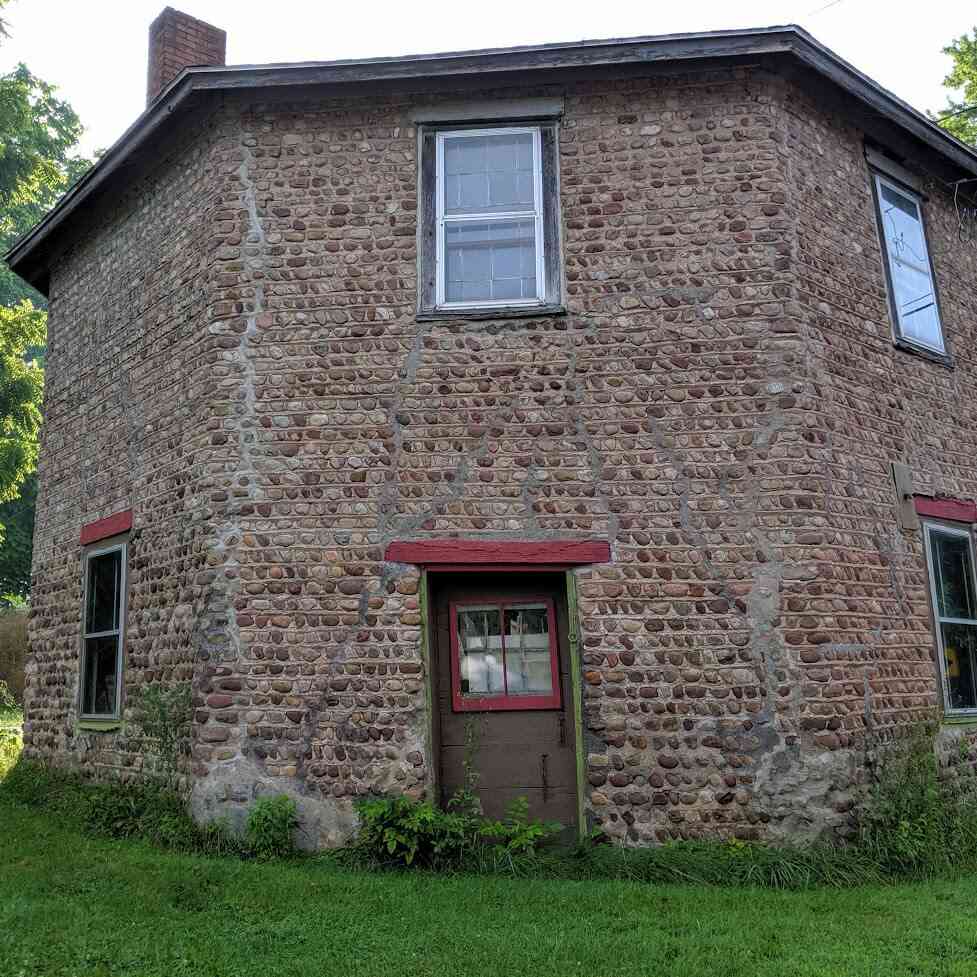
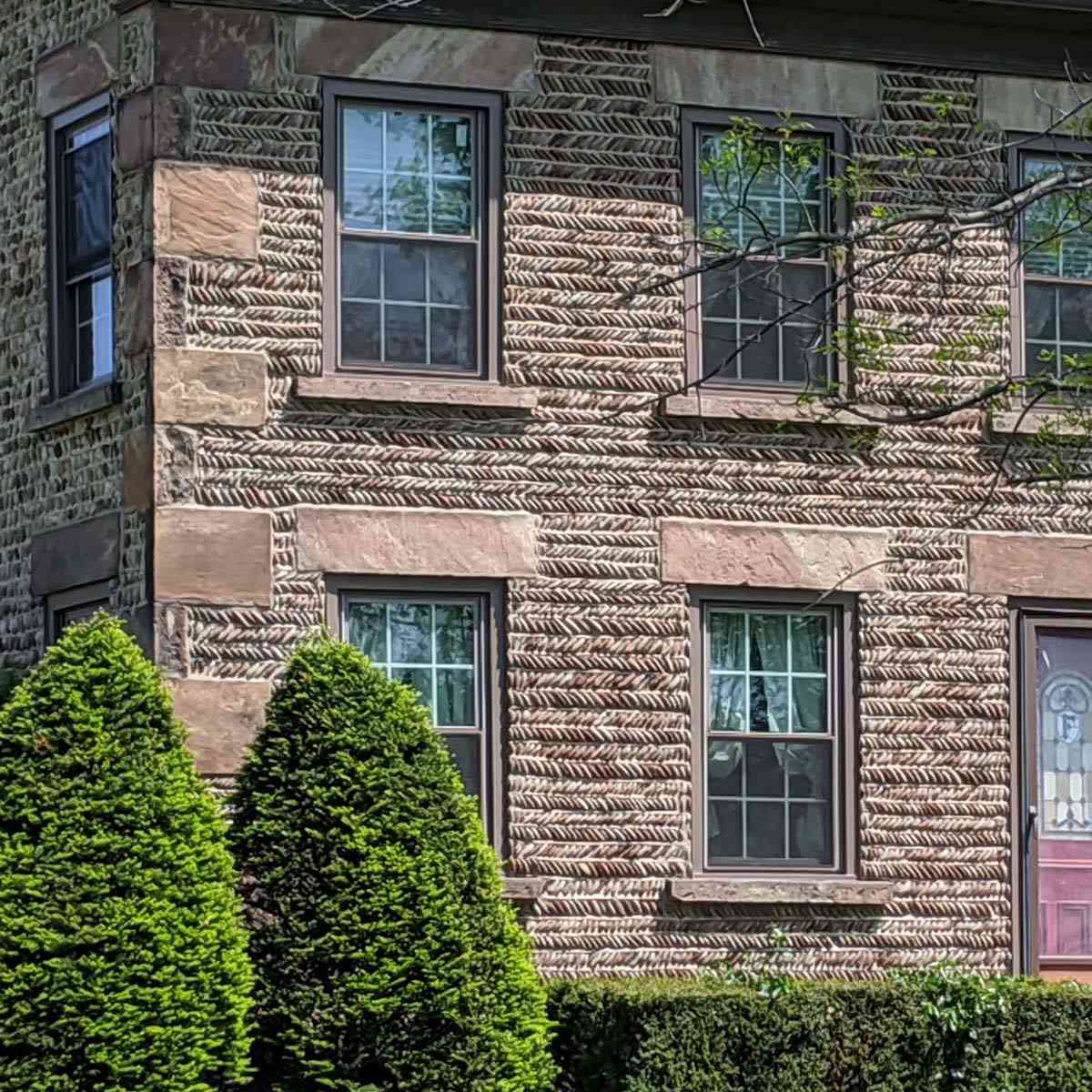
The craftsmanship alone is worth the visit. Notice how each rounded stone is hand-selected and carefully mortared into symmetrical rows. No two walls are exactly alike.

Pair It With

- A scenic drive along historic Ridge Road
- Exploring nearby Albion’s courthouse square
- A stop at farm stands or orchards in season
Insider Tip
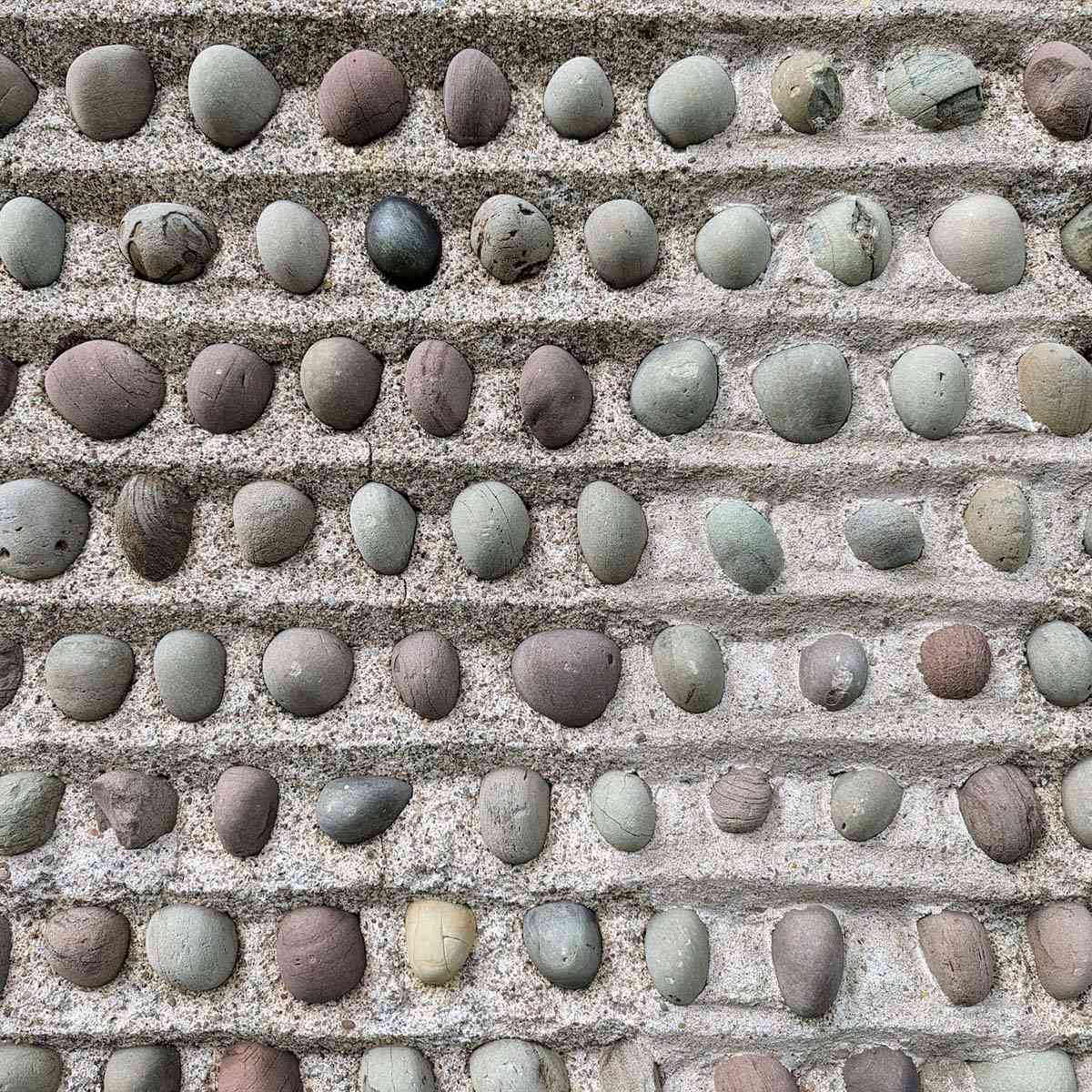
Look closely at the stonework on each building. Early masons experimented with size, spacing, and mortar techniques, creating distinctive patterns that make every wall slightly different.
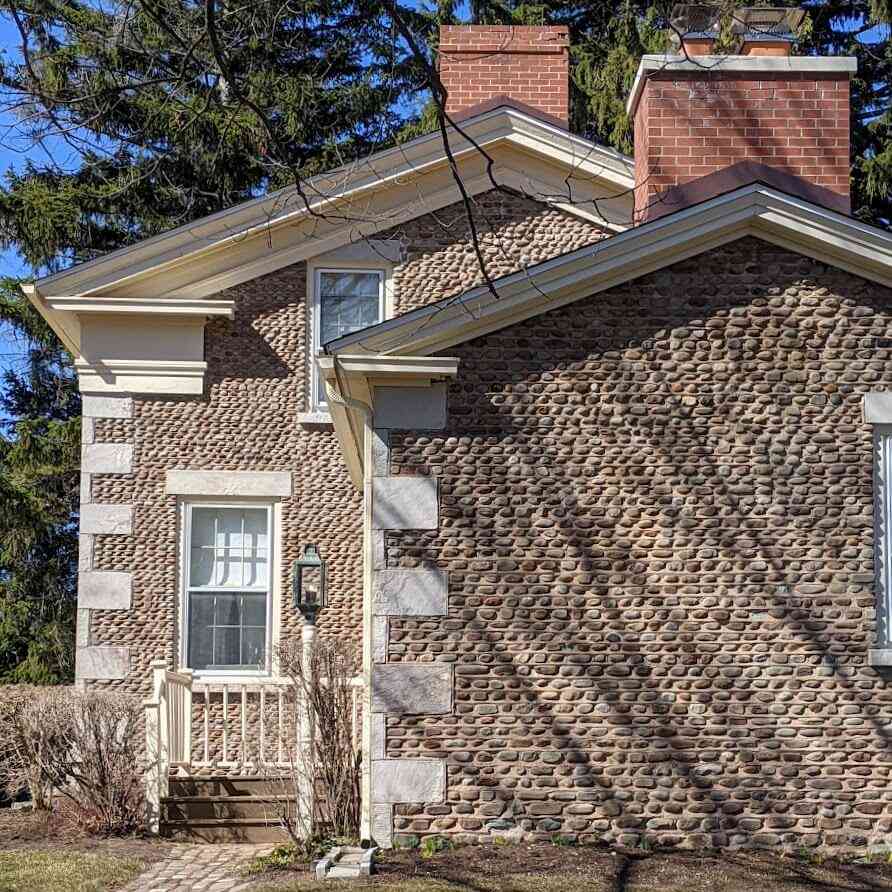
Once you begin noticing these details, you may find yourself spotting cobblestone homes across western and central New York. Wayne County contains the largest number of surviving cobblestone houses, while neighboring Orleans County holds one of the highest concentrations.
The Cobblestone Museum even sponsors a self-guided Cobblestone Trail through Orleans County, highlighting nearly 100 surviving structures visible from public roads—an easy way to extend your visit into a scenic architectural driving tour.
Here are a few of my favorites from around the region:
Explore More

50 Hidden Places Around Rochester
From secret gardens to enchanting waterfalls, exploring hidden places around the Rochester area is the ultimate way to add some spice to your travel experiences.

132 Things to Do Around Rochester, NY
We've pulled together a list of fun and unique things to do around Rochester, NY, within two hours of home—perfect for quick getaways.
Hidden Places Around
Rochester, New York
Photo Book
Learn More →
Hidden Places Around
Rochester, New York
Microguide
Learn More →
Have you been to the Cobblestone Museum?
I’d love to hear from you—please share your thoughts and experiences in the comments below.


Help Support My Work
People often ask if I get free access to the places I visit. The answer is no—unless I’m invited to a special preview or offered behind-the-scenes access through my media role. Most of the time, I don’t even mention Day Trips Around Rochester, New York when I visit a place. I want to have the same experience you would.
I create and share this content because it brings me joy—and I hope it adds value to your adventures, too.
If my work has helped you explore and appreciate the Rochester area, please consider becoming a paid subscriber on Substack. You’ll receive an email whenever I publish new content and have the chance to connect with a growing community of local explorers.
Thank you for supporting my efforts to keep producing meaningful and helpful content.
Thank you!
Debi
Enjoy the Journey Together!


