
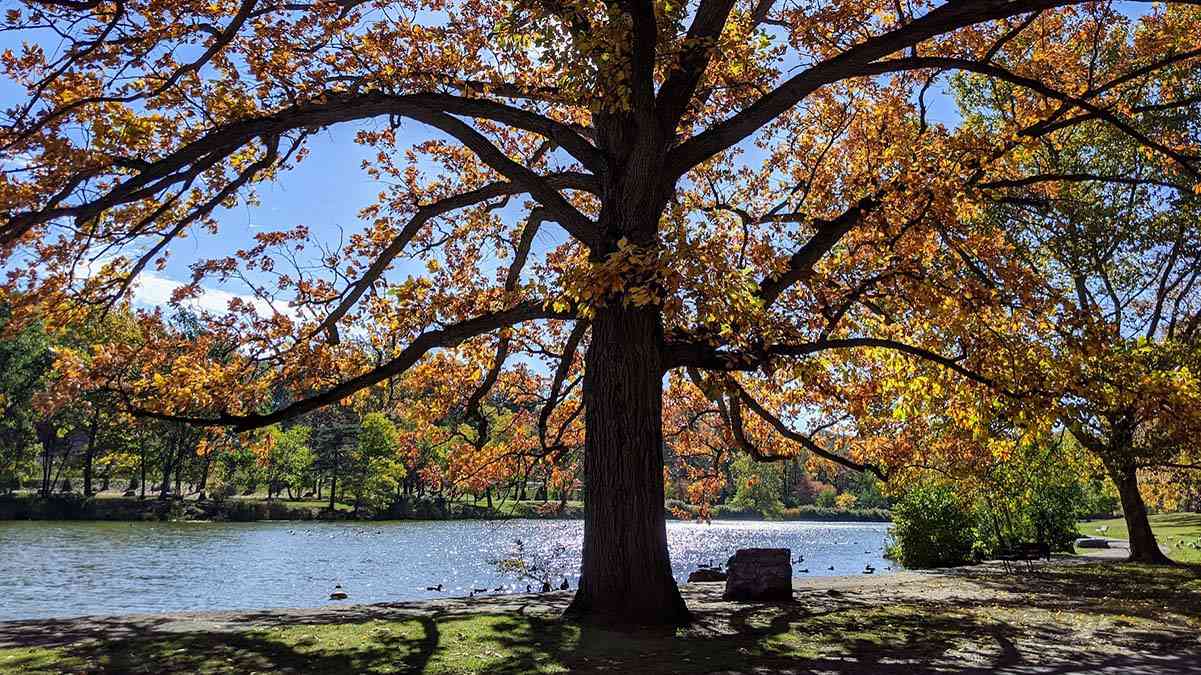
Monroe County’s park system protects more than 12,000 acres of forests, wetlands, waterways, gardens, historic landscapes, and places for year-round recreation. Together, the parks reveal how glaciers shaped the land, how the Genesee River and Erie Canal influenced the region, and how generations of residents have chosen to preserve these places for public use.
The system reaches its 100th anniversary in 2026. Monroe County began assuming direct responsibility for local parkland in 1926, starting with Ellison Park, its first official county park. The centennial offers an opportunity to revisit familiar places, explore parks in other parts of the county, and learn more about the landscapes and stories they hold.
Most Monroe County parks are free to visit. Fees apply to select amenities, rentals, programs, and admission to Seneca Park Zoo and Lamberton Conservatory. Use the official Monroe County Parks website linked with each listing to check current maps, hours, reservations, seasonal access, permitted activities, and alerts before you go.
The Centennial Begins at Ellison Park
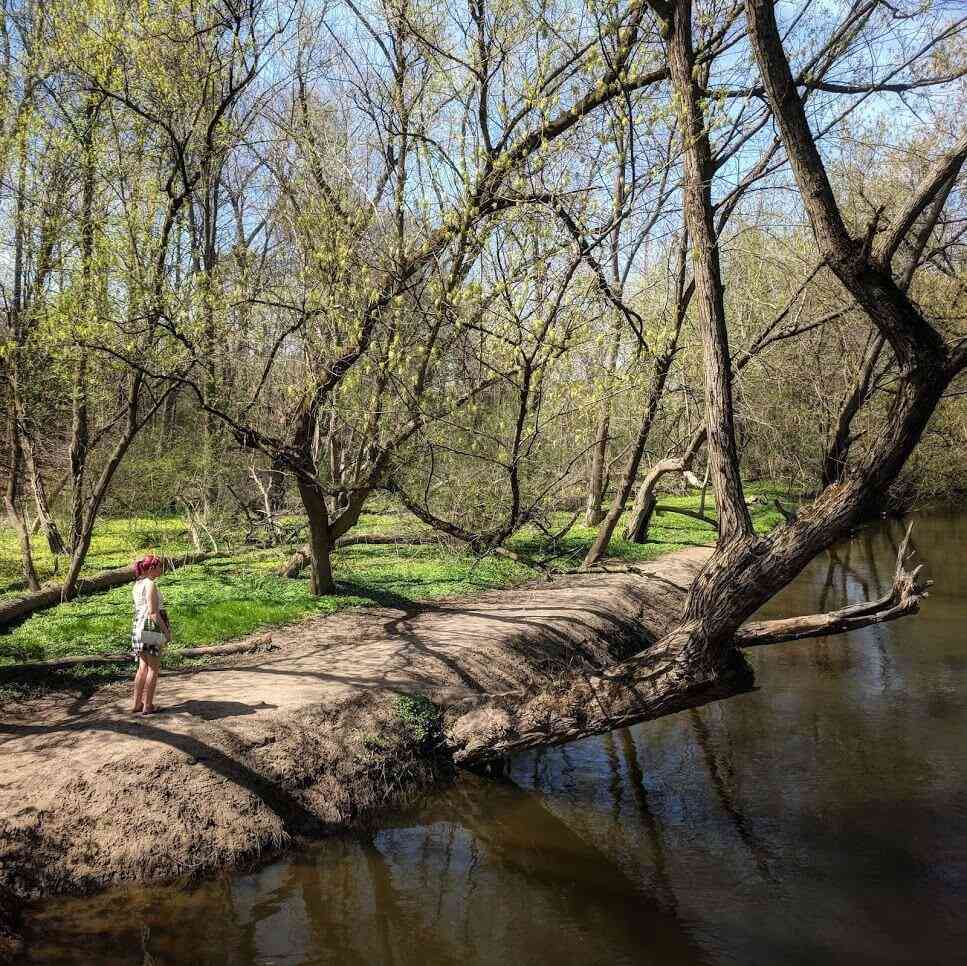
Ellison Park came into being in December 1926, when Monroe County accepted approximately 200 acres from Frank and Katherine Ellison in memory of Frank’s father, Nathaniel. It became the county’s first official park and has since grown to 447 acres along Irondequoit Creek.
The landscape changes quickly from steep wooded slopes to broad meadows, wetlands, and floodplain forest. Five color-blazed trails cross the valley, while a seasonal launch near Circle Shelter provides access to Irondequoit Creek for car-top, nonmotorized boats. The park also includes athletic fields, picnic areas, a playground, an off-leash dog park, seasonal disc golf, and designated sledding hills.
Ellison also preserves layers of regional history. A log-blockhouse replica near North Landing Road marks the presumed site of Fort Schuyler, a colonial trading post established in 1721. Nearby markers interpret Indian Landing, part of a portage route used by the Haudenosaunee between Irondequoit Bay and the Genesee River valley.

Explore Monroe County Parks
Abraham Lincoln Park
Formerly known as Irondequoit Bay Park East, this wooded park was renamed in 2009 to commemorate the 200th anniversary of Abraham Lincoln’s birth. Its color-blazed trails cross steep ravines and wooded slopes overlooking Irondequoit Bay. The three-mile out-and-back white trail provides the park’s longest route and connects with several shorter loops.
Near the main recreation area, a log-cabin replica, playground, and nature play area offer a gentler contrast to the rugged trail system.

Black Creek Park
Black Creek Park spreads across more than 1,500 acres in Chili, making it one of the largest parks in the county system. Trails pass through woodlands, wetlands, meadows, and areas where mud can persist well beyond spring. A short walk around the pond offers an easy introduction, while longer color-blazed routes reach quieter sections of the park.
A seasonal car-top boat launch provides access to Black Creek for paddling and fishing. In winter, the park’s designated hill near Woodside Lodge is a popular place for sledding when conditions allow.

Beikirch Park
In 2021, the southern portion of Highland Park was renamed for Gary Beikirch, a Vietnam War veteran and Medal of Honor recipient. This contemplative landscape brings together the Greater Rochester Vietnam Veterans Memorial, AIDS Remembrance Garden, Crime Victims Memorial, Workers’ Memorial, and War on Terror Memorial.
Beikirch Park is best understood as part of the broader Highland Park landscape, where gardens, memorials, institutions, and Olmsted-designed parkland meet along South Avenue.

Churchville Park
Black Creek winds through Churchville Park, where a seasonal launch provides access for car-top, nonmotorized boats. The park’s relatively level landscape also supports a golf course, disc golf, athletic fields, courts, playgrounds, picnic areas, and an outdoor ice-skating rink when winter conditions cooperate.
In 2025, Monroe County completed its first ADA-accessible canoe and kayak launch here, creating a more inclusive way to reach the creek.
Devil’s Cove Park
At 18 acres, Devil’s Cove is the smallest park in the county system. Located along Irondequoit Bay, it remains natural and undeveloped to protect shoreline, wetlands, and wildlife habitat within an ecologically significant watershed. There are no formal recreational facilities, making preservation rather than active use the defining purpose of this park.

Durand Eastman Park
Durand Eastman Park protects nearly 1,000 acres of steep glacial hills, wooded ravines, interior lakes, and Lake Ontario shoreline. Gifted to the city by Dr. Henry Durand and George Eastman in 1907, the park feels remarkably secluded despite its proximity to residential neighborhoods.
Trails circle Durand and Eastman Lakes and climb through hardwood forest, while the arboretum brings together native and introduced trees in a landscape designed by Bernard H. Slavin. Across Lakeshore Boulevard, a paved route and wetland boardwalk follow part of the park’s 5,000 feet of waterfront. The City of Rochester operates a supervised swimming area at Durand Beach during the summer when staffing and water conditions permit.
Genesee Valley Park
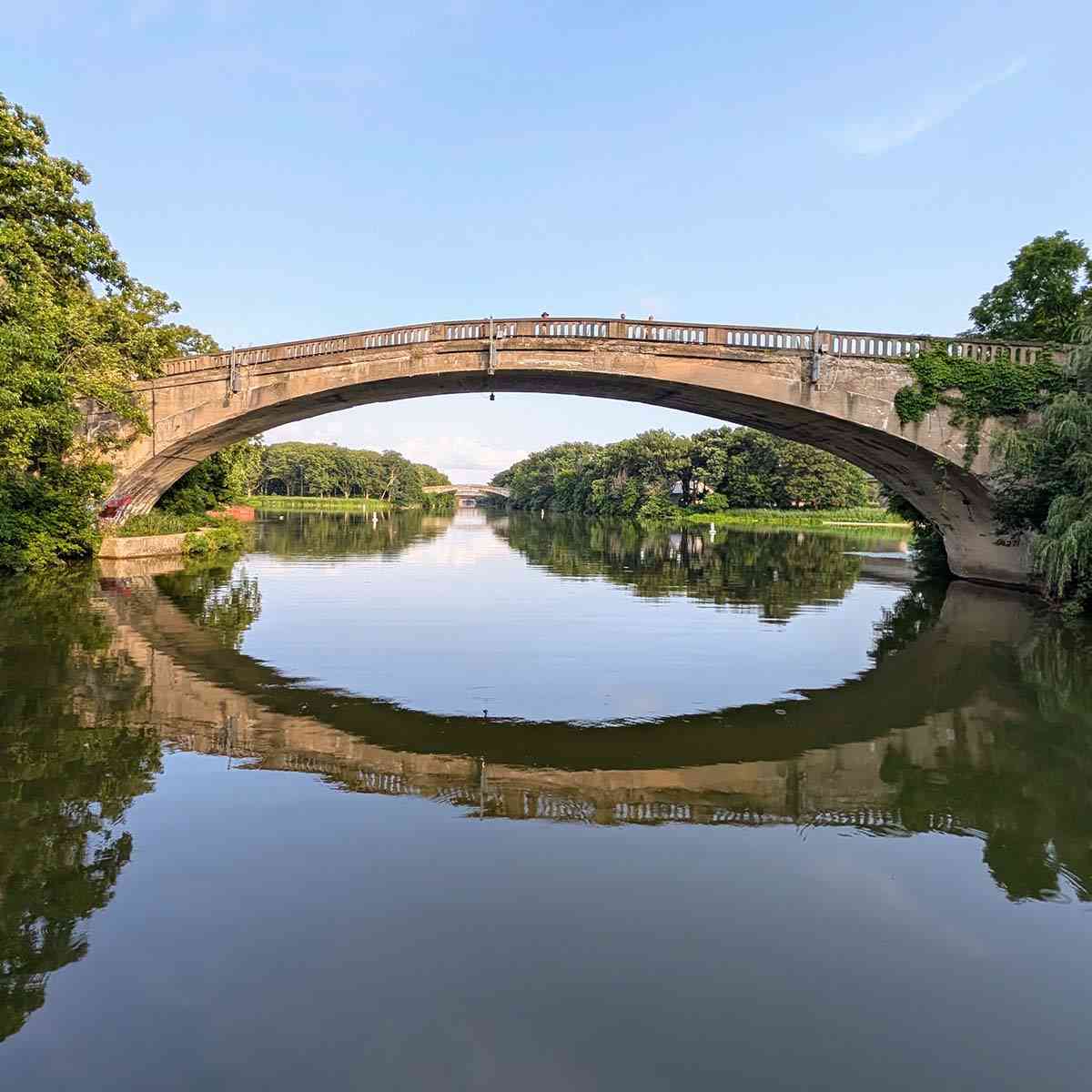
Designed by Frederick Law Olmsted Sr. beginning in 1888, Genesee Valley Park offers a spacious riverside landscape of open lawns, mature trees, winding paths, and scenic waterways. Its most distinctive feature is the water crossroads where the Erie Canal meets the Genesee River. Graceful arched bridges provide elevated views, while rowing crews, kayakers, and canal boats animate the water below.
The Erie Canalway Trail, Genesee Riverway Trail, and Genesee Valley Greenway meet here, making the park useful for anything from a short waterfront walk to a much longer bicycle ride. The Genesee Waterways Center supports rowing and paddling from the river’s east bank.
Greece Canal Park
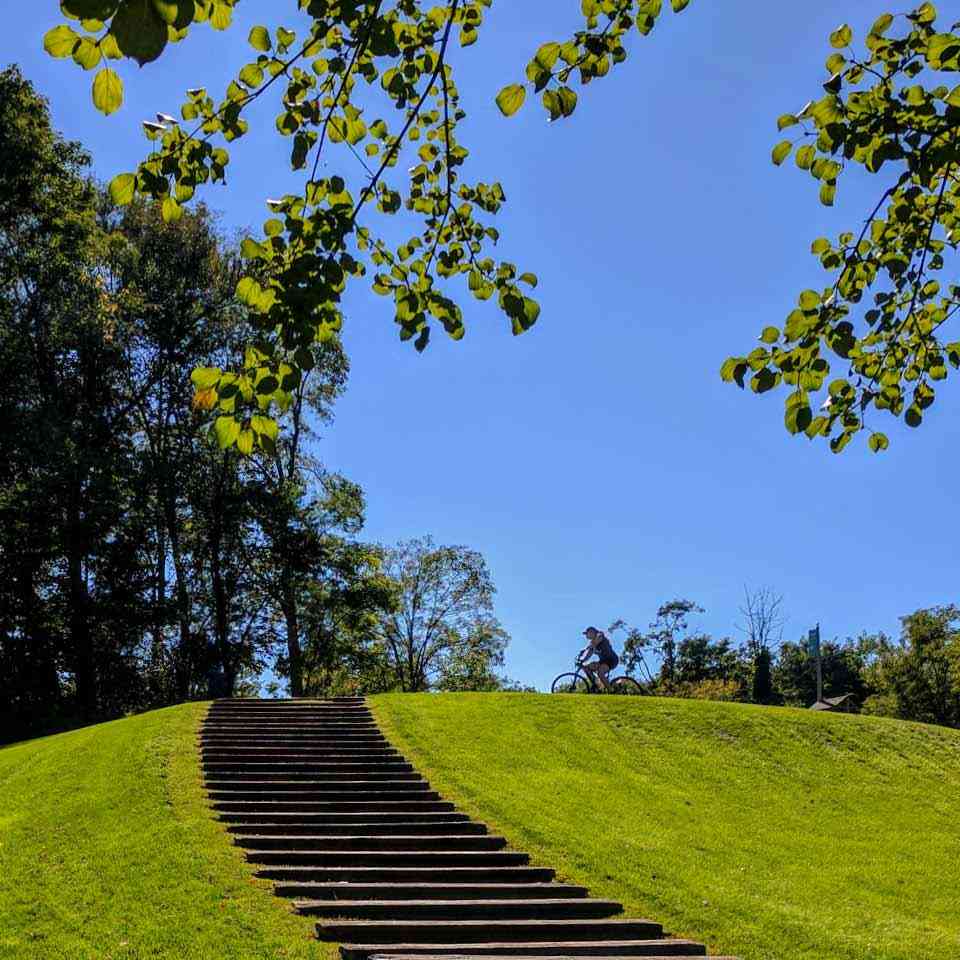
Greece Canal Park covers 577 acres beside the Erie Canal. Four mostly level, color-blazed trails cross woodlands and open areas, while the Erie Canalway Trail provides a longer east–west route for walking and bicycling.
The park also includes athletic fields, courts, two playgrounds, a youth camping area, rentable lodges and shelters, and an off-leash dog park. Its combination of level trails and recreation areas makes it easy to shape either a short visit or a longer outing.
Highland Park
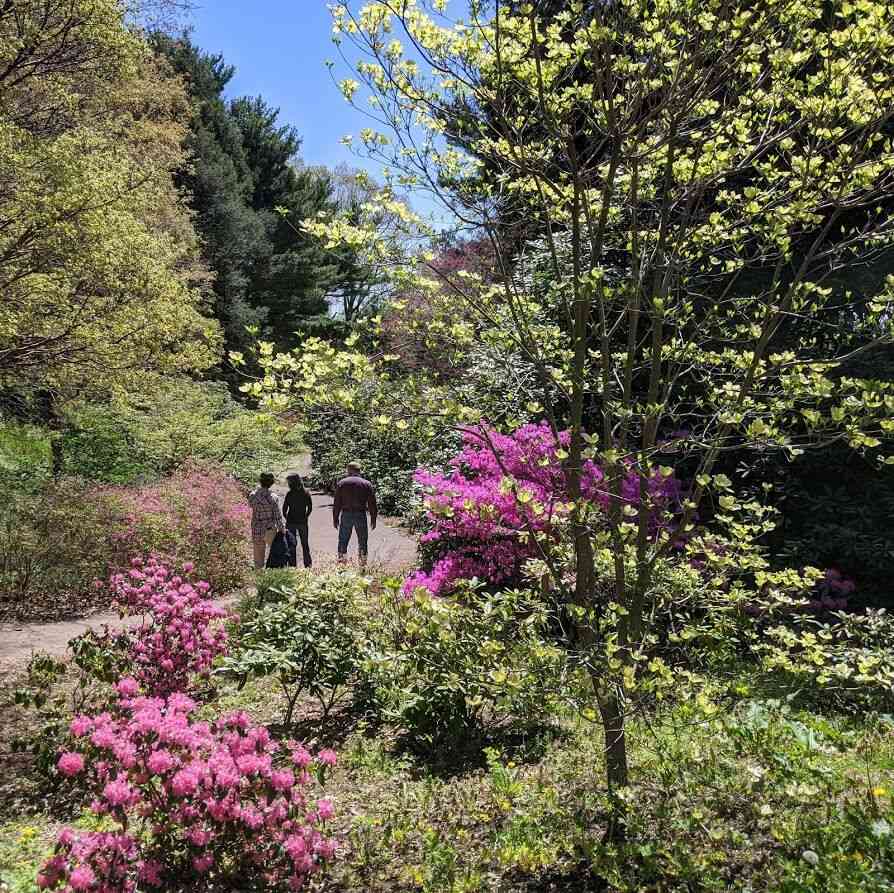
Designed by Frederick Law Olmsted, Highland Park is defined by rolling glacial hills, winding paths, and an extensive collection of trees and shrubs. Its lilacs reach peak bloom around the annual Rochester Lilac Festival in May, while magnolias, flowering cherries, rhododendrons, Japanese maples, conifers, and other plants carry seasonal interest throughout the year.
Paved and mown-grass pathways connect the lilac collection with Highland Bowl, Poet’s Garden, Lamberton Conservatory, and Warner Castle’s Sunken Garden. These places reward separate visits: the conservatory maintains tropical, desert, and seasonal displays, while the enclosed Sunken Garden, designed by Alling S. DeForest in 1930, creates an intimate formal landscape behind the castle.

Highland Park
Frederick Law Olmsted’s living landscape in Rochester, New York.
Irondequoit Bay Park West
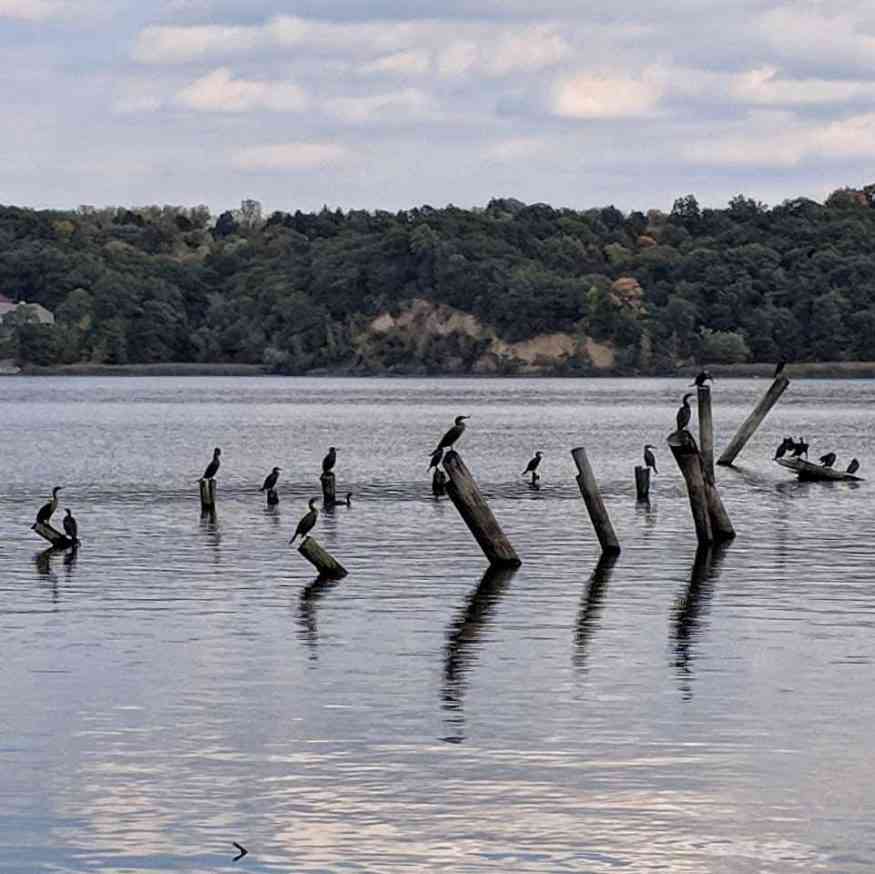
Irondequoit Bay Park West protects 147 acres along the bay’s southwestern shoreline. The mostly undeveloped park includes wooded trails, approximately 2,000 feet of waterfront, fishing access, and a seasonal launch for car-top, nonmotorized boats.
The park’s position between Empire Boulevard and the bay provides a close look at the transition from wooded slope to shoreline habitat. Check the official map before visiting, as access points and trail conditions are less obvious than at the county’s more developed parks.

Lehigh Valley Trail Park
This 15-mile linear park follows a former Lehigh Valley Railroad corridor between Mendon and Scottsville. Multiple trailheads make it possible to explore shorter sections, including Rochester Junction, where the restored depot recalls the former branch lines toward Rush and Rochester.
East of Rochester Junction, the trail connects with Great Bend Park. Traveling west leads across Honeoye Creek and eventually to a bridge over the Genesee River, where the route meets the Genesee Valley Greenway near Wadsworth Junction.

Lucien Morin Park
Lucien Morin Park occupies a steep hillside overlooking Irondequoit Creek as it approaches Irondequoit Bay. The short, level route between the small parking area and lodge offers a gentle introduction, while the woodland trails climb and descend across ravines and slopes above the wetlands.
From higher ground, look across marshes, natural levees, and winding waterways. Below, the creek supports fishing, birdwatching, and paddling through the lower Irondequoit Creek corridor.
Mendon Ponds Park
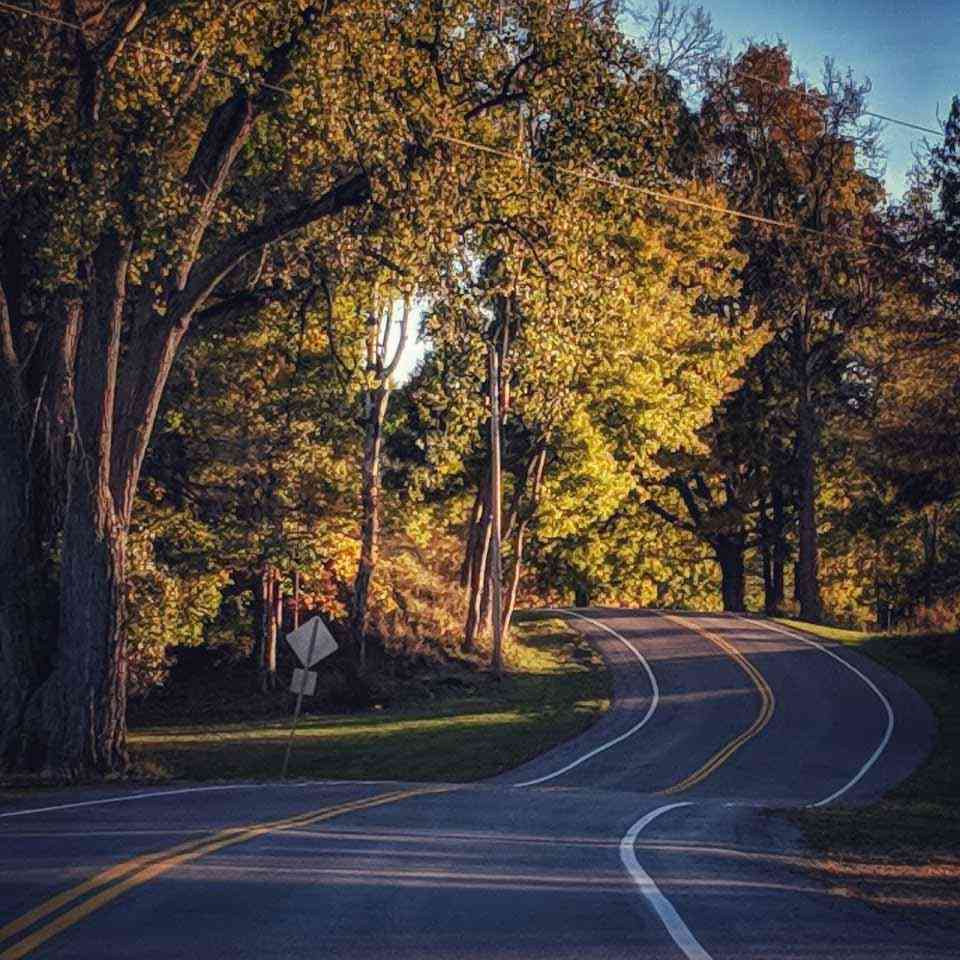
Mendon Ponds is Monroe County’s largest park, spanning 2,500 acres of woodlands, wetlands, ponds, and meadows. More than 30 miles of trails connect Hundred Acre, Deep, Round, and Quaker Ponds with rolling hills, glacial kettles, kames, eskers, and other landforms that earned the park recognition as a National Natural Landmark.
Near the nature center, Wild Wings cares for permanently injured, nonreleasable birds of prey and offers environmental education. The nearby Birdsong Fairy Trail follows a broad dirt path through the woods. During winter and early spring, chickadees, nuthatches, and tufted titmice may take black-oil sunflower seeds from an open hand. Pets, horses, and cross-country skiing are not permitted on the Birdsong and Swamp trails.
Beyond the nature center, consider walking around one of the ponds, visiting Sharon’s Sensory Garden, looking for Devil’s Bathtub, or following a longer woodland trail. Seasonal paddling, fishing, sledding, and groomed cross-country ski trails reveal different aspects of the park throughout the year.

Northampton Park
Northampton Park covers more than 900 acres in the towns of Sweden and Ogden. Trails cross woods, meadows, and creek corridors, while the park also supports athletic fields, playgrounds, horseback riding, a model-airplane field, youth camping, and seasonal downhill skiing.
Within the park, Springdale Farm combines agricultural education with meaningful work and community engagement for adults with intellectual and developmental disabilities through Heritage Christian Services. Visitors can see farm animals, walk the grounds, and learn about the farm’s work. Check current public hours before visiting. The historic Pulver House, operated separately by the Ogden Historical Society, also keeps its own limited schedule.

Oatka Creek Park
Oatka Creek Park protects 461 acres of mostly undeveloped land in Wheatland. Wide, color-blazed trails loop through hardwood forest and tall grasslands where summer wildflowers support birds and insects. The terrain has little elevation change, though grass paths and shared equestrian routes can remain muddy.
Follow the purple trail to a bridge over Oatka Creek or the black trail toward a quaking aspen grove. The creek is also known for brown trout fishing; anglers must follow New York State licensing and fishing regulations.

Ontario Beach Park
Ontario Beach Park sits at the mouth of the Genesee River in Charlotte. Its wide sandy beach, boardwalk, lawns, shelters, and long pier create several ways to experience Lake Ontario. Swimming is permitted only in the supervised area when the beach is open; check daily water and staffing conditions before making swimming the focus of a visit.
The 1905 Dentzel menagerie carousel remains one of the park’s defining features. Nearby, the original Abbott’s Frozen Custard stand has served the Charlotte neighborhood since 1926, and the 1822 Charlotte-Genesee Lighthouse preserves the history of navigation at the river’s mouth. Avoid walking on the pier when waves, wind, or ice make conditions hazardous.
Rochester, delivered
A weekly Substack newsletter, with periodic essays exploring behind-the-scenes work and reflections on traveling close to home. While the content is free, paid subscriptions support my ongoing research and writing.
Powder Mills Park
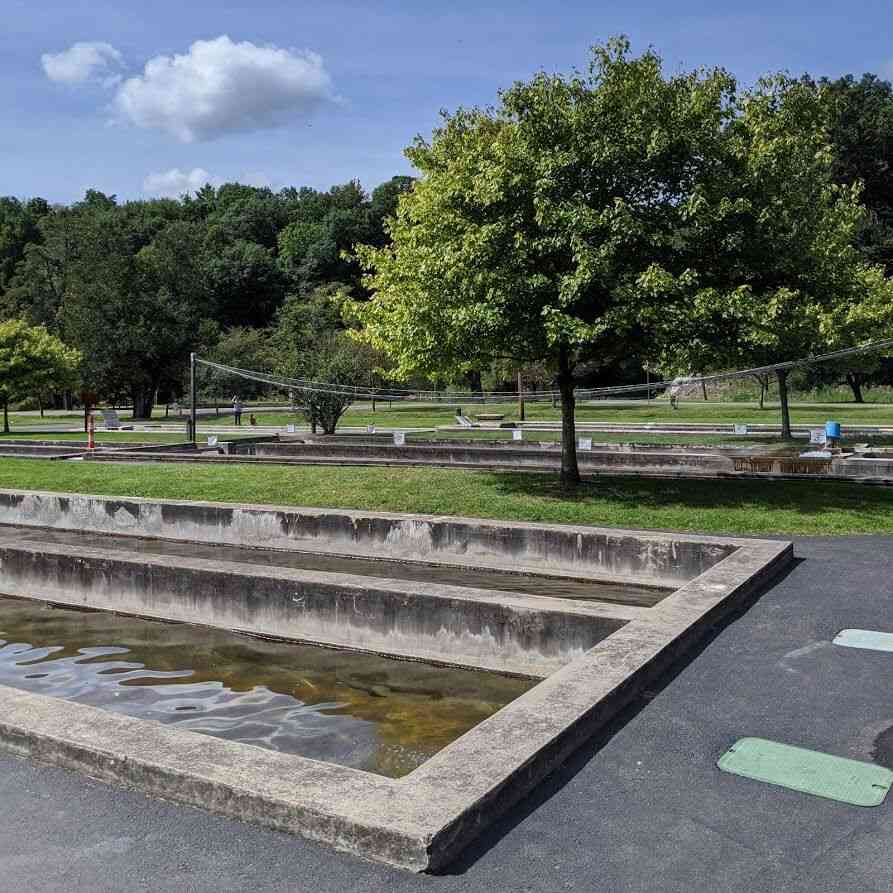
Powder Mills Park features wooded trails, winding trout streams, and a historic fish hatchery in the Irondequoit Creek valley. The park takes its name from the 19th-century gunpowder mills that once operated here, remnants of which remain part of the surrounding landscape.
At the hatchery, visitors can observe fish at several stages of development and, when available, purchase food pellets. Trails continue through wetlands, meadows, and woods, while a gradual ski hill with a rope tow supports seasonal lessons and winter recreation. The Mushroom House across Park Road is a private residence; admire its organic architecture from public property without entering the grounds.

Seneca Park
Designed by Frederick Law Olmsted in 1893, Seneca Park spans 297 acres along the eastern rim of the Genesee River gorge. Mature trees, open lawns, and wooded trails create a landscape that feels removed from the surrounding city. At the park’s center, Trout Pond is encircled by a paved path near shelters and a playground.
The maintained trails provide views into the gorge and connect with the Pure Waters Pedestrian Bridge, which crosses the river to Maplewood Park and the Genesee Riverway Trail. Several unofficial routes descend toward the river, but the county identifies them as unmaintained and dangerous. Remain on marked trails and do not attempt to reach the water from the gorge slopes.

Seneca Park Zoo
Seneca Park Zoo occupies approximately 20 acres within the larger Olmsted-designed park. Animal habitats, conservation programs, and educational exhibits line a long, compact campus overlooking the Genesee River gorge.
The zoo is the only destination in the county park directory with general admission. Hours, ticket prices, animal access, construction impacts, and seasonal transportation can change, so consult the zoo directly when planning a visit.
Tryon Park
Tryon Park protects 82 acres of steep, undeveloped land above the western bank of Irondequoit Creek. Its narrow, winding trails are shared by hikers and off-road cyclists, with technical terrain, roots, slopes, and changing surface conditions that call for awareness and cooperation.
The park suits an active trail outing better than a picnic or casual walk. Review the map, stay alert for approaching cyclists, and expect muddy conditions after wet weather.

Webster Park
Webster Park covers 550 acres along Lake Ontario, combining wooded valleys and evergreen-planted slopes with a bluff, pier, and long shoreline views. Trails loop through the forest and connect with routes maintained by Friends of Webster Trails.
The park includes the county system’s public campground, along with lodges, shelters, playgrounds, fishing access, an off-leash dog park, and seasonal recreation. The bluff near Whitehouse Lodge and the pier both face west across the lake, making them useful places to watch the late-day light. Stay off the pier during high waves or icy conditions.
A Future County Park in Henrietta
Monroe County and the Town of Henrietta are working to add approximately 70 acres of wooded and wetland habitat as the county’s 23rd park. The land lies between East Henrietta and Pinnacle Roads, south of Ward Hill Road, and straddles the Lehigh Valley Trail.
The county announced the planned acquisition in March 2023, and the Henrietta Town Board authorized transfer and closing documents in October 2025. The agreement calls for preserving natural areas and involving the public in a master-planning process before developing new amenities. Until the transfer, name, access, and opening plans are formally announced, treat the property as a developing park rather than an established public destination.
Planning a Visit
Monroe County parks are generally open daily, but hours, road access, restrooms, boat launches, athletic facilities, campgrounds, ski areas, swimming, and other seasonal amenities vary. Many parks follow carry-in, carry-out rules. Dogs must remain leashed except inside registered off-leash dog parks, and individual trails may have additional restrictions.
Trail surfaces range from paved walks and broad rail trails to muddy wetlands, steep ravines, and technical cycling routes. Check the official park and trail maps before heading out, then choose footwear and a route that suit current conditions.
Explore More

Parks and Preserves Around Rochester
Enjoy the beauty and wonders of the world by making the most of the varied memorable experiences offered by our parks, gardens, and farms.

Rochester-Area Parks
Beyond the gorge trails, nature centers, and gardens, these exceptional parks offer unique experiences and amenities worthy of exploration.

Our Favorite 5 Town Parks to Explore
Among my top five favorite town parks are those with distinctive wooded areas, diverse wildlife, and captivating water features.

Which Monroe County parks do you return to throughout the year?
I’d love to hear from you—please reach out and share your thoughts and experiences.


Help Support My Work
If my work has helped you explore and appreciate the Rochester area, please consider subscribing to Substack as a paid member. You’ll receive an email whenever I publish new content and can connect with a growing community of local explorers.
See you out there!
Debi
Enjoy the Journey Together!


Pingback: What to SEE | Rochester, NY -