

Autumn color moves through Monroe County gradually, beginning in pockets of wetland, shoreline, and higher ground before spreading across the region’s hardwood forests. From mid-September into early November, familiar parks and preserves change from week to week as maples, oaks, aspens, and ornamental trees reach their peak at different times.
This guide brings together my favorite fall walks and hikes in Monroe County, from paved pond loops and rail trails to rooted woodland paths and steep creek valleys. Each entry describes what makes the landscape distinctive, what the trail feels like underfoot, and how you might plan a short walk or longer outing. Conditions can change with rain, fallen leaves, and seasonal maintenance, so choose a route that fits the weather and your comfort level.
City of Rochester




Cobbs Hill + Washington Grove
City of Rochester
Because the Pinnacle Range rises above the surrounding city, major infrastructure projects—including the canal, subway, and expressway—were routed around it. That helped preserve the woodlands of Cobb’s Hill and Washington Grove. Begin with the 0.7-mile paved loop around the reservoir for an open view across Rochester’s skyline, church spires, and treetops.
From the reservoir, trails descend into the 26-acre grove beneath mature oaks, maples, beeches, sassafras, and tulip poplars. The transition from the open overlook to the enclosed woodland happens quickly. Trails weave through glacial kettles, mossy logs, and scattered boulders before reaching two graffiti-covered water towers that serve as an ever-changing outdoor gallery. Enter from the reservoir or use the Nunda Boulevard trailhead for the most direct route into the grove.


Durand-Eastman Park
Irondequoit
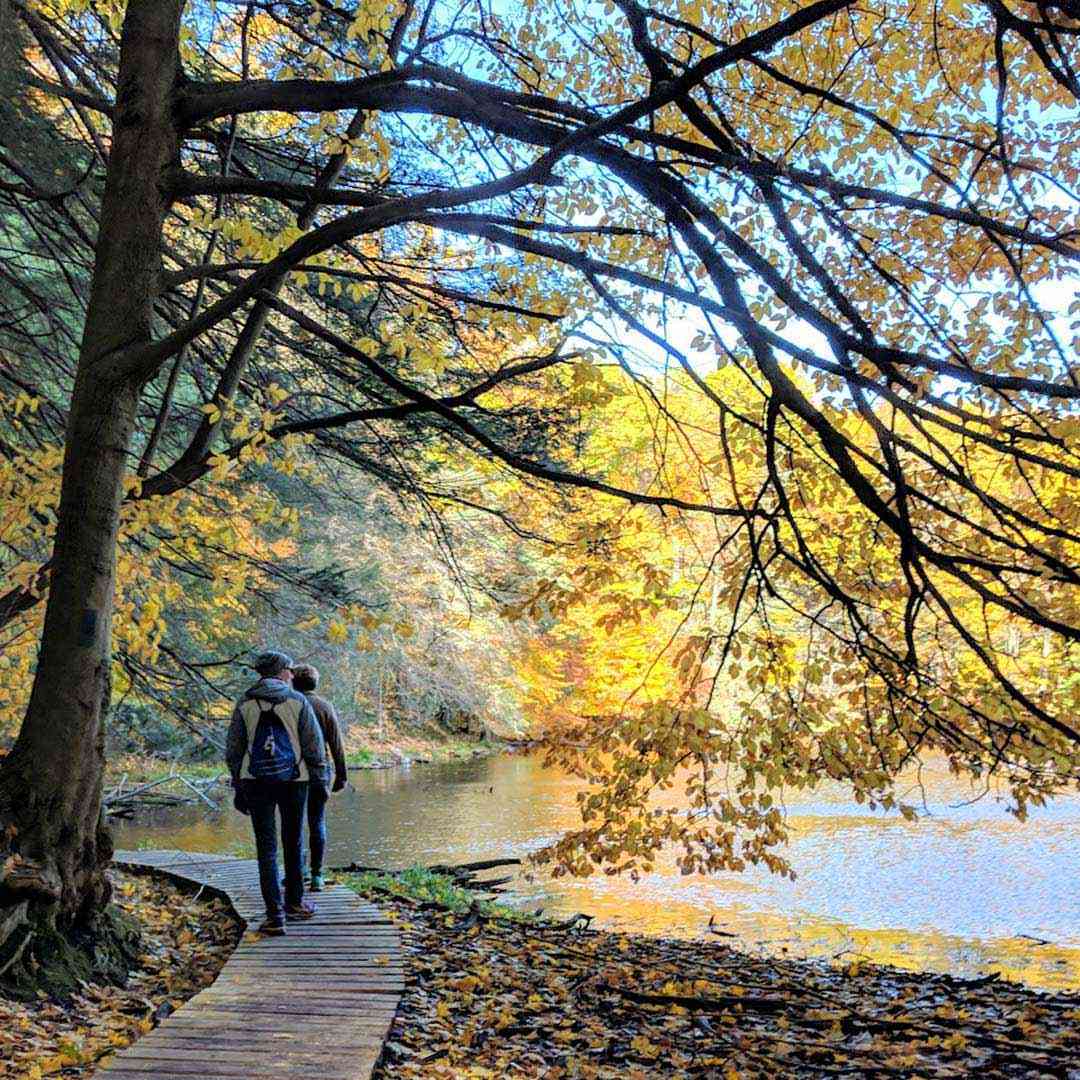
Nearly 1,000 acres of wooded ravines, steep glacial hills, interior lakes, and Lake Ontario shoreline make Durand Eastman Park one of the area’s most varied places for a fall walk. Trails circle Durand and Eastman Lakes and climb through hardwood forest, while the paved, vehicle-free section between Log Cabin and Zoo Roads offers an easier route through the arboretum.
The arboretum stretches east from Durand Lake toward Culver Road, with collections of magnolia, cherry, oak, maple, tulip poplar, witch hazel, dogwood, and evergreens. Katsura Glen is especially memorable in early November, when golden, heart-shaped leaves fall and release a fragrance that some people compare to cotton candy or burnt sugar. On a clear day, the lakes reflect the surrounding color; gray skies bring out the reds, golds, and deep greens in a different way.




Genesee Valley Park
City of Rochester
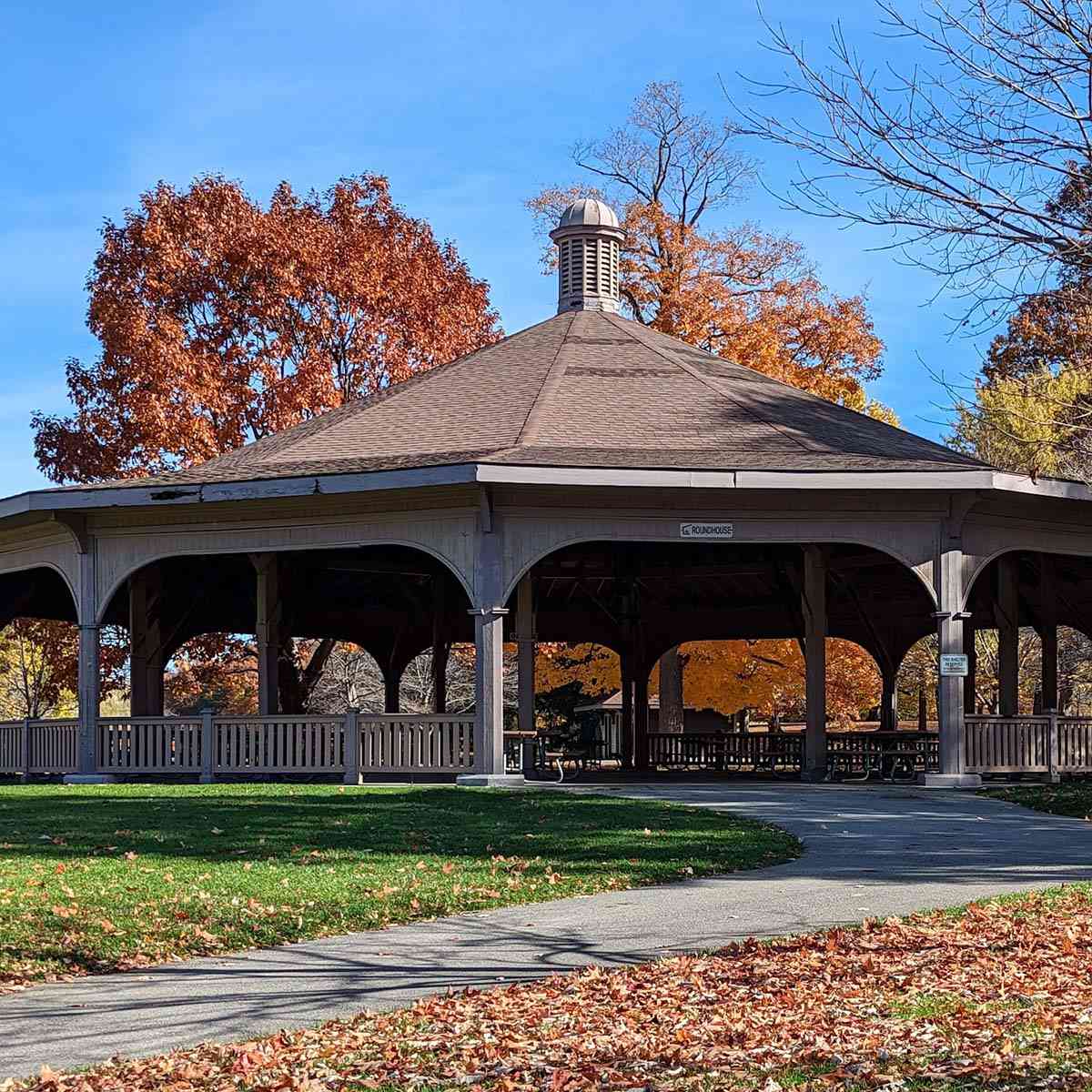
Designed by Frederick Law Olmsted beginning in 1888, Genesee Valley Park spreads across open lawns and mature trees where the Erie Canal, Red Creek, and Genesee River meet. This “water crossroads” gives the park its distinctive character, with rowing crews, kayakers, and canal boats moving through a landscape designed for broad views and unhurried recreation.
Four graceful concrete footbridges connect the park across its waterways and create an easy framework for a fall walk. When Olmsted first designed the park, the Erie Canal crossed downtown Rochester on the aqueduct that is now the Broad Street Bridge. The canal was rerouted through Genesee Valley Park in 1918, leading to the bridges visitors use today. The Erie Canalway Trail, Genesee Riverway Trail, and Genesee Valley Greenway also converge here, so a short bridge loop can easily become a longer outing.


Highland Park
City of Rochester
Frederick Law Olmsted designed Highland Park as a landscape to experience throughout the year. Rolling glacial hills, winding paths, and carefully arranged views connect an extensive collection of trees and shrubs. In autumn, the park rewards close attention: Japanese maples, mature canopy trees, evergreens, and ornamental plantings change at different times, extending the season beyond a single peak weekend.
A walk can be as short or layered as you like. Wander among the tall conifers in the Pinetum, follow the paved paths around the reservoir basin, or continue toward Highland Bowl. The park’s southern edge also connects naturally with Warner Castle and the Sunken Garden across South Avenue. Because the plant collections are distributed across the hillsides, repeated visits reveal new pockets of color as the season progresses.

Highland Park
Frederick Law Olmsted’s living landscape in Rochester, New York.


Mount Hope Cemetery
City of Rochester
Established in 1838, Mount Hope Cemetery combines the reverence of a burial ground with the rolling terrain of a Victorian landscape park. Its 196 acres contain winding carriage roads, wooded hillsides, quiet valleys, ornate monuments, and an arboretum whose varied trees produce bold layers of yellow, red, and orange in October. Fallen leaves often remain in the valleys even after the roads have been cleared.
The newer south section has broader roadways, while the older north section is best explored slowly on foot. Cobblestone lanes and steep glacial landforms lead past the graves of Nathaniel Rochester, Susan B. Anthony, Frederick Douglass, and many other people connected to Rochester’s history. Maps and guided tours can add context about the cemetery’s residents, geology, fossils, and trees, but the roads also make it easy to shape an independent walk of almost any length.


Seneca Park & Zoo
City of Rochester
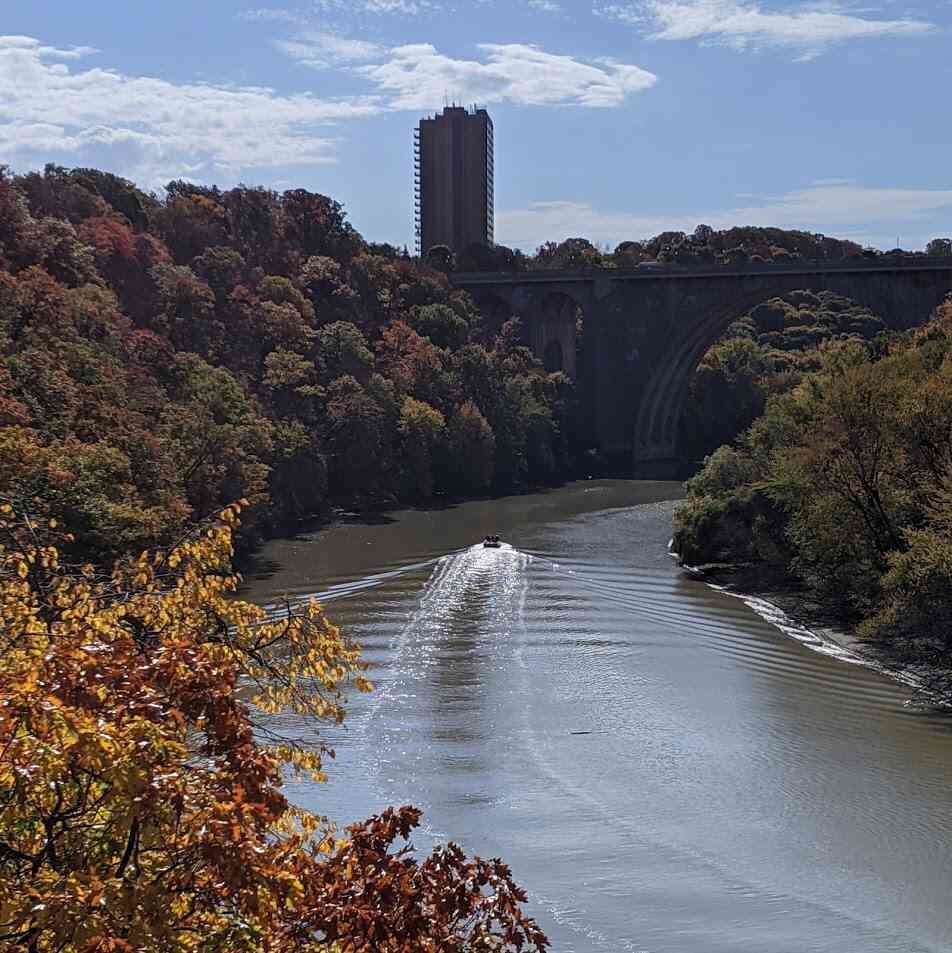
Seneca Park Zoo occupies about 20 acres within the nearly 300-acre Seneca Park, designed by Frederick Law Olmsted in 1893. Beyond the zoo, mature trees, open lawns, and wooded trails follow the eastern rim of the Genesee River gorge. Trout Pond sits near the center of the park, surrounded by pavilions, a playground, and access to the trail system.
The north trail follows the river corridor toward Lake Ontario, while the south trail leads to the Pure Waters Pedestrian Bridge. Crossing the bridge connects Seneca Park with Maplewood Park and provides an expansive view into the gorge. These paths are also part of the Genesee Riverway Trail, making it possible to combine the park with a longer walk along the river. Unofficial routes down the gorge are steep and hazardous, so remain on maintained trails.


Sunken Garden
City of Rochester
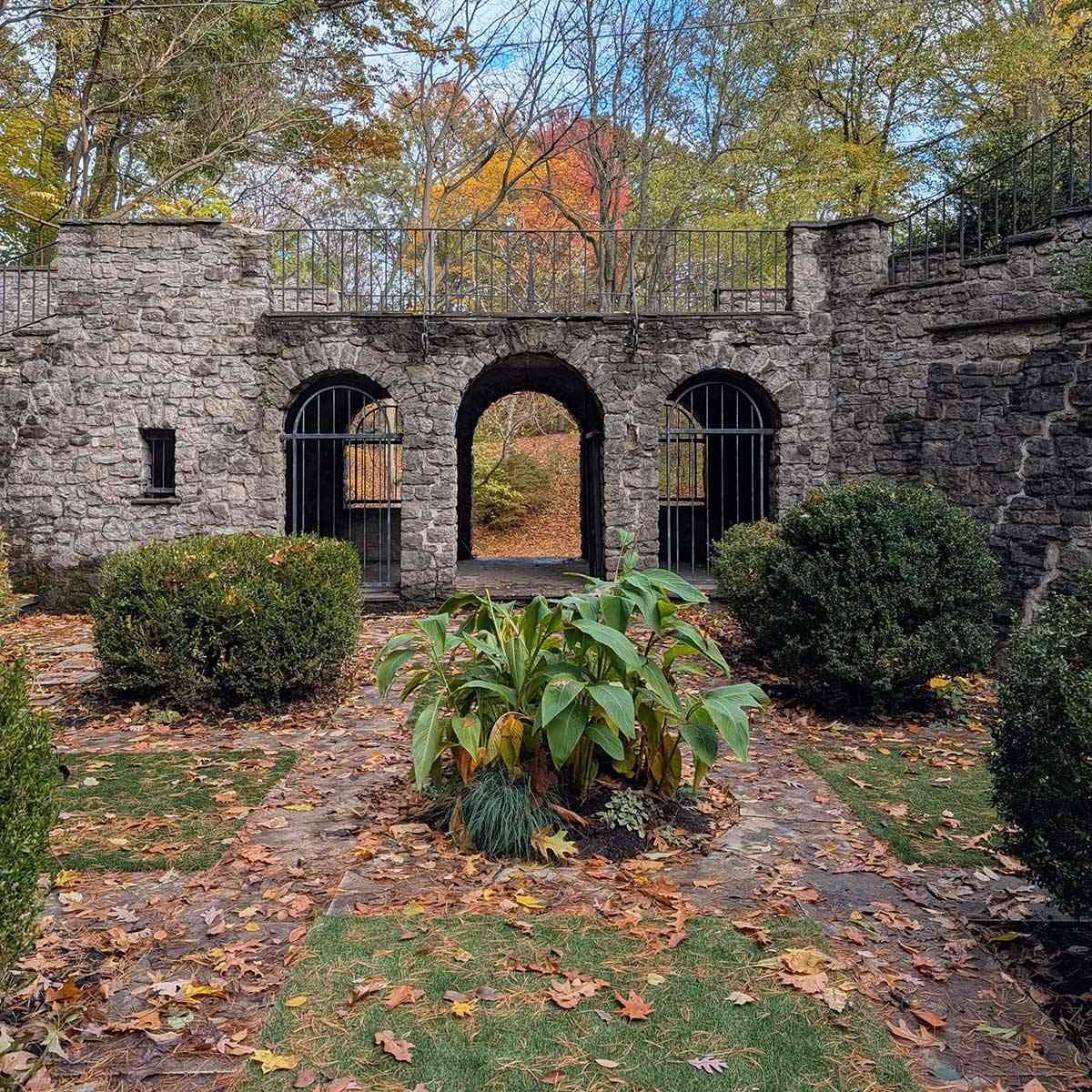
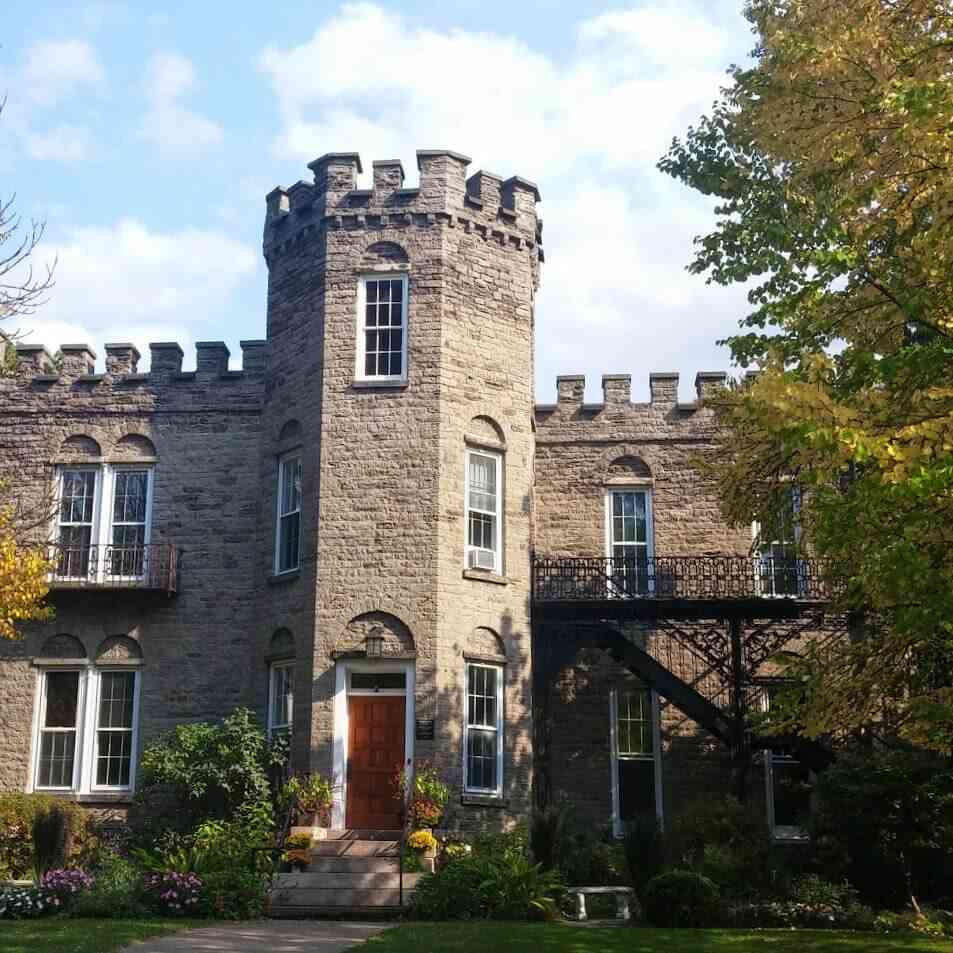
The Sunken Garden is part of Highland Park, but its tucked-away location behind Warner Castle makes it feel separate from the busier paths around the reservoir. Walk behind the castle and down the grassy slope to enter the walled garden, where stone steps, gates, and layered plantings create a quiet, enclosed space in every season. Continue beyond the garden to reach Highland Bowl.
The Gothic-style Warner Castle was built in 1854 and now serves as the headquarters of the Landmark Society of Western New York. Landscape architect Alling S. DeForest, who also designed the gardens at the George Eastman estate, created the Sunken Garden in 1930. The garden is sometimes reserved for professional photography, so weekday mornings or earlier visits may offer the best chance for an unhurried walk.



Turning Point Park
City of Rochester
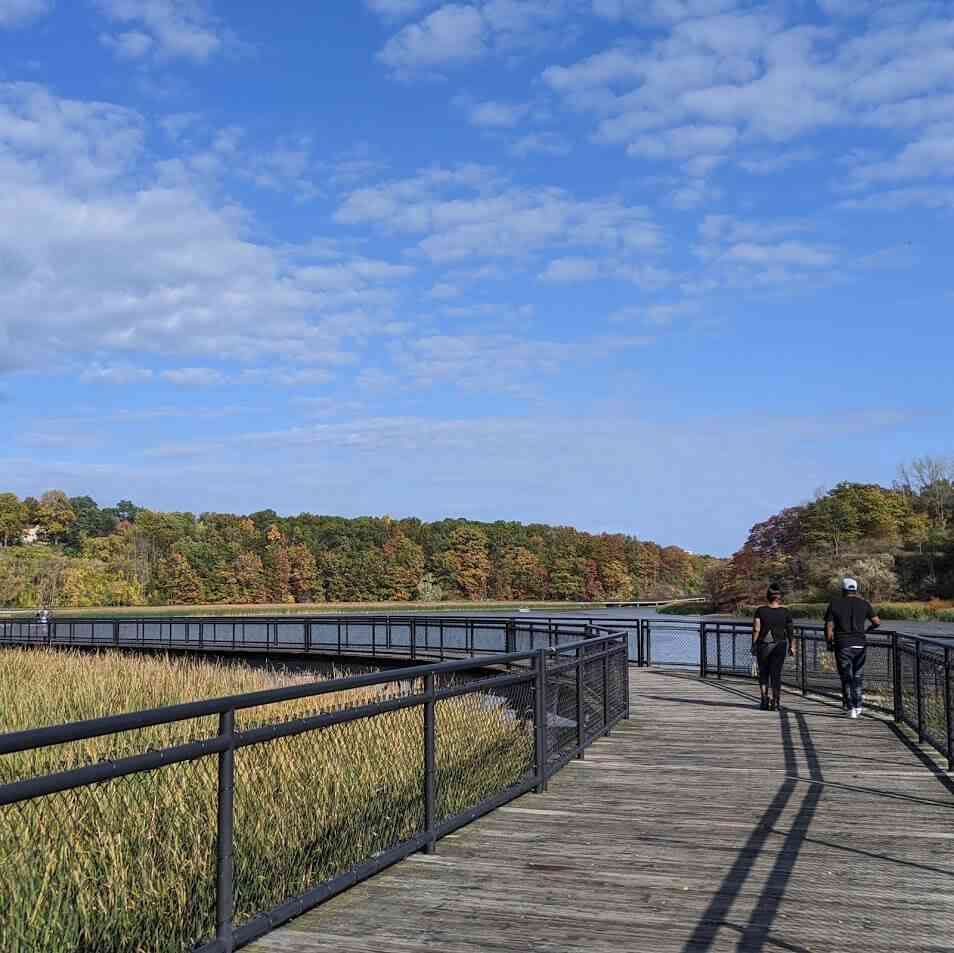
The signature feature of Turning Point Park is a 3,572-foot boardwalk spanning the Genesee River’s turning basin. The route carries walkers over marshes and open water, where great blue herons, swans, turtles, deer, and migrating birds are common. The quiet landscape gives few clues that this area once supported coal barges and river commerce.
For minimal elevation change, begin at Petten Street near the marina and O’Rorke Bridge. Along the way, you’ll pass the abandoned 150-foot Spirit of Rochester, which once carried passengers on Lake Ontario. From the Boxart Street lot, most visitors descend the steep paved road, but a longer alternative follows a former railroad grade through Bullock’s Woods, beside a seasonal creek and small waterfall. The park is part of the Genesee Riverway Trail connecting Ontario Beach Park with Genesee Valley Park.
Monroe County



Braddock Bay Marina Trail
Greece
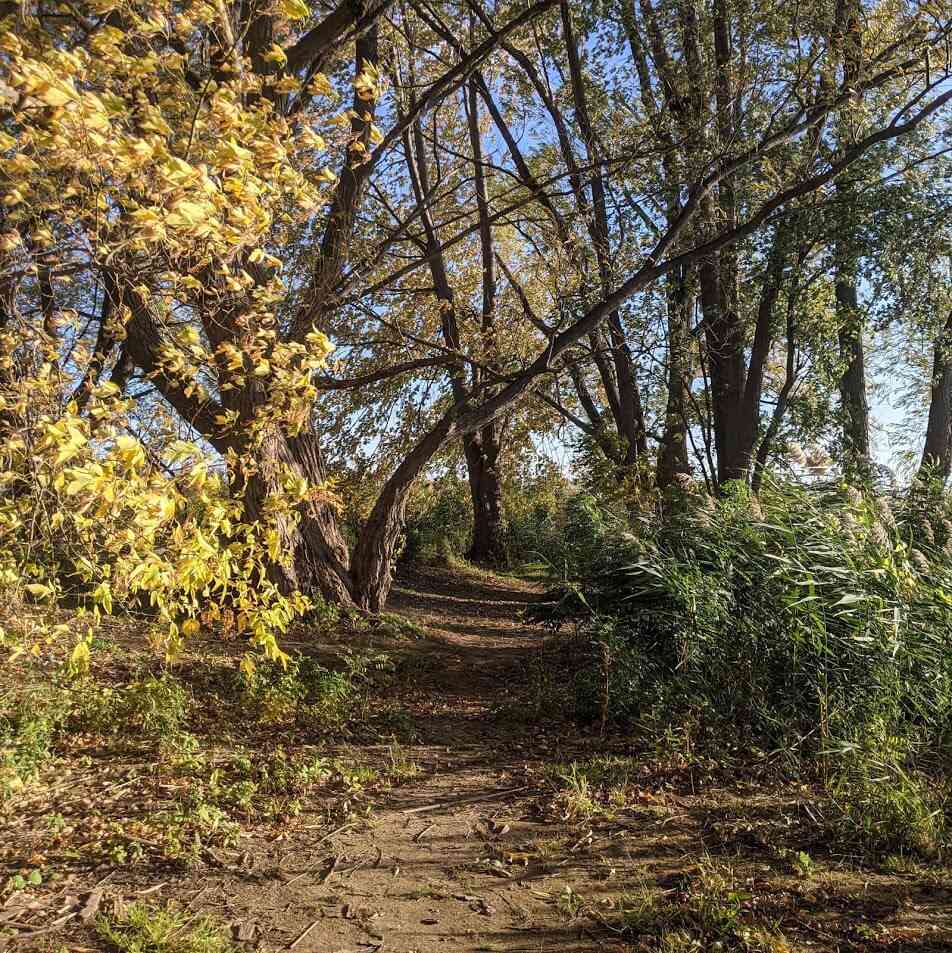
The Braddock Bay Marina Trail follows the Lake Ontario shoreline through part of the larger Braddock Bay Wildlife Management Area. To reach it, turn from Manitou Road into Westpoint Marina and continue to the north end of the parking lot. The roughly one-mile out-and-back route curves along the bay before ending near the jetty, with broad views across the water and coastal wetlands.
Braddock Bay lies along an important migration corridor, so the trail is especially rewarding for watching raptors, waterfowl, and songbirds during spring and fall. Depending on the season, you may also encounter anglers, duck hunters, and wildlife photographers. When lake levels are low, people wearing waders—or walking barefoot with care—sometimes continue onto the sandbar. Conditions along the shoreline change quickly, so treat the marked trail as the dependable route.


Channing H. Philbrick Park
Penfield
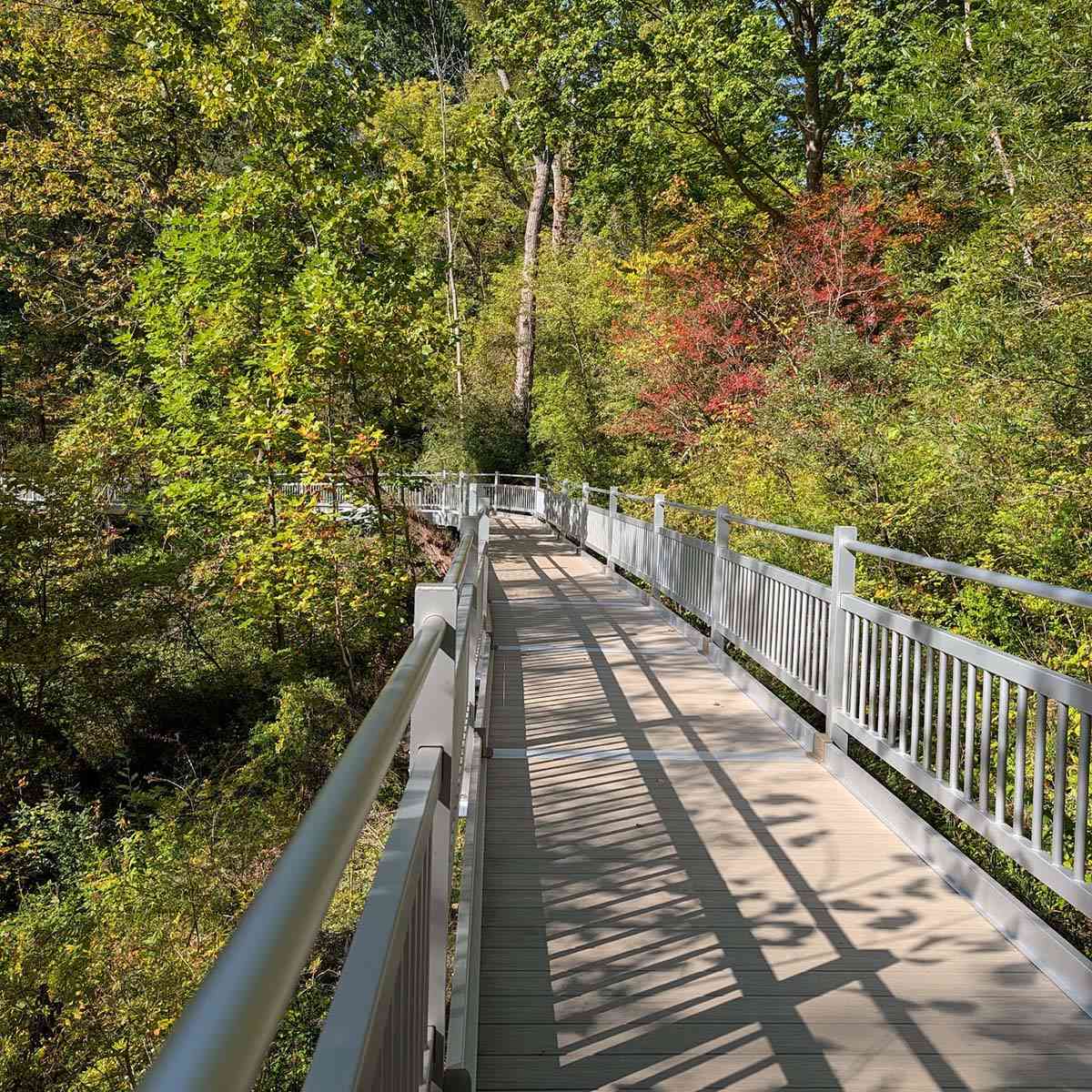
Irondequoit Creek drops nearly 90 feet over one mile through Channing H. Philbrick Park, creating cascades, rapids, and rushing water that echoes between the wooded valley walls. Formerly known as Linear Park, this narrow green corridor feels surprisingly secluded despite the nearby roads and neighborhoods.
Linear Park Drive divides the trail system. To the east, follow the Irondequoit Creek Trail toward a 500-foot boardwalk and the Mills Trail’s creek overlook. Honey Creek enters the valley in this section, with a small waterfall visible from an informal side path when water is flowing. West of the road, the Fishing Trail stays close to the creek and passes a sandy bluff where bank swallows nest. Roots, narrow dirt paths, and damp sections call for attentive footing even though much of the route is easy to follow.


Charles E. Sexton Park
Webster
Charles E. Sexton Memorial Park, formerly known as North Ponds Park, offers a one-mile paved loop around two large ponds with little elevation change. The open water, wetland edges, and planted trees make the loop especially colorful in autumn, while benches and picnic areas provide places to pause along the way.
Eight fitness stations are spaced around the route and designed for a variety of abilities and heights. The park also works as a starting point for a longer walk or ride: connections lead to the Bird Sanctuary Trail, the Chiyoda Connector, the Hojack Rail Trail, and the Route 104 Trail. Staying on the pond loop creates a simple, predictable outing; following one of the connectors adds distance without requiring a drive to another trailhead.


Gosnell Big Woods
Webster
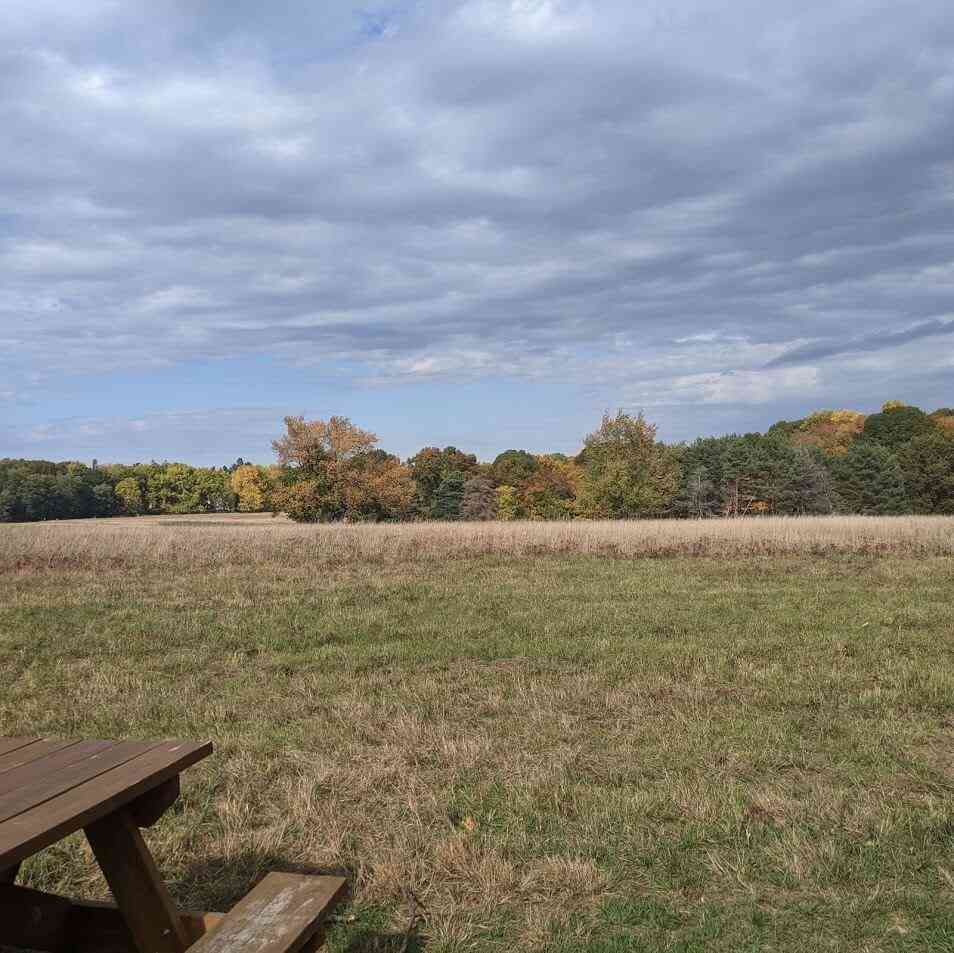
Gosnell Big Woods Nature Preserve protects a mature hardwood forest managed by the Genesee Land Trust. From the parking area on Vosburg Road, a 0.7-mile out-and-back trail enters the woods beneath tall oaks, maples, and beeches. In autumn, the established canopy and layered understory create a classic woodland walk close to Webster’s residential neighborhoods.
You can extend the outing on the 1.2-mile Big Field Trail, where the landscape opens into grassland before returning to the forest edge. Benches along the routes make this a comfortable place for a short, unhurried walk. Spring wildflowers are another reason to return, but in fall the contrast between the enclosed woods and open field is the preserve’s defining feature.


Hart’s Woods
Perinton
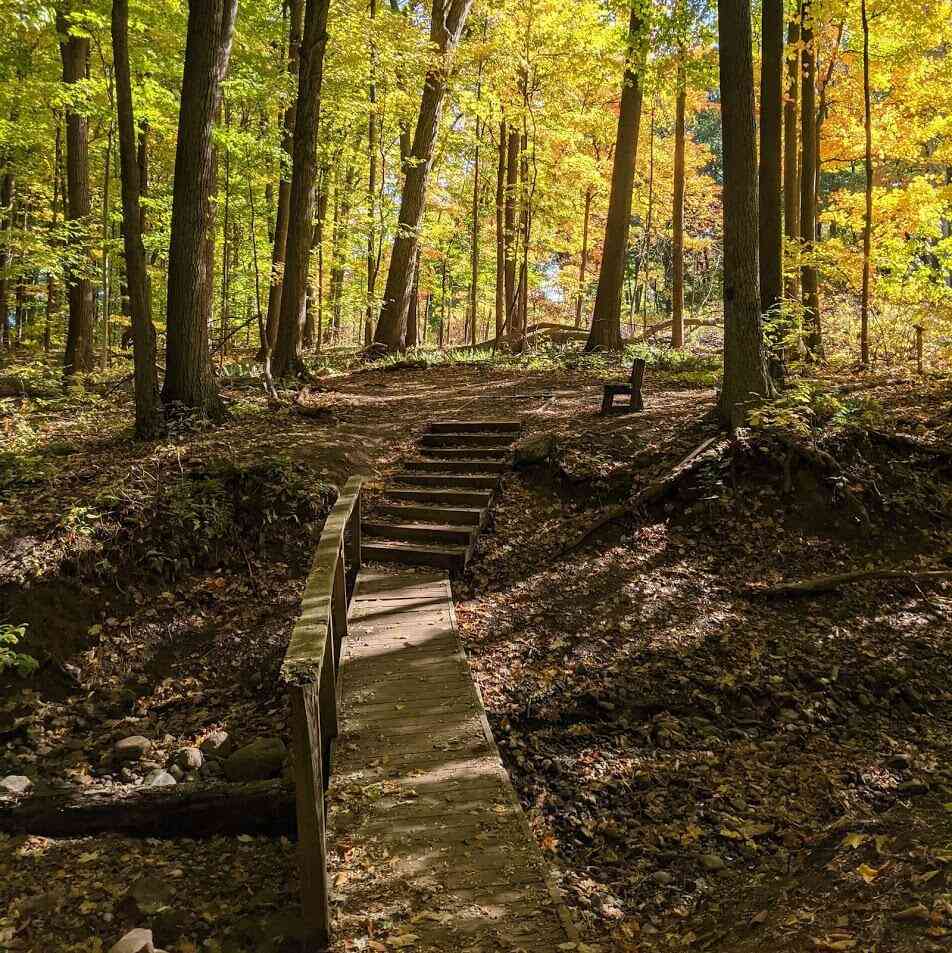
Hart’s Woods is a rare remnant of Perinton’s original glacial-era beech, maple, and oak forest. The roughly one-mile loop follows a natural woodland path beneath mature trees, with roots, leaf litter, and uneven ground contributing to its undeveloped character. Because the preserve is small, the walk is brief, but it offers a close look at the kind of forest that once covered much more of the town.
Parking is limited. There is room for only one or two cars at the end of Greenwood Cliff, so many visitors park near Minerva DeLand School and walk up the hill to the trail. The preserve has few built features and no elaborate trail system; its appeal lies in moving slowly beneath the canopy and noticing the structure of an older woodland.


Helmer Nature Center
Irondequoit
Helmer Nature Center is a 45-acre outdoor classroom owned and operated by the West Irondequoit Central School District. About 1.5 miles of dirt, wood-chip, boardwalk, and gravel trails descend through a mature woodland valley. Tree roots cross many sections of the path, and the rolling terrain makes this a more varied walk than its short distance might suggest.
The steep, tree-covered slopes help screen surrounding roads and neighborhoods, creating a quiet setting close to home. Trails lead to an observation deck beside a bog, where bullfrogs, water striders, and other wetland life may be visible. Helmer is open throughout the year, with maple-sugaring activities typically offered in March and snowshoe rentals available on select winter weekends when the snowpack is deep enough.


Mendon Ponds Park
Mendon
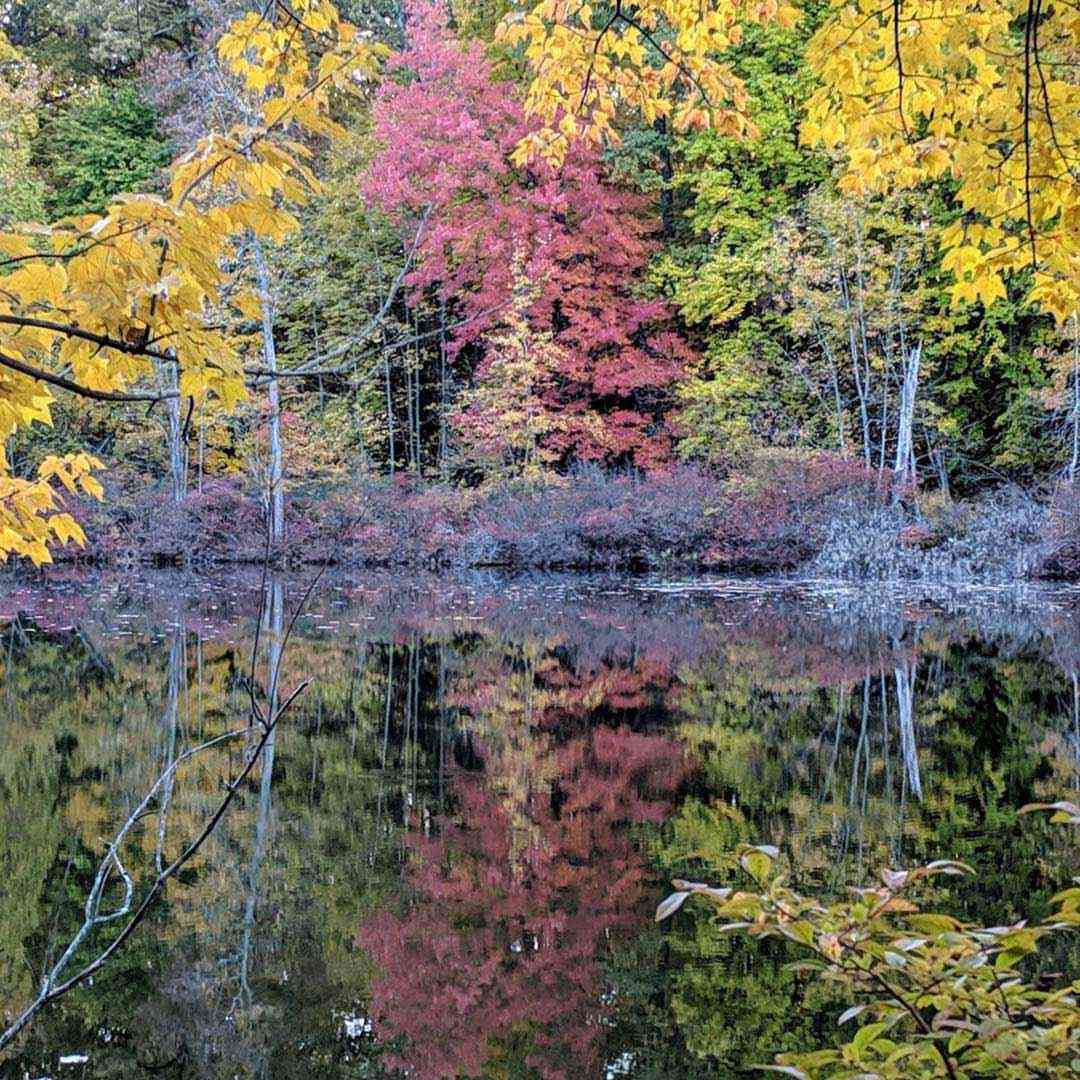
Mendon Ponds Park is Monroe County’s largest park, covering 2,500 acres of woodlands, wetlands, meadows, and ponds. More than 30 miles of trails cross rolling hills and glacial landforms—including kettles, kames, eskers, and bogs—that earned the park National Natural Landmark status. The trail network supports anything from a short pond-side walk to a half-day hike.
For a fall outing, consider a loop around one of the park’s four largest ponds: Hundred Acre, Round, Quaker, or Deep. The Devil’s Bathtub is a rare meromictic lake and one of the park’s most distinctive features. Near the nature center, the broad Birdsong Fairy Trail passes colorful fairy houses, while nearby Wild Wings cares for nonreleasable birds of prey. In winter and early spring, chickadees, nuthatches, and tufted titmice may take black-oil sunflower seeds from an open hand.



Oatka Creek Park
Scottsville
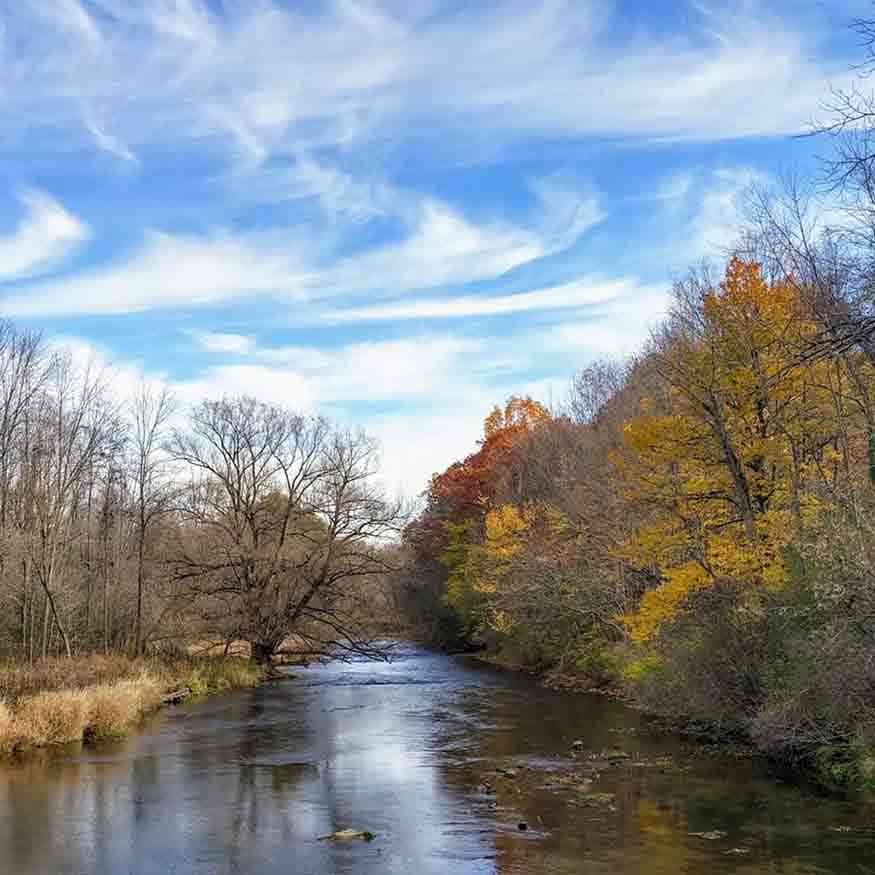
The largely undeveloped Oatka Creek Park protects 461 acres of hardwood forest, broad grasslands, and a brown-trout stream. Wide, color-blazed trails cross former farmland, so the terrain has little elevation change and the open sightlines make it easier to observe birds and other wildlife from a distance. Some paths are shared with horses and may remain muddy after rain.
Follow the Purple Trail to a stone bridge over Oatka Creek, or take the Black Trail toward a grove of white quaking aspens. The meadow routes are especially appealing from late summer into fall, when wildflowers, grasses, seed heads, and changing leaves overlap. Oatka tends to feel quieter and less developed than many county parks, making it a good choice when the goal is spaciousness rather than a single landmark.


Powder Mills Park
Pittsford
Powder Mills Park occupies a deep Irondequoit Creek valley shaped by wooded hillsides, wetlands, open meadows, and trout streams. Marked trails provide several ways to explore the landscape, from creekside paths and footbridges to wooded climbs. The park takes its name from the 19th-century gunpowder mills that once operated here, and traces of those industries remain among the trees.
The county fish hatchery, operating since 1933, raises thousands of brown and rainbow trout in outdoor raceways; bring quarters if you would like to purchase food pellets. Near the hatchery parking lot, the Mushroom House is a distinctive private residence that can be viewed from public property. In spring, the Daffodil Meadow becomes the park’s best-known seasonal destination, but the varied tree cover and creek valley make the trail system worthwhile in autumn as well.


Rochester Junction
Mendon, Lehigh Valley Rail Trail
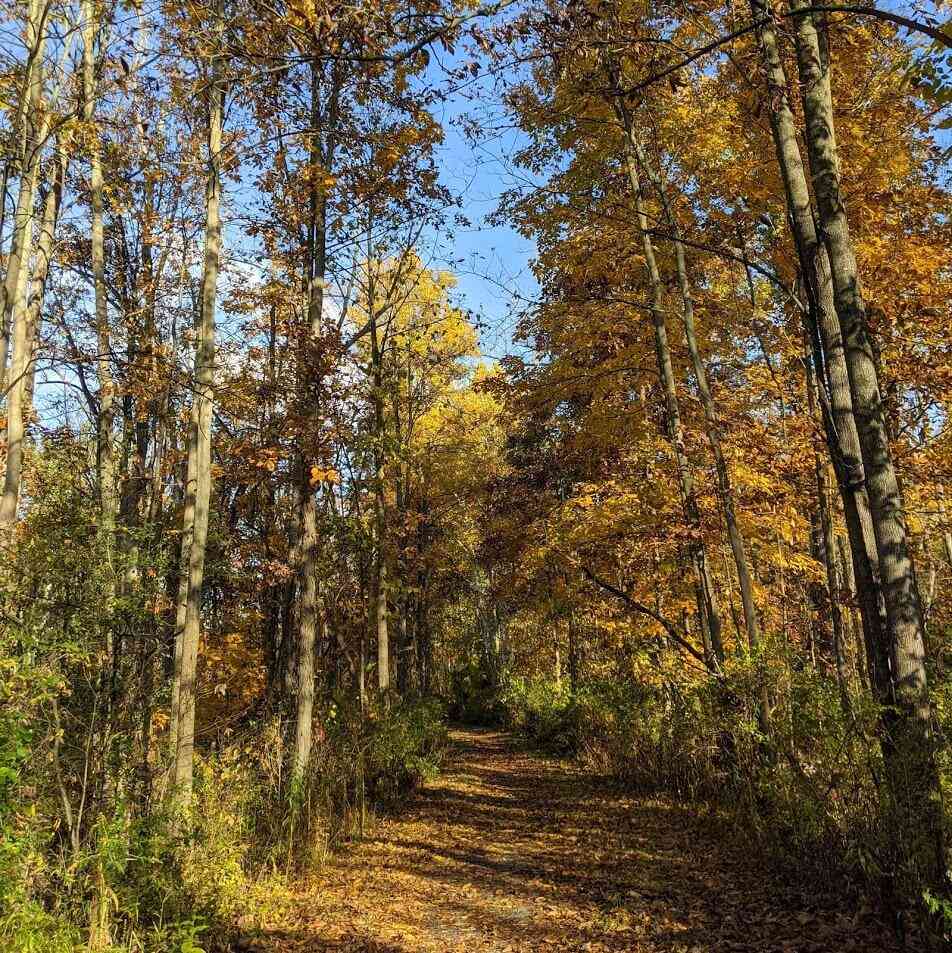
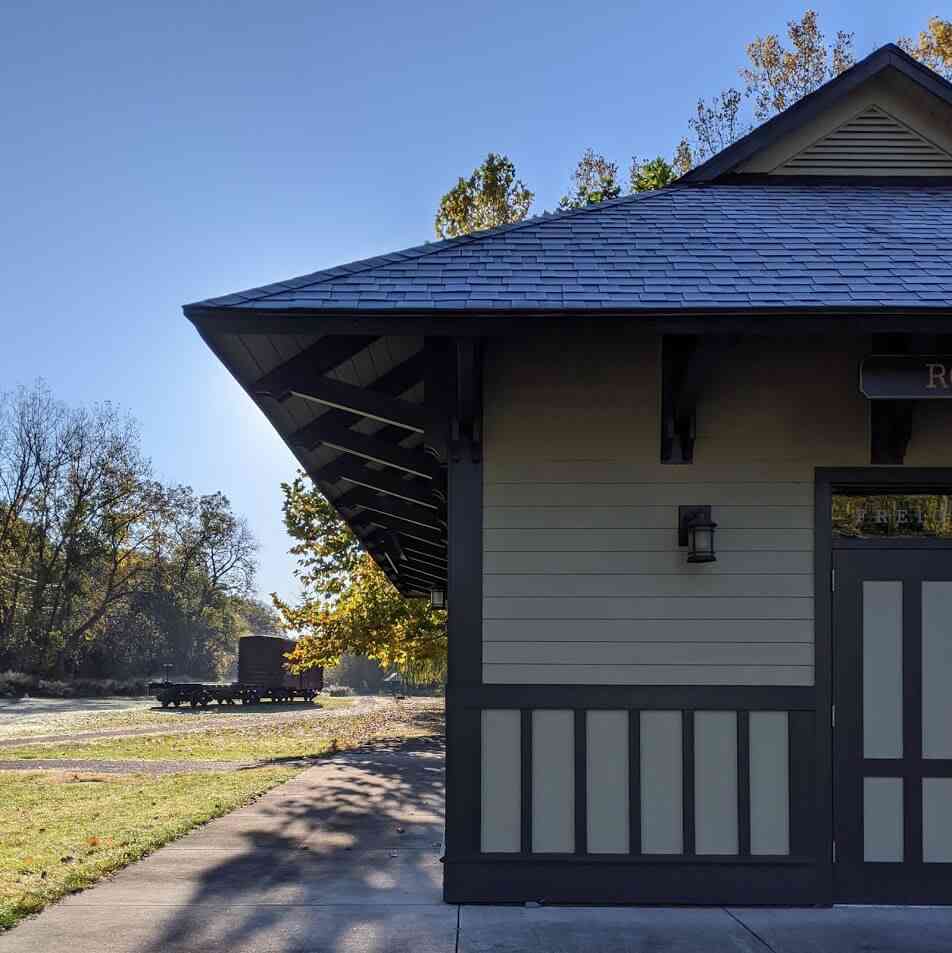
Rochester Junction is a useful starting point for exploring the Lehigh Valley Rail Trail, a 15-mile linear park connecting Mendon and Scottsville. The restored depot marks the former junction where the railroad branched west toward Rush and north toward Rochester. The trail’s broad, flat surface makes it easy to settle into a steady walk or ride beneath a corridor of changing leaves.
Head east to combine the main trail with a connector near Great Bend Park. Travel west to cross Honeoye Creek on a former railroad bridge and continue toward the Genesee River, where the route meets the Genesee Valley Greenway at Wadsworth Junction. The northwest branch leads toward Lehigh Station Road. This area was also near Totiakton, a Seneca village destroyed during the Denonville expedition of 1687, the same campaign that attacked Ganondagan.



Rotary Park
Honeoye Falls
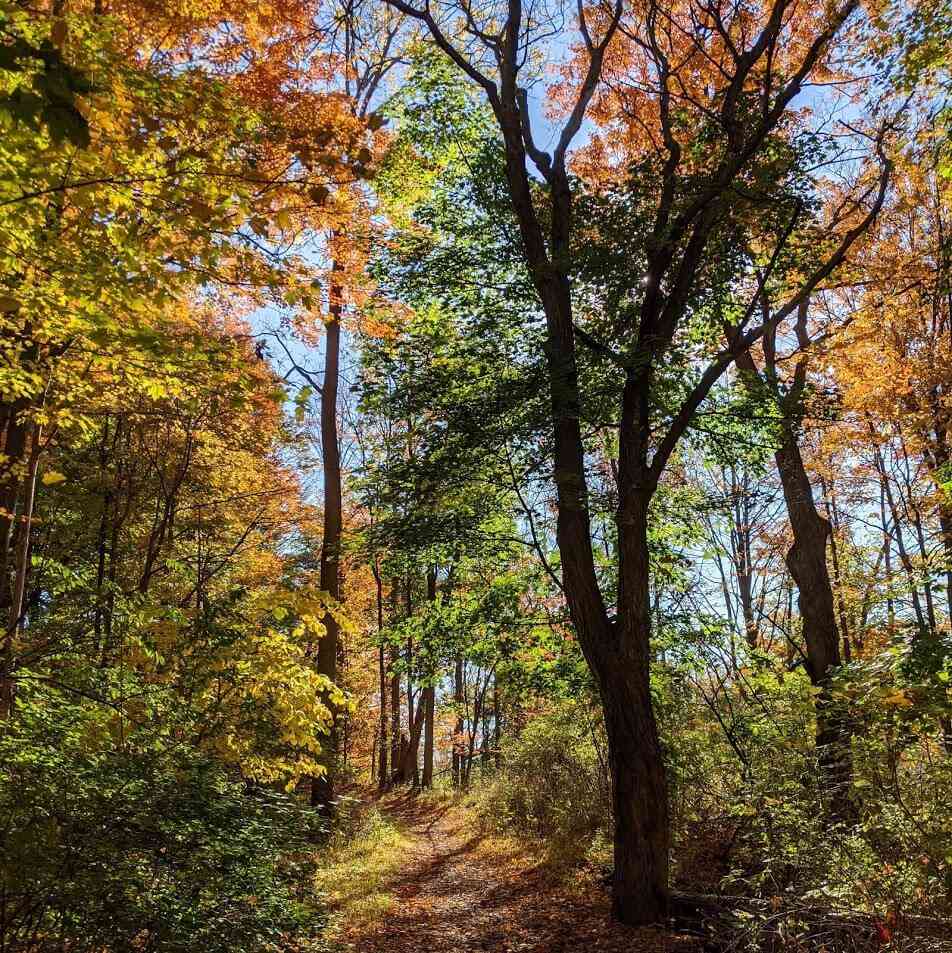
Rotary Park in Honeoye Falls offers a short woodland walk along the Zebulon Norton Trail. The roughly quarter-mile path follows Honeoye Creek between the sports park and North Main Street, with several benches placed along the route. Reflections on the creek, fallen leaves, and the surrounding tree canopy give this compact trail a strong sense of season.
This is a useful option when you want time outdoors without committing to a long hike. The route is simple, but the creek and village setting distinguish it from a neighborhood sidewalk walk. Pair it with time in the village or use it as a brief stop while traveling through southern Monroe County.



Tinker Nature Park
Henrietta
Tinker Nature Park covers 68 acres along the Pittsford–Henrietta border. A flat, one-mile perimeter trail provides the main route through the property, while shorter branches and boardwalks pass through woodland, wetland, and meadow habitats. The mix of ecosystems creates frequent changes in color, light, and wildlife over a relatively short distance.
The perimeter route supports walking, jogging, cycling, cross-country skiing, and snowshoeing. The Hansen Nature Center adds environmental exhibits and programs, while the Tinker Homestead and Farm Museum opens for scheduled events or by appointment. Check the current schedule if either building is part of your plan; the outdoor trails remain the focus of an autumn visit.


Webster Arboretum
Webster
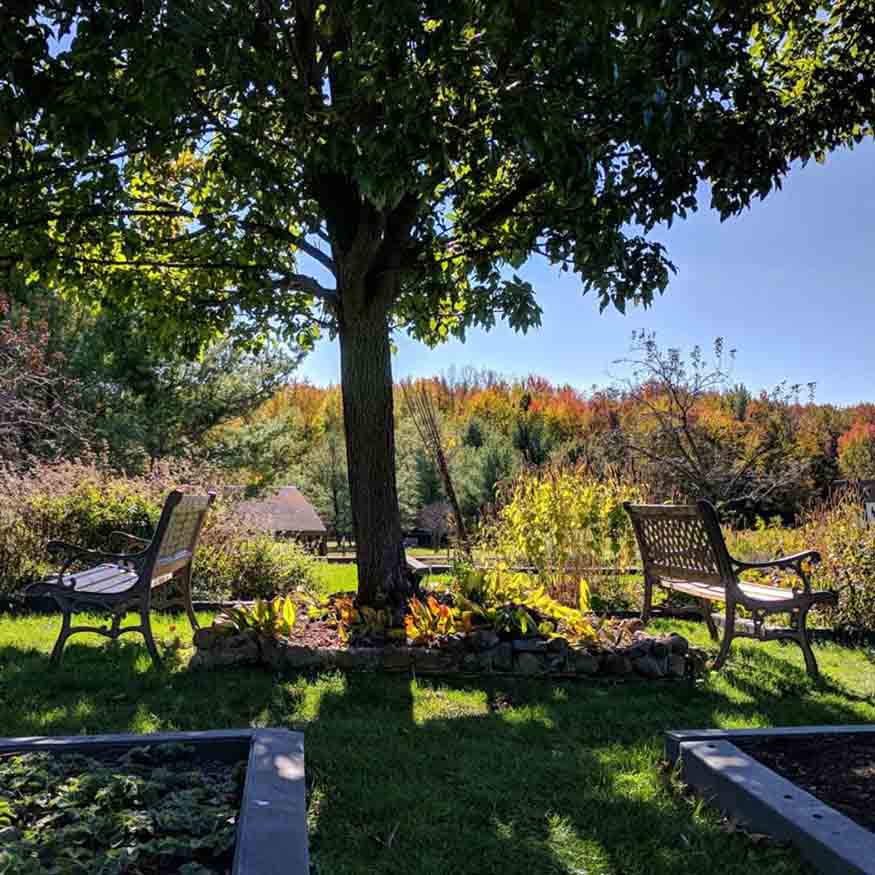
The 32-acre Webster Arboretum sits within Kent Park, where flat gravel paths lead through curated gardens and shaded corners. A reflective pond, wooden bridges, gazebos, and benches give the grounds a gentler character than a woodland preserve. Local garden clubs and volunteers maintain collections that include conifers, antique roses, daylilies, dahlias, herbs, and a variety of trees and shrubs.
Although summer brings the most flower color, autumn shifts attention to foliage, seed heads, evergreens, and reflections across the pond. The arboretum generally sees fewer visitors than larger nearby parks, making it a quieter choice for an easy walk. Near the entrance, a time capsule buried beneath a crabapple tree during Webster’s 1990 sesquicentennial is scheduled to be opened in 2039.

Whiting Road Nature Preserve
Webster
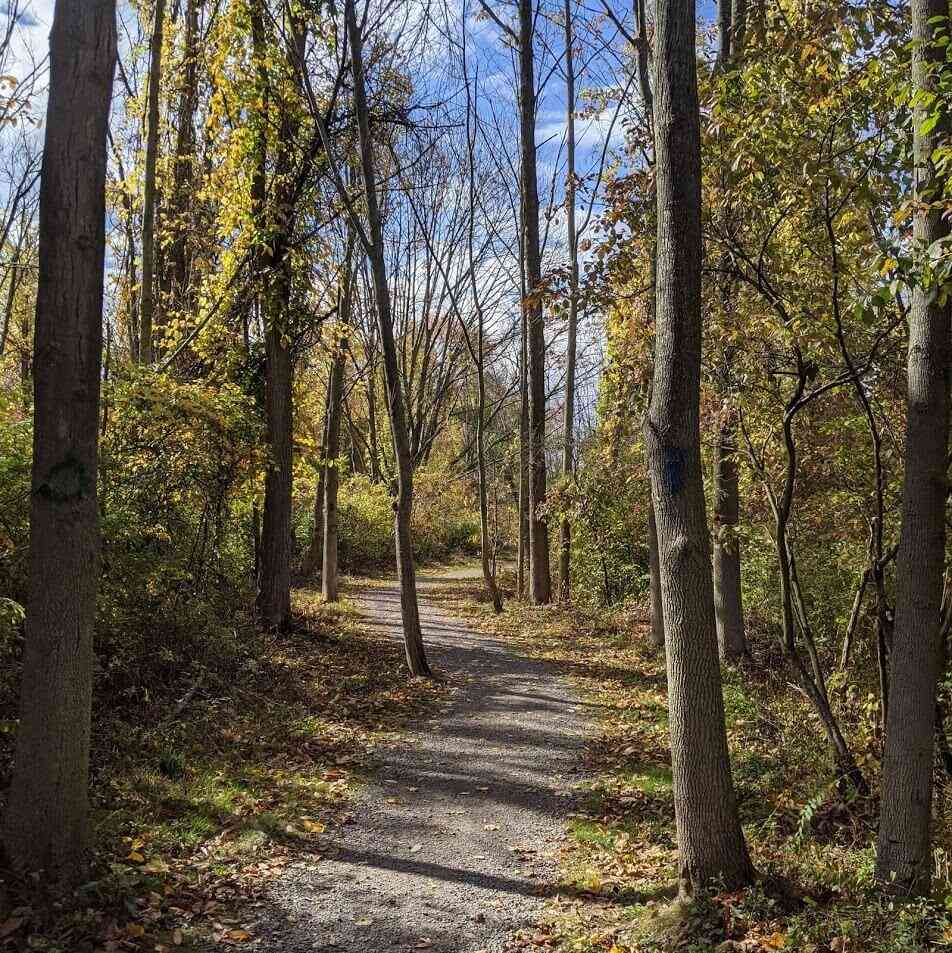
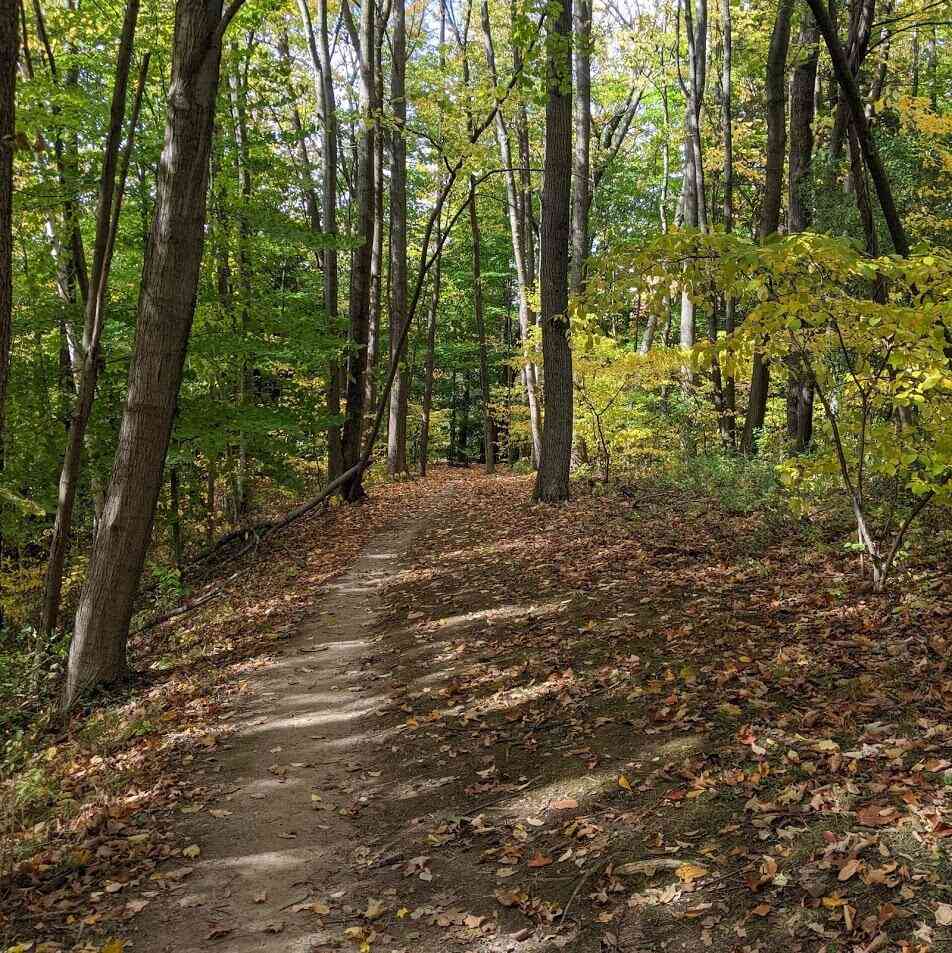
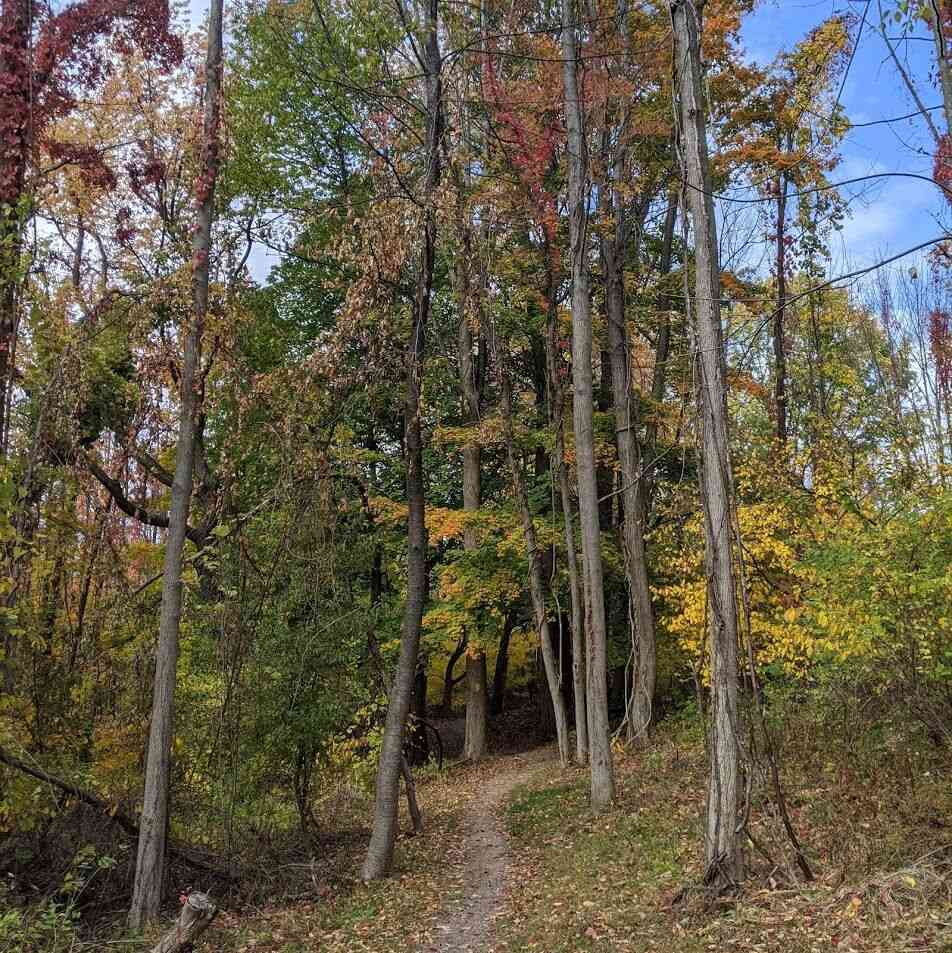
Whiting Road Nature Preserve in Webster offers a network of wooded trails with different lengths and levels of difficulty. Paths near the parking area provide shorter options, while the longer routes include steeper grades, exposed roots, and more demanding footing. The trails feel closer to well-worn forest paths than groomed park walkways, which gives the preserve its immersive character.
Hikers and mountain bikers share portions of the system, so stay alert on narrow sections and at bends. Fallen leaves can hide roots and uneven ground in autumn, especially after rain. Choose a shorter loop for a casual woodland walk or combine trails for a more challenging outing, using the preserve map to keep track of intersections.



Bonus! Genesee Country Village & Museum
Mumford
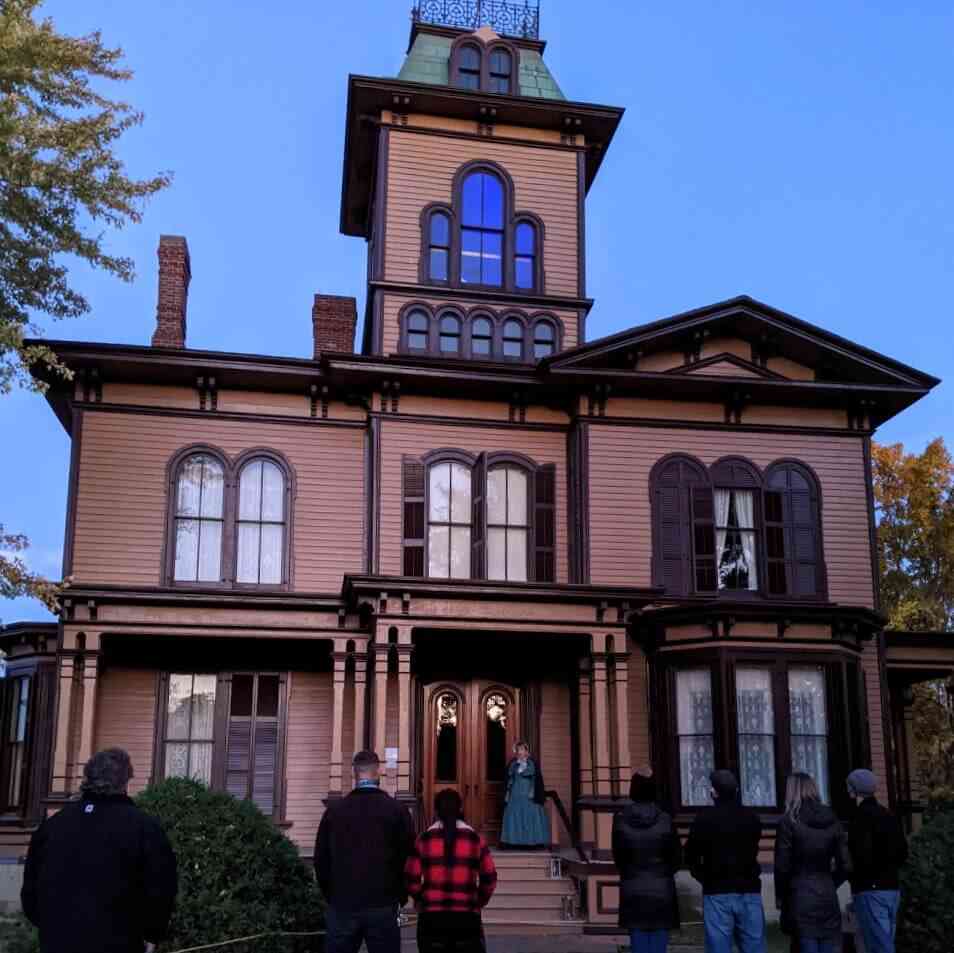
Genesee Country Village & Museum recreates a 19th-century community across more than 600 acres in the Genesee Valley. Gravel roads connect historic homes, shops, schools, churches, and public buildings in the Pioneer Settlement, Center Village, and Gas Light District. In autumn, colorful trees, heirloom gardens, heritage livestock, and cooking fires add seasonal texture to a walk through the village.
Costumed interpreters demonstrate traditional skills such as blacksmithing, printing, pottery, farming, and food preparation, so the experience combines outdoor walking with regional history. The property also includes nature trails and the John L. Wehle Gallery. Fall programming varies from year to year and may include harvest activities or Spirits of the Past, so check the current calendar before planning around a specific event.
Explore More

🍁 Fall Foliage: 7 Stunning Views Around Rochester
If you're looking for picturesque autumn scenery, these locations offer stunning fall foliage and unique landscapes.

80+ Hiking Trails Around Rochester: A Trail for Every Season
Explore 80+ hiking trails around Rochester, and learn how to choose the right trail for every season—from spring waterfalls to winter woodlands.
22 Monroe County Parks
Monroe County parks are free and offer 12,000 acres of natural, zoological, horticultural, historical, and geological experiences.
Where are your favorite fall hikes in Monroe County?
I’d love to hear from you—please reach out and share your thoughts and experiences.


Help Support My Work
If my work has helped you explore and appreciate the Rochester area, please consider subscribing to Substack as a paid member. You’ll receive an email whenever I publish new content and can connect with a growing community of local explorers.
See you out there!
Debi
Enjoy the Journey Together!


