
The Monroe County Parks system includes more than 20 parks that are all worth visiting, but these are the five you absolutely must explore if you haven’t already.
1. Highland Park


Host to Rochester’s celebrated Lilac Festival in May, Highland Park boasts one of the country’s most significant lilac collections, with over 500 varieties across 1,200 shrubs. You’ll also find a vast Japanese maple collection, 35 types of magnolias, 700 rhododendron specimens, and 300 conifer varieties in the pinetum. Many of the trees are the tallest of their species in the state, though few are native. Highland has even been described as a museum or zoo of exotic plants and trees. The Arnold Arboretum of Harvard University sent original specimens to Rochester for simultaneous scientific study. Meander along paved and mown-grass pathways to Lamberton Conservatory, the Poet’s Garden, Highland Bowl, and Warner Castle’s Sunken Garden.
Take a break and unwind in the Lamberton Conservatory‘s Lord and Burnham–designed glasshouse, which is filled with exotic, desert, and economic plants, including banana trees. Find turtles lounging by indoor ponds, with tiny button quail and tortoises wandering around. The theme of the Seasonal Display Room changes five times throughout the year, with the beloved Holiday Show in December. The conservatory is open on Friday and Sunday evenings to fully appreciate the beautiful festive lights.
In 1951, Monroe County Parks purchased the Warner Castle Estate and Sunken Garden as an extension of Highland Park. The 1854 Gothic-style castle is now the headquarters for the Landmark Society of Western New York. In 1930, landscape architect Alling S. DeForest, who also designed the Eastman estate’s gardens, added the sunken garden to the property. Photographers often capture wedding and family photos in the garden, but it can be a peaceful retreat if you visit when it’s not crowded.
Explore More

2. Mendon Ponds Park
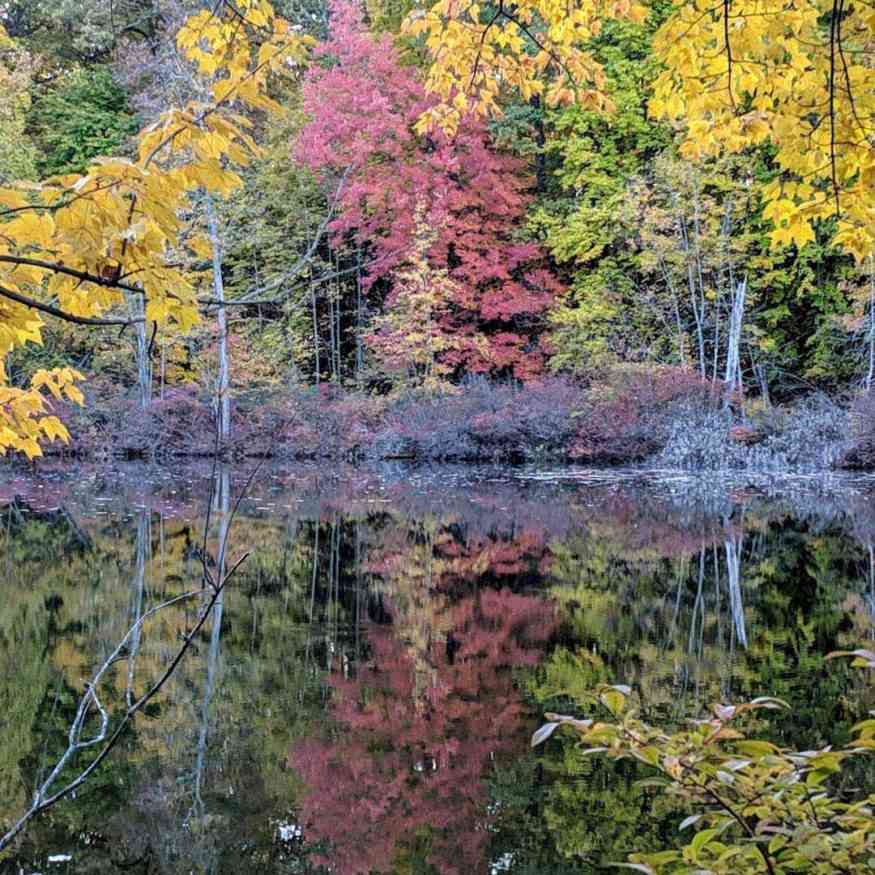


Explore 21 miles of marked trails across 2,500 acres of woodlands, wetlands, and glacially created landforms like kettles, kames, eskers, and bogs. Named for its four most significant ponds—Hundred Acre, Round, Quaker, and Deep Ponds—one of Mendon Ponds Park‘s unique bodies of water is Devil’s Bathtub, a rare meromictic lake with a depth of about 47 feet at its deepest point. Be sure to check out Wild Wings Inc.’s bird of prey facility and nature center, and enjoy a walk along the nearby Birdsong Fairy Trail.
Wild Wings Inc. is a not-for-profit organization that manages the Mendon Ponds Park Nature Center and Bird of Prey Facility. They provide short-term and lifelong sanctuary for animals that rely on human care for their survival. Visitors can see small mammals, amphibians, insects, and reptiles in the nature center building. The Bird of Prey Facility next door houses permanently injured raptor and owl species, a raven, a bobcat, and two red foxes. Both facilities are free to explore, and donations and profits from the gift shop go directly toward the care of the animals.
This county park’s most popular walk among bird lovers and families is the Birdsong Fairy Trail, near the nature center. With a broad dirt path and a slight elevation change, this trail offers an easy way to explore a forest full of woodland creatures and is ideal for a multigenerational nature walk. Wandering counterclockwise along the path, search for over 40 colorful fairy homes and play spaces. When food is scarce in winter and early spring, head clockwise on the trail with a handful of black oil sunflower seeds so chickadees, nuthatches, and tufted titmice can eat them directly from your hand. Make time to explore the other trails in the park, including those around the ponds.
Explore More
3. Genesee Valley Park


Genesee Valley Park (GVP) in Rochester was designed by Frederick Law Olmsted in 1888. Located at the southern edge of the city, where the Erie Canal, Red Creek, and Genesee River intersect, the park offers visitors the opportunity to rent kayaks and canoes from the Genesee Waterways Center. The park features four beautiful concrete footbridges that span each waterway. Originally, the Erie Canal ran through Rochester, crossing an aqueduct that is now the Broad Street Bridge. In 1918, the state changed the canal route to follow the city’s southern border through Genesee Valley Park, leading to the addition of the bridges.
The Genesee Riverway Trail (GRT) is a 24-mile National Recreation Trail that runs alongside a 12-mile stretch of river through Rochester’s urban corridor. This trail is a great way to explore the city’s scenic, historic, and cultural areas. It starts at Lake Ontario and travels south through Turning Point Park, Seneca Park, Maplewood Park, High Falls Historic District, Corn Hill, and the University of Rochester, ending in Genesee Valley Park. Along the way, the GRT crosses eight bridges and three waterfalls. Although it is mainly paved and dedicated, some areas are steep and narrow or require the use of streets, mainly through the city center. The GRT connects with the Genesee Valley Greenway Trail and Erie Canalway Trail in Genesee Valley Park, making the park a great starting point for a hike or bike ride.
Explore More
4. Durand Eastman
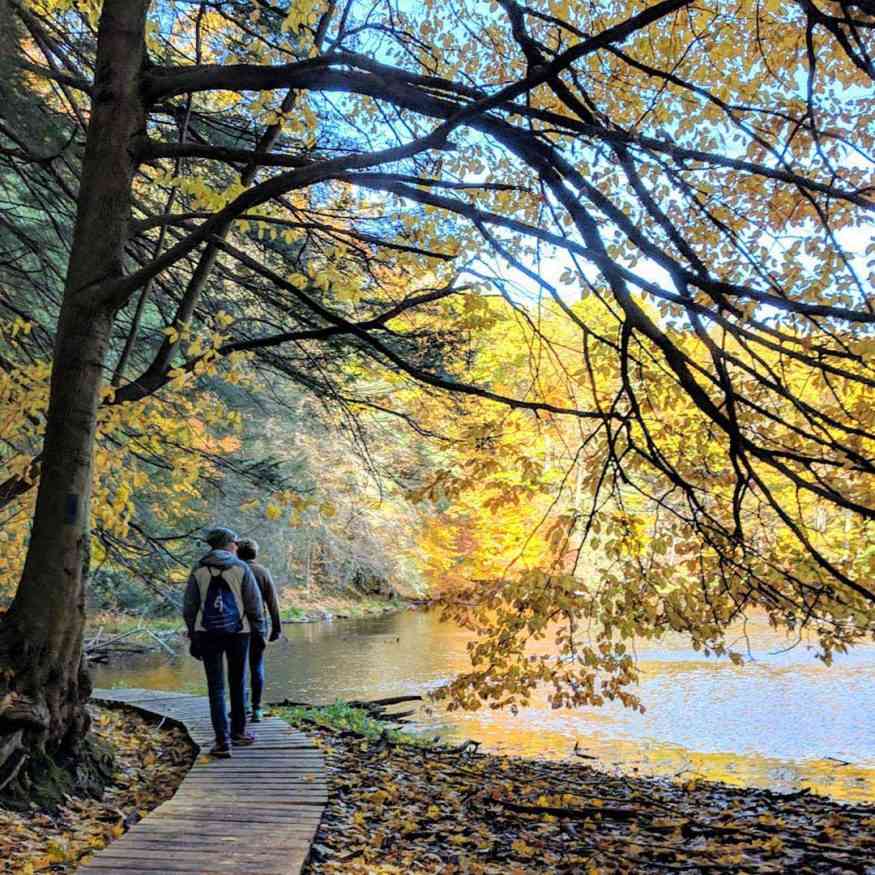


In 1908, landscape architect Bernard (Barney) H. Slavin began designing Durand Eastman Park, which now covers 977 acres and features five artificial lakes: Durand, Eastman, Trimble, Trott, and Pat. A section of pedestrian-only roadway between Log Cabin and Zoo Roads is perfect for a walk through the arboretum. Walk across Lakeshore Boulevard to explore the seven-mile Irondequoit Lakeside Multi-Use Trail. At Lot A near Horseshoe Road, you will find the designated swimming area along the 5,000-foot sandy Lake Ontario shoreline.
Slavin drew on design principles established by the Olmsted firm in Rochester while also contributing his own long-term vision to the county park system—an influence evident in the mature arboretum landscapes between Zoo and Sweet Fern Roads in Pine Valley, Rhododendron Valley, Fruit Valley, and Katsura Glen.
A fun fact, despite popular belief, the White Lady’s Castle at Durand Eastman Park is not an actual castle but the façade of a former beach-side dining hall called Three Lakes Pavilion. However, rumors persist of a vengeful mother and her two large white dogs haunting the area.
Explore More
Rochester, delivered
A weekly Substack newsletter, with periodic essays exploring behind-the-scenes work and reflections on traveling close to home. While the content is free, paid subscriptions support my ongoing research and writing.
5. Oatka Creek Park


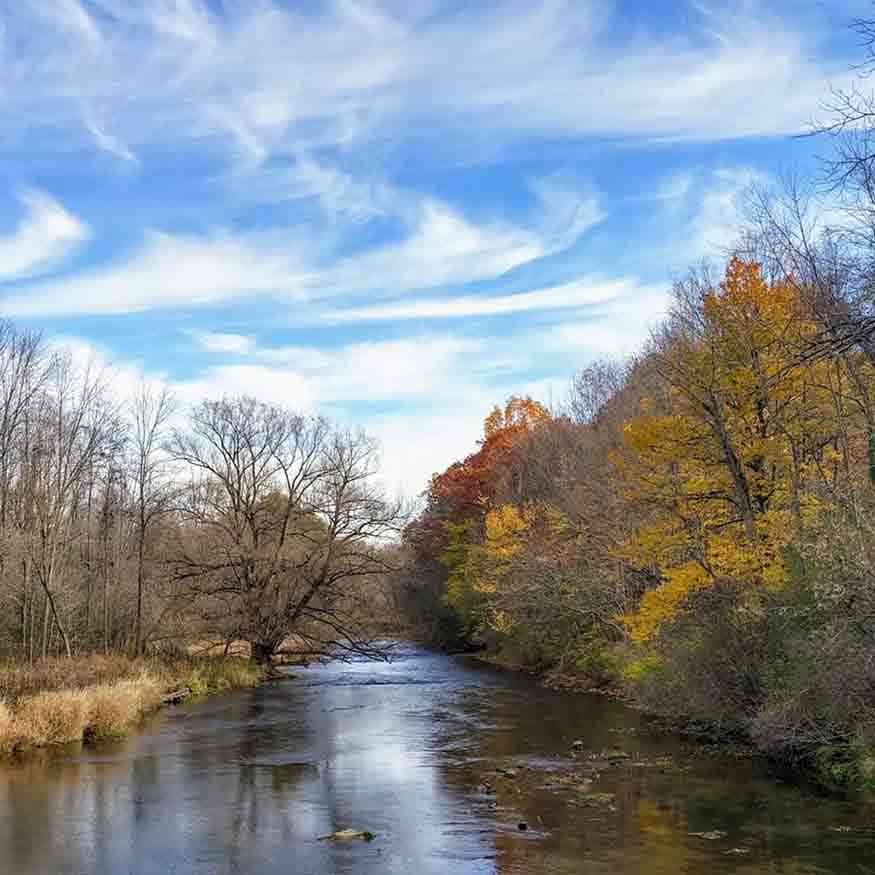
Oatka Creek Park, located in Scottsville, is one of Monroe County’s most quietly immersive landscapes. Following the course of Oatka Creek, this largely undeveloped park protects a mix of riparian habitat and open meadowland that shifts subtly with the seasons—from spring wildflowers to goldenrod and seed heads in late summer and fall.
Some pathways may be muddy and shared with horses, but there is little elevation change, making it well-suited for unhurried exploration. Trails wind through woodlands and meadows, where the sound of water and the movement of grasses shape the experience more than landmarks. Highlights include a bridge over Oatka Creek along the purple trail and a striking quaking aspen grove along the black trail.
Unlike the more formally designed landscapes of Highland or Durand Eastman, Oatka Creek Park offers a simpler encounter—one shaped more by water, soil, and time than by formal planning.
Explore More
Explore More

Which are your favorite county parks?
I’d love to hear from you—please reach out and share your thoughts and experiences.


Help Support My Work
If my work has helped you explore and appreciate the Rochester area, please consider subscribing to Substack as a paid member. You’ll receive an email whenever I publish new content and can connect with a growing community of local explorers.
See you out there!
Debi
Enjoy the Journey Together!


